Best De'Longhi Espresso Machines Compared (2026)
De'Longhi sells across the entire automation spectrum, from a $150 lever-pump machine you run by hand to an $800 bean-to-cup unit that grinds, doses and brews behind one button. That range is the whole story: the brand name tells you almost nothing about what a given model actually asks of you each morning.
Reader-supported: we may earn a commission if you buy through our links, at no extra cost to you. Prices are the ones we recorded between September 24 and October 1, 2026 and they move constantly — confirm the live price before buying.
The short answer
If you want espresso with zero technique and no learning curve, buy a super-automatic — the Magnifica Start at $714.15 or the Magnifica Duo at $799.95. Both grind, dose, tamp and brew from a single button, and the Duo's extra money buys a second automated milk mode and a cold-brew setting the Start does not have. If you want to grind your own beans, tamp your own puck and work a steam wand by hand, buy a Classic-line machine instead — the Classic at $149.95 or the Classic Signature at $179.95, where the $30 difference buys an adjustable frother and a sturdier build rather than any kind of automation.
That split — automatic bean-to-cup versus manual lever pump — is the real decision in this lineup, and it matters more than which specific model you end up with. Picking the wrong automation level means a $700 machine gathering dust because you wanted to learn espresso, or a $150 machine that never gets touched because mornings are too rushed for a steam wand. Everything below is about getting that first call right, then choosing inside it.
Super-automatic versus semi-automatic: this brand sells both
De'Longhi's catalogue splits cleanly into two machine classes, and the four machines here sit two-and-two on either side of that line.
The Magnifica Start and Magnifica Duo are super-automatic: both have a built-in conical burr grinder, and both grind, dose, tamp and brew a shot internally when you press one button. There is no portafilter to fill, no tamper to use, and no grind size to dial in by hand day to day — the machine's internal mechanism does the compacting. You choose a drink and a strength, and the rest happens inside the housing.
The Classic Espresso Machine and Classic Signature are semi-automatic, pump-driven machines built around a manual portafilter. You bring pre-ground coffee or beans ground elsewhere, fill and tamp the portafilter yourself, lock it into the group head, and start the shot. The machine supplies pump pressure and heat; everything about dose, grind and extraction time is on you.
This is not a quality gap — it is a control-versus-convenience trade, and it is the single biggest reason two machines from the same brand can cost $150 and $800. A super-automatic is buying you a result with the process hidden; a semi-automatic is selling you the process itself, at a fraction of the price, because the hardware doing the work is simpler.
The practical test is honest self-assessment, not budget. Someone who wants a shot pulled the same way every single morning, with no interest in grind settings, is better served by the $714.15 Magnifica Start than by fighting a manual portafilter at 7am. Someone who wants to learn what changes a shot's taste — and is willing to own a separate burr grinder, since neither Classic model has one built in — gets more espresso education out of the $149.95 Classic than out of either Magnifica, at a fifth of the price. Our look at 58mm semi-commercial machines goes further into what the manual side of this market offers once you're past entry level.
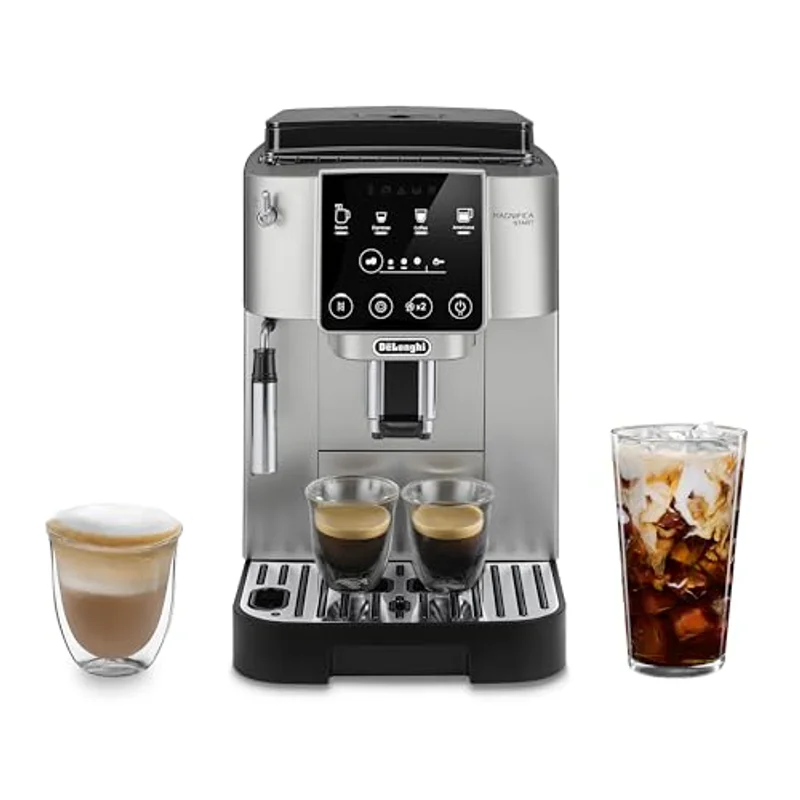
De'Longhi Magnifica Start Automatic Espresso Machine
Super-automatic with a built-in burr grinder and a manual milk frother. One button for espresso, coffee or an americano; nothing to tamp or dial in by hand.
$714.15 Check price →Magnifica Start versus Magnifica Duo: what the extra money buys
Both Magnifica machines are super-automatic with a built-in grinder and a milk frother, which makes the roughly $85 gap between them ($714.15 for the Start versus $799.95 for the Duo) worth isolating carefully rather than assuming "Duo costs more, so it does more of everything."
The name is the first clue. "Duo" in De'Longhi's Magnifica range signals a dual milk system — a machine built to handle two different ways of taking milk rather than one. The Magnifica Start's frother is listed simply as a milk frother; the Magnifica Duo is positioned around its milk system doing more, which is the headline reason to spend the extra money. If milk drinks are a daily habit rather than an occasional one, that is where the Duo's premium goes.
The second difference is a cold-brew mode. The Magnifica Duo lists a cold-brew capability that the Magnifica Start's listing does not include. For a household that drinks iced coffee as often as hot espresso, that is a real feature gap rather than a marketing distinction, since brewing cold coffee usually means a separate process otherwise.
What does not change between the two: both grind with a built-in conical burr system, and both are silver-finished one-touch machines. Neither listing gives us a bean hopper capacity, water tank size or wattage figure, so check the current listing before ordering if either number matters for your kitchen.
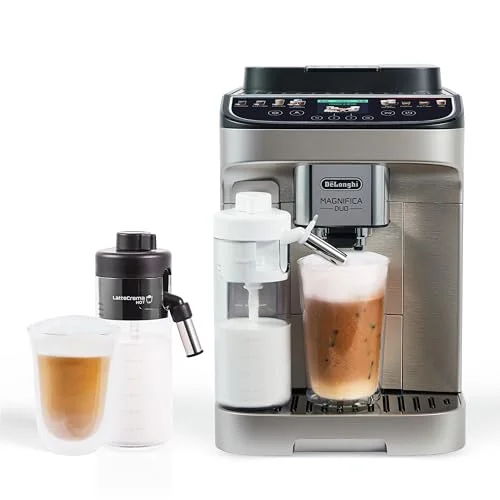
De'Longhi Magnifica Duo Automatic Espresso Machine
Super-automatic with a built-in grinder, a dual milk system and a cold-brew mode the Start does not list. The step up inside De'Longhi's one-touch tier.
$799.95 Check price →Classic Signature versus Classic: the manual end of the lineup
At the other end of the brand, the gap between the $149.95 Classic and the $179.95 Classic Signature is $30 — small enough that it reads as a rounding error until you look at what each name implies.
Both are manual, semi-automatic espresso machines with a milk frother and no built-in grinder: you supply ground coffee, fill and tamp the portafilter, and work the steam wand yourself on either model. Neither is a bean-to-cup machine, and neither automates the shot.
The named difference is the frother. The base Classic ships with a milk frother; the Classic Signature's is specifically called out as an adjustable milk frother, which — on manual steam machines in this price range — typically means a wand or knob you can set across a range rather than a single fixed froth output. If you want to vary foam texture between a flat white's microfoam and a cappuccino's denser cap without buying a separate tool, that adjustability is where the $30 goes.
The Classic Signature also carries the "Linea Classic" size and variant designation — the only size detail either listing specifies for this pair, worth noting if footprint is tight. Beyond the frother and that naming, boiler wattage, tank size and portafilter diameter aren't confirmed for either Classic model, so treat those as check-the-listing items.
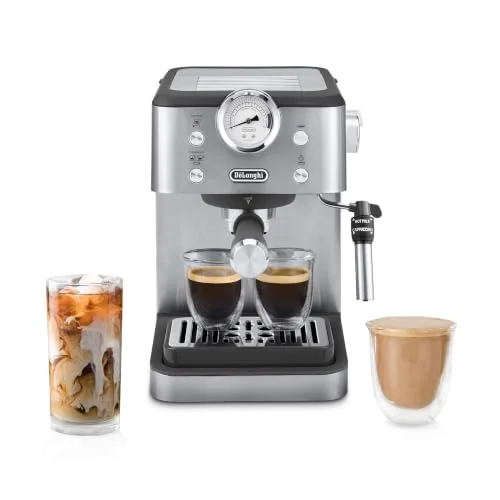
De'Longhi Classic Signature Espresso Machine
Manual, semi-automatic, no built-in grinder, with an adjustable milk frother. Size/variant: Linea Classic.
$179.95 Check price →The picks
Four machines, four different buyers. Rather than force a single winner, here is who each one is actually for.
| Machine | Best for | Type | Grinder | Price | |
|---|---|---|---|---|---|
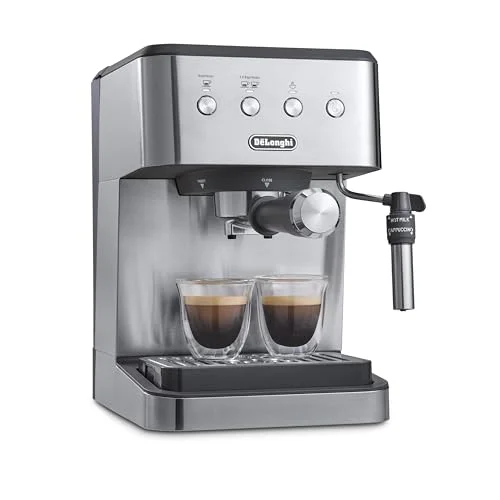 De'Longhi Classic De'Longhi Classic | Lowest entry price, manual technique | Semi-automatic | None | $149.95 | Price |
| De'Longhi Classic Signature | Same as Classic, plus adjustable foam | Semi-automatic | None | $179.95 | Price |
| De'Longhi Magnifica Start | One-touch espresso, no milk routine | Super-automatic | Built-in | $714.15 | Price |
| De'Longhi Magnifica Duo | One-touch, daily milk drinks and cold brew | Super-automatic | Built-in | $799.95 | Price |
The De'Longhi Classic — the cheapest way to find out if espresso sticks
At $149.95, the Classic is the lowest-risk entry point in this lineup by a wide margin — less than a fifth of what either Magnifica costs. It is a real pump machine with a portafilter and a milk frother, not a steam-driven toy, which means the ceiling on what you can learn from it is set by your technique rather than by the hardware. The trade-off is everything the super-automatics hide: no built-in grinder, so budget for pre-ground coffee or a separate burr grinder, and a fixed milk frother rather than the Signature's adjustable one.
The De'Longhi Classic Signature — the same machine, tuned for milk
At $179.95, the Classic Signature is the better buy for anyone who already knows they'll be making lattes or cappuccinos regularly, since the adjustable frother is the one concrete upgrade the listing specifies over the base Classic. It stays in the same semi-automatic, no-grinder category, so the same caveat applies: pair it with a decent burr grinder if you want it to perform.
The De'Longhi Magnifica Start — one button, no milk routine to manage
At $714.15, the Magnifica Start is the pick for someone who wants the grinding and brewing automated but is fine working a manual frother for milk, or drinks espresso and americanos more than lattes. It is the lower-cost route into De'Longhi's bean-to-cup tier, and the gap to the Duo is specifically about milk and cold brew rather than core espresso quality.
The De'Longhi Magnifica Duo — one button, including the milk
At $799.95, the Magnifica Duo is the pick for a household that wants the entire routine automated: grind, dose, brew and a dual milk system, plus a cold-brew mode for warmer months. It is the most expensive machine here, and the extra roughly $85 over the Start is worth paying only if that dual milk system and the cold-brew mode are things you'll actually use — if milk stays an occasional afterthought, the Start gets you the same core shot for less.
Milk system compared across all four
Milk handling is where these four machines diverge the most, and it is worth laying out exactly what each one offers rather than assuming "frother" means the same thing across the lineup.
The Classic has a milk frother with no adjustability called out in its listing — you work it by hand, and foam texture is whatever that fixed mechanism produces. The Classic Signature upgrades to an adjustable milk frother, which gives you a range to work within rather than one fixed output; on manual machines, that is usually the difference between a flat white's thin microfoam and a cappuccino's denser cap being achievable on the same wand. Both remain manual: you hold the pitcher, judge the texture, and stop when it looks right.
The Magnifica Start has a milk frother as well, but on a super-automatic chassis — the grinding and brewing are automated even though the milk step on this specific model is not listed as automatic. The Magnifica Duo is the outlier: it is built around what De'Longhi calls a milk system rather than a single frother, and the "Duo" name specifically signals handling more than one milk format or mode. That is the clearest hands-off milk option across all four, and it is the single biggest reason to pay the extra money for the Duo over the Start.
None of these four listings specifies dairy versus plant-milk performance. If that matters to your routine, our guide to espresso machines for oat and plant milk covers it directly.
Which one actually fits a daily two-cup routine
"Two cups a day" sounds like a small, easy habit, but it changes which of these four machines actually works in practice, because the two automation classes handle repetition completely differently.
On either Classic model, two cups means two full manual cycles: grind or scoop, dose, tamp, lock in, pull, then empty and repeat for the second person. That is a genuinely different morning than one cup — closer to ten minutes than five — and it is the real cost of the semi-automatic route that a spec sheet never states. If two people in the house both want espresso before work, that stacking matters more than any single spec on either Classic listing.
On either Magnifica, two cups is two button presses, and the internal grind-dose-brew cycle repeats itself without you refilling anything beyond the bean hopper and water tank periodically. That is the strongest practical case for paying the super-automatic premium in a two-person household on a tight schedule: the second cup costs you the same thirty seconds of attention as the first, rather than doubling the manual effort.
Milk complicates the comparison further. A two-cup routine where both drinks are milk-based favors the Magnifica Duo specifically, since its dual milk system is built around handling that kind of repeat, varied milk demand; the Magnifica Start and both Classic machines all put the second milk drink's effort on you in one form or another — either working the same manual or single-mode frother twice, or, on the Start, doing that frothing by hand while the espresso side stays automated. If your two daily cups are both straight espresso with no milk at all, the gap between all four narrows considerably, and the Classic at $149.95 becomes a far more defensible choice than its price tag alone suggests. Our guide to weight-based dosing versus a timer is worth a look too if repeatability across two cups, rather than speed, is your main concern on the manual side.
All four, side by side
Same four machines, every confirmed spec in one place. Prices are what we recorded between September 24 and October 1, 2026.
| Machine | Type | Grinder | Milk | Notable extra | Price | |
|---|---|---|---|---|---|---|
| Classic | Semi-automatic | None | Milk frother | — | $149.95 | Price |
| Classic Signature | Semi-automatic | None | Adjustable milk frother | Linea Classic size/variant | $179.95 | Price |
| Magnifica Start | Super-automatic | Built-in | Milk frother | One-touch brewing | $714.15 | Price |
| Magnifica Duo | Super-automatic | Built-in | Dual milk system | Cold-brew mode | $799.95 | Price |
A few gaps are worth naming rather than papering over. None of the four listings gives us boiler wattage — our guide to watts and amps explains why that number is worth confirming before you buy, De'Longhi included. Neither Magnifica listing states a tank or hopper size, and neither Classic listing states a boiler type or self-clean cycle. Where we don't have a number, check the current listing rather than guess — the same applies to descaling behavior, covered generally in our guide to self-clean and auto-descale cycles.
One thing not to assume
Don't assume "Magnifica" or "Classic" guarantees a specific spec just because another model in the line has it. The Duo's cold-brew mode and dual milk system are not confirmed on the Start, and the Signature's adjustable frother is not confirmed on the base Classic. Within one brand, model names signal a tier, not an identical feature set — check the current listing for the exact model you're buying.
How we compared these
We compare published specifications, product names, price and machine class — we do not physically test these machines, we do not run a testing lab, and we do not publish ratings we cannot verify. Amazon's product data returns no rating and no review count for the machines on this site, so there are no stars and no invented scores anywhere on this page. Where a listing names a feature (an adjustable frother, a dual milk system, a cold-brew mode), we report it as stated; where a listing is silent on a spec — wattage, tank size, hopper capacity — we say so explicitly instead of filling the gap with a plausible-sounding guess.
The automation-tier distinction in this guide (super-automatic versus semi-automatic) is general, non-product-specific domain knowledge about how espresso machines are built, not a claim about any single listing. Judgement calls — that the Duo's premium is worth it only for heavy milk drinkers, that two-cup routines favor automation — are stated in our own voice as trade-offs, not as verified facts, so you can weigh them against your own routine. The rest of our method sits on our main espresso machine guide.
Frequently asked questions
What's the real difference between the Magnifica Start and Magnifica Duo?
Both are super-automatic De'Longhi machines with a built-in burr grinder that handle the entire grind-dose-brew cycle behind one button. The Magnifica Duo adds a dual milk system — built to handle more than one milk format or mode — and a cold-brew setting the Magnifica Start's listing does not include. At $799.95 versus $714.15, that roughly $85 difference is specifically about milk handling and cold brew, not about core espresso quality.
Is the De'Longhi Classic Signature worth $30 more than the base Classic?
If milk drinks are a regular part of your routine, yes: the Signature's milk frother is specifically listed as adjustable, which on a manual steam machine typically means a wider range of foam textures from the same wand. Both models are otherwise the same tier — semi-automatic, no built-in grinder, manual portafilter — so if you drink espresso black, the $30 buys you a feature you may never use.
Do any of these four De'Longhi machines have a built-in grinder?
Yes, but only two of them. The Magnifica Start and Magnifica Duo are both super-automatic with a built-in grinder. The Classic and Classic Signature are semi-automatic machines with no grinder built in — you supply pre-ground coffee or grind elsewhere, which is also why they cost a fraction of the Magnifica price.
Which De'Longhi machine makes the most sense for two espressos every morning?
If both drinks are milk-based, the Magnifica Duo's dual milk system is built for exactly that kind of repeat, varied demand. If both drinks are straight espresso with no milk, the gap narrows a lot: either Magnifica turns a second cup into one more button press, while either Classic means a second full manual cycle — grind or scoop, dose, tamp, pull — which can easily double your time at the machine.