Self-Clean and Auto-Descale Cycles: What They Actually Automate
A self-clean brew cycle, one-touch descaling, and a dishwasher-safe milk system are three different promises, and each one automates a different, narrow job. None of them means you can skip maintenance entirely — they just move the boring part around.
Reader-supported: we may earn a commission if you buy through our links, at no extra cost to you. Prices are the ones we recorded in our database on the dates noted below and they move constantly — confirm the live price before buying.
The short answer
"Self-clean," "auto-descale," and "dishwasher-safe milk system" get lumped together in listing copy as if they're one feature — a machine that basically cleans itself. They're not. Each one automates a different, narrow slice of maintenance, and each one leaves a different part of the machine entirely untouched.
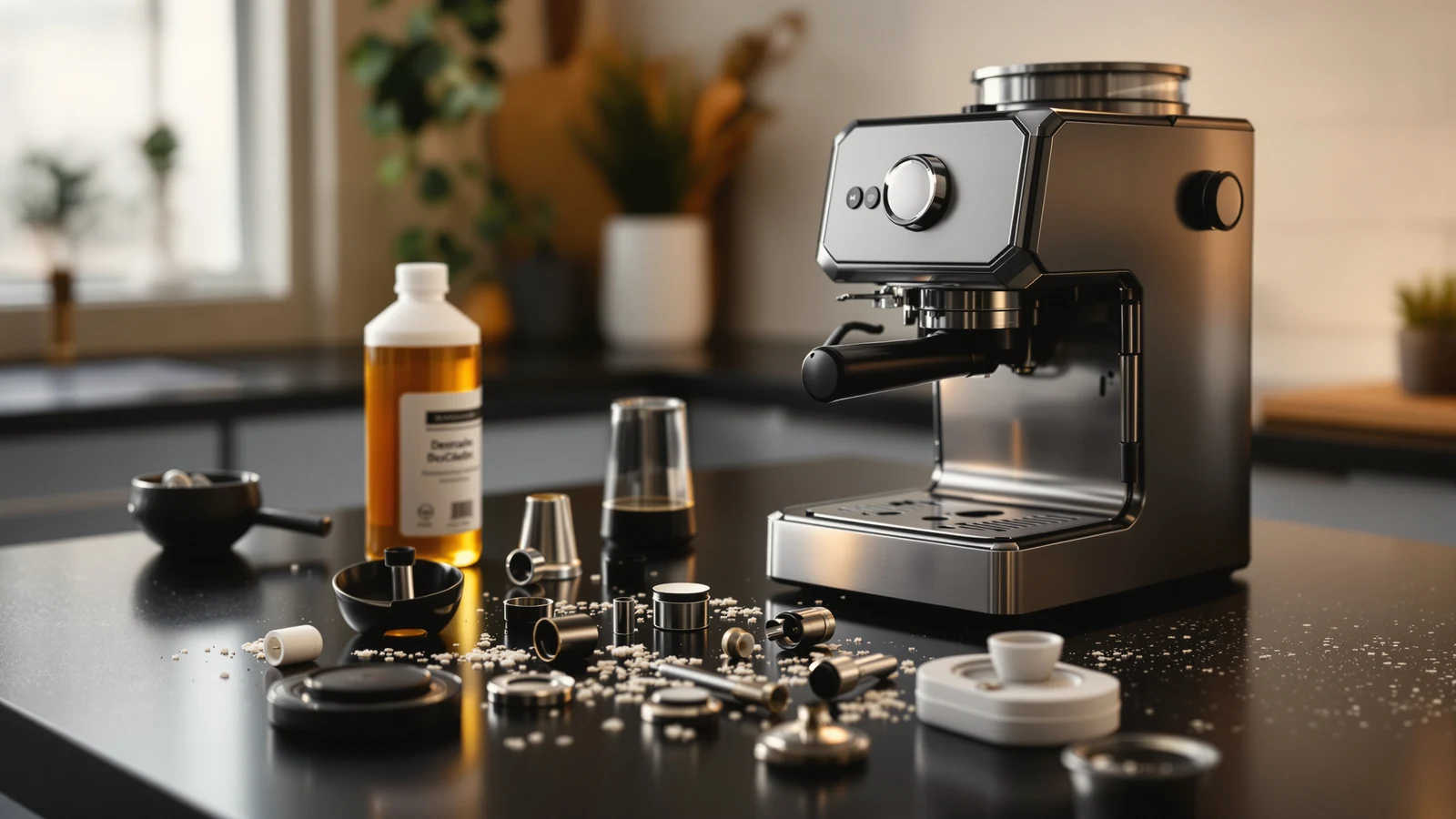
A self-clean or rinse cycle flushes the water path with hot water on a timer. It clears loose coffee residue from the lines the water travels through, and it does nothing about mineral scale, because scale needs an acid, not heat, to dissolve. One-touch or auto-descale automates the sequence and timing of a descaling run — fill, dwell, flush, rinse — but you still buy the descaling solution and pour it in yourself; the machine isn't manufacturing chemistry. And a dishwasher-safe milk system removes the "wipe it now or regret it" urgency of a steam wand, but it's still a part you have to detach and clean, just on your schedule instead of the machine's. None of the three reaches the shower screen, the group gasket, or the drip tray, which stay entirely manual on every machine we cover here, at every price.
What a self-clean cycle actually flushes
When a machine advertises a "self-clean" or "auto-rinse" program, what's usually running is a timed push of hot water through the brew path — the group head and the internal tubing the water travels through between the pump and the spout. It typically fires on power-up, on power-down, or on a button press, and it's over in under a minute. The point is to move fresh water through lines that would otherwise sit with yesterday's coffee oils and fine residue clinging to the walls, which is where stale, bitter-tasting carryover into your next shot comes from.
That's a real and useful job, and it's also a small one. A hot-water flush has no acid in it, so it does nothing to mineral scale — the chalky buildup hard water leaves on heating elements and boiler walls, which needs a descaling solution to break down, not a rinse. It also doesn't reach anything outside the sealed water path: the removable dispersion screen under the group head, the rubber gasket that seals the portafilter, the milk wand or frother attachment, and the drip tray all sit outside the loop a self-clean cycle runs through. A machine that proudly self-cleans on every power-down can still have a crusted shower screen and a full drip tray, because those are different problems with different fixes.
Interfaces vary in how visibly this is surfaced. Some machines run the rinse silently in the background; others expose it as a named cycle behind a menu icon, which is more common on the touchscreen-driven machines we cover in touchscreen vs. manual controls than on a machine with a single physical dial.
One-touch descaling: automated timing, not automated chemistry
"One-touch descale" is the phrase that does the most overselling in this category, so it's worth being precise about what it actually removes from your job. A guided or one-touch descale program automates the sequence: it walks the machine (and sometimes you, via on-screen prompts) through filling the tank with descaling solution, letting it dwell in the boiler and lines long enough to dissolve scale, running it through in stages, and finishing with several tank-fulls of plain water to rinse the solution out before you brew again. That sequencing and timing is the part a program is good at automating, because getting the dwell time and rinse count wrong is exactly the kind of thing people get wrong doing it by hand.
What it does not automate is the chemistry. You still buy a descaling solution — typically a citric-acid-based powder or liquid made for espresso machines — and pour it into the tank yourself. No machine on the market manufactures its own descaler. Some machines add a second layer of automation on top of the sequencing: a shot counter or a water-hardness setting you input once, which trips a reminder light or on-screen prompt at an interval the machine estimates for you, rather than you tracking dates on a calendar. That reminder is still just telling you it's time — you're doing the actual work either way.
Where a machine sits on this spectrum tracks fairly closely with price and interface. A straightforward pump machine like the AMZCHEF 20 Bar Home Espresso Coffee Machine at $89.99 is the kind of unit where descaling is entirely on you: no guided program to lean on, so you're setting your own reminder and running solution through by hand on your own schedule. A touchscreen interface, like the one on the SHARDOR Espresso Machine 20 Bar at $109.99, is the more common place to find the reminder and the guided steps surfaced as an on-screen icon rather than buried in a manual, though you should confirm exactly which programs a specific listing includes before assuming one. Fully automatic machines in the class of the PHILIPS 2300 Series at $549.99 more often bundle a guided descale routine as standard, since the brewing itself is already automated end to end — but again, check the current listing or the printed manual for your unit to see precisely what its cycle covers, since we're working from published specs and price rather than running the program ourselves.
The one thing "automatic" never means here
No espresso machine we've found buys, mixes, or dispenses its own descaling solution. "Automatic" in this category means automated timing and sequencing of a process you still stock the chemistry for. If a listing implies otherwise, read it again — it's marketing language, not a new mechanism.
The picks
Three machines across the price range this decision actually plays out at — a straightforward budget pump machine, a touchscreen mid-tier unit, and a fully automatic machine with a tool-free milk system — to make the trade-offs concrete rather than abstract.
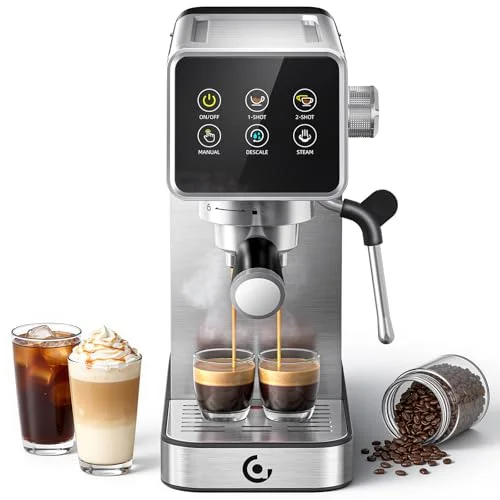
AMZCHEF 20 Bar Home Espresso Coffee Machine
A 20-bar pump machine with a 41 oz tank, priced at the point where dedicated descale programs are the exception rather than the rule. Budget here for a manual routine: your own reminder, your own descaling solution, run through by hand.
$89.99 Check price →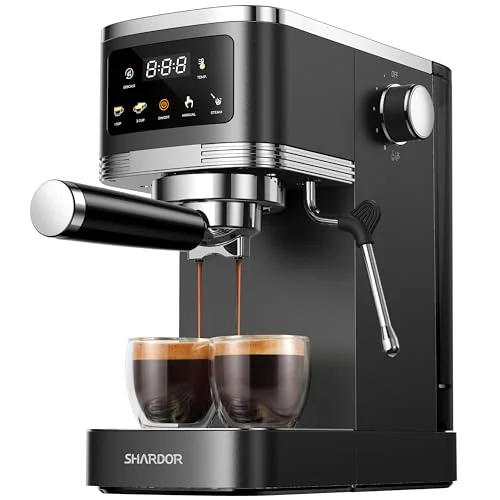
SHARDOR Espresso Machine 20 Bar, with Milk Frother and Touchscreen
A 20-bar machine that pairs a touchscreen interface with an adjustable-temperature control and a milk frother. The screen is the more likely home for a visible descale reminder and step-by-step prompts than a machine with only physical buttons — confirm the specific programs on the current listing before buying on that basis alone.
$109.99 Check price →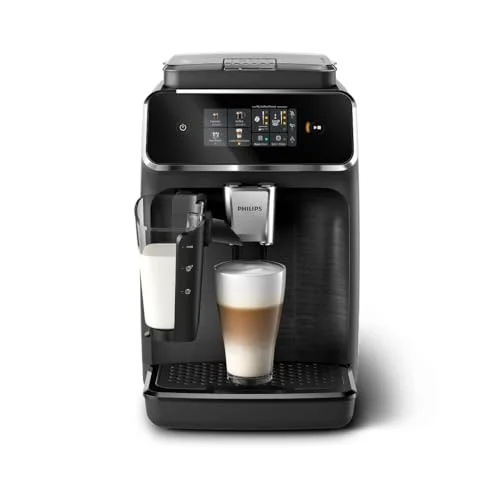
PHILIPS 2300 Series Fully Automatic Espresso Machine, LatteGo Milk System
A fully automatic bean-to-cup machine built around Philips's LatteGo milk system — a two-piece carafe designed to snap apart without tools, so it can go straight into a dishwasher instead of needing an immediate hand-wipe the way a steam wand does. That solves the milk side specifically; it's still worth confirming what the brew-path rinse and descale cycle on this model covers before you buy.
$549.99 Check price →Dishwasher-safe milk systems versus a steam wand you wipe by hand
A manual steam wand is unforgiving about timing in a way nothing else on a machine is. Milk protein starts drying and hardening inside the wand's tip almost as soon as steaming stops, and if you don't purge it and wipe it down within a minute or two, it can clog the small holes the steam sprays through — a fix that ranges from a soak to a needle-sized cleaning pin, depending how bad it's gotten. That's the origin of the "wipe it now" rule that shows up in every espresso machine manual: it isn't caution for its own sake, it's a narrow window before the job gets harder.
A dishwasher-safe milk system, like the LatteGo carafe built into the Philips machine above, is designed around removing that urgency rather than the cleaning step itself. The two-piece design snaps apart without tools, so instead of a wand you have to catch within minutes, you have a small carafe you can rinse under a tap or set in a dishwasher whenever it's convenient — tonight, tomorrow morning, whenever you get to it. What it doesn't remove is the cleaning entirely: milk still passed through the part, and it still needs to actually go through that rinse or dishwasher cycle before it's used again, just without the same countdown clock.
Automatic milk frothers that aren't explicitly listed as dishwasher-safe sit in between: convenient to operate, but check the specific listing or manual for how the frothing wand or attachment on a given unit is meant to be cleaned before assuming it can go straight in a dishwasher rack. We don't have that confirmed for every machine in this category, which is exactly the kind of detail worth checking before it becomes a stuck-on mess.
The steps no automation replaces
Three parts of an espresso machine sit outside every cycle described above, on every machine we cover, regardless of price or how many buttons it has.
The shower screen. This is the perforated disc directly under the group head that spreads water evenly over the coffee puck. Fine coffee particles collect on its face and in the small screw or clip holding it on, and a hot-water rinse cycle doesn't dislodge what's already sitting there — it needs to be removed by hand periodically, brushed off, and occasionally soaked. A clogged shower screen shows up as uneven extraction long before it shows up as anything a sensor would flag.
The gasket. The rubber seal that lets the portafilter lock against the group head under pressure hardens and can crack with age and heat cycling, and no automated program inspects it, replaces it, or even knows it exists. It's a manual check: if the machine starts hissing or spraying at the seal during a shot, the gasket is usually why, and it's a manual, low-cost part swap. This applies just as much to the heavier 58mm portafilter machines discussed in semi-commercial 58mm machines for home as it does to a compact 51mm unit — a bigger gasket still just wears out and still needs a hand to change it.
The drip tray. Some machines add a float sensor that lights up or beeps once the tray is full, which is a genuine convenience. What it isn't is automation of the actual emptying — you still lift it out, tip it into a sink, rinse it, and put it back. The sensor changes when you're told to do the job, not who does it.
A realistic weekly routine, even with every automated feature switched on
Stack the automated features from every tier above onto one imaginary machine — a self-clean rinse on every power cycle, a guided one-touch descale with a reminder, and a dishwasher-safe milk carafe — and the maintenance list still doesn't hit zero. Here's what's actually left, laid out by how often it comes up:
Every day: wipe down the exterior and drip tray, and if the machine has a manual steam wand, purge it and wipe the tip immediately after every milk drink, not just at the end of the day.
Once a week: run the self-clean or backflush cycle if it isn't already firing automatically on power-down, pull and rinse the shower screen if your model allows tool-free removal, and empty and properly wash the drip tray rather than just tipping it out.
On the interval your reminder or manual specifies (commonly every one to three months depending on water hardness and how often you brew): run the descale cycle, guided or manual, start to finish, including every rinse stage the instructions call for — skipping the final rinses is the most common way people end up tasting descaling solution in their next few cups.
As needed, not on a schedule: inspect the gasket for cracking or hardening when you notice hissing or a leak at the group head, and deep-clean any milk carafe or frother attachment that's started leaving a film even between normal washes.
That routine holds whether the machine cost $89.99 or $549.99. What changes with price and interface is how much of it is reminded for you and how convenient each step is to actually do — not whether the steps exist.
How we compared these
We compare published specifications, product names, and live pricing pulled from our own product database — we do not physically test these machines, and we do not run a testing lab. Where a listing's own name states a feature, such as the SHARDOR's touchscreen or the Philips's LatteGo system, we describe what that named feature is generally known to do; where a specific cycle, sensor, or exact program isn't confirmed in the data we have for a given unit, we say so and point you to the current listing or manual instead of guessing. We also don't publish star ratings or review counts anywhere on this site: Amazon's product data doesn't return verified rating figures for the machines we track, and inventing a number would make this page look more authoritative than the data supports.
Frequently asked questions
Does a self-clean cycle remove limescale?
No. A self-clean or rinse cycle is a timed push of hot water through the brew path to clear loose coffee residue from the lines — it has no acid in it, and limescale needs a descaling solution to dissolve, not hot water. A machine can run a self-clean cycle every day and still need a separate descale to deal with mineral buildup.
What's the actual difference between one-touch descale and doing it manually?
A one-touch or guided descale program automates the sequence and timing — filling, letting the solution dwell, flushing it through in stages, and rinsing afterward — and on some machines adds a reminder based on a shot count or a hardness setting you enter. It does not automate the chemistry: you still buy a descaling solution, usually citric-acid-based, and pour it in yourself. Doing it manually means tracking the same steps and timing on your own instead of following on-screen prompts.
Can a steam wand go in the dishwasher?
No — a fixed steam wand is part of the machine's plumbing and isn't removable for a dishwasher cycle; it needs to be purged and wiped by hand after every milk drink, ideally within a minute or two, before milk protein dries inside the tip. Some machines use a separate, detachable milk system instead — the LatteGo carafe on the Philips 2300 Series above, for example, is a two-piece design meant to come apart without tools and go into a dishwasher — but that's a different mechanism from a wand, not a dishwasher-safe version of one.
How often should I actually descale my espresso machine?
It depends on your water hardness and how often you brew, which is why manufacturers give a range rather than a single number — commonly every one to three months for regular home use. If your machine has a hardness setting, entering your actual local water hardness makes its reminder more accurate than leaving it on a default. Where you don't have that setting, following the manufacturer's printed schedule for your specific model is more reliable than guessing from how the machine tastes.