The short answer
The Rancilio Silvia at $995.00 is a 0.3-liter single-boiler machine with an iron frame and stainless steel side panels, measuring 13.4 by 9.25 by 11.5 inches — a design that has barely changed in its public identity since it became the machine a generation of home baristas cut their teeth on. The Rancilio Silvia Pro X at $2,195.00 is sold by the same company as a mid-size successor, in black, at roughly 2.2 times the price.
That is the entire comparison this page has verified data for: two product listings, two prices, one stated frame-and-panel material on the original, one stated boiler volume on the original, and a "Mid-Size" variant label on the Pro X. We do not have a published boiler volume, external dimensions, or a materials breakdown for the Pro X listing in our database, so we will not invent one — where the listing is silent, we say so and point you to the live page to confirm before you buy.
What we can say with confidence: a $1,200 gap between two machines carrying the same first name is a gap worth interrogating rather than assuming. Some of it is almost certainly real engineering — dual boilers and PID temperature control are the most common reasons a "Pro" espresso machine costs more than its base model industry-wide. Some of it is positioning: a legacy name commands a premium regardless of what changed underneath it. This page separates what the listings confirm from what the name merely implies.
What the Silvia has been for two decades
Before there was a "Pro X," there was just the Silvia, and the reason it earned a cult following rather than a quiet retirement is worth stating plainly: it is a manual, no-frills single-boiler machine, and home espresso enthusiasts kept buying it precisely because it refused to add complexity it didn't need.
The listing we track states a 0.3-liter boiler, an iron frame, and stainless steel side panels — a construction philosophy that is almost the opposite of a modern appliance. Iron for the frame means mass and heat retention rather than a lightweight shell; stainless panels mean the exterior survives being wiped down daily in a kitchen for years without the finish degrading. The stated footprint is 13.4 inches high by 9.25 inches deep by 11.5 inches wide — small enough to live on a normal counter, which matters more than it sounds once you've tried to fit a bean-to-cup machine under an upper cabinet.
"Manual" in this context means what it has always meant for this machine: no digital display, no programmed shot volumes, a single boiler shared between brewing and steaming rather than two independent ones. You switch between brew and steam modes with a dial, you watch the pressure gauge, and you learn the machine's particular rhythm of heating and recovery. That rhythm — wait for the ready light, pull the shot, wait again before steaming milk — is the exact thing later "Pro" machines are usually built to remove. Whether removing it is worth $1,200 is the question the rest of this page tries to answer with the data we actually have.
None of this is nostalgia for its own sake. A single-boiler, iron-frame, manual machine is a specific set of trade-offs: lower cost, a learning curve, and a wait between drinks, in exchange for a mechanically simple machine with fewer parts that can fail. Two decades of the same basic recipe staying on the market, largely unchanged in its publicly stated materials, is itself a data point about how well that trade-off has held up. For more on how boiler count changes the waiting-around part of the experience, see our guide to thermoblock vs. boiler espresso machines.
Rancilio Silvia, 0.3L, Iron Frame + Stainless Side Panels
The machine itself: a manual single-boiler espresso machine, iron frame, stainless steel side panels, 13.4h x 9.25d x 11.5w inches. No built-in grinder, no digital shot programming — the base recipe that built the reputation.
$995.00 Check price →
The $1,200 gap, spec by stated spec
Here is the honest limit of a specs-first comparison: our database carries a boiler size, a frame material, and a footprint for the original Silvia, and for the Pro X it carries a price and a size category — "Mid-Size" — and nothing else we can verify. That asymmetry is itself information. A successor positioned at more than double the price, marketed under a name built on the original's reputation, with a thinner public spec sheet in our data than the machine it replaces, is exactly the situation where a buyer should slow down and read the live listing in full before paying the premium.
What we can compare directly:
| Machine | Price | Boiler | Frame / panels | Footprint | |
|---|
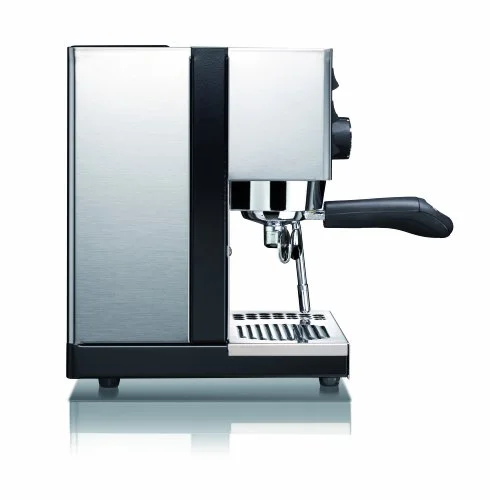 Rancilio Silvia | $995.00 | 0.3 liter, single | Iron frame, stainless steel side panels | 13.4h x 9.25d x 11.5w in | Price |
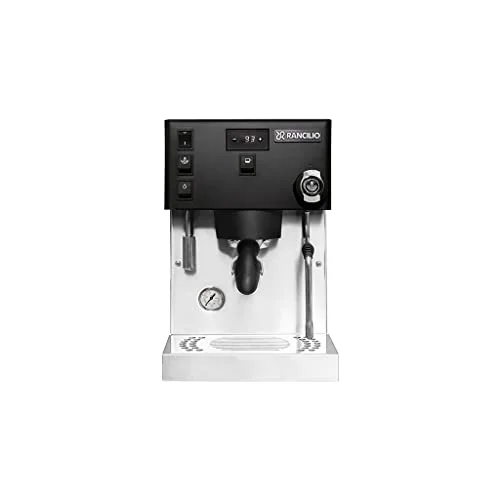 Rancilio Silvia Pro X | $2,195.00 | Not stated in listing data | Not stated in listing data | Mid-Size (variant label only) | Price |
The only hard numbers we can set side by side are the prices: $995.00 versus $2,195.00, a difference of $1,200.00, or the Pro X costing about 2.2 times the original. Every other line in that table is either a stated fact about the original or an acknowledged gap in what we can verify about the Pro X. We are not going to paper over that gap with a plausible-sounding dual-boiler or PID claim unless the listing itself states it — on this site, if we don't have the spec, we don't assert it, and that rule applies even when the comparison would read more cleanly with it filled in.
What a buyer should actually do with that gap: open both live Amazon listings side by side before ordering either machine, and specifically look for boiler configuration (single versus dual), temperature control (manual thermostat versus PID), and whether the Pro X ships with accessories the original doesn't — these are the categories where "Pro" machines in this price bracket most commonly justify a jump, and where this page cannot tell you more than the database currently holds.
What "Pro X" signals versus what the listing actually confirms
Model-name suffixes like "Pro," "X," "Plus," and "Max" are a vocabulary borrowed from consumer electronics, and they carry an implicit promise: more capability, built for a more demanding user. In espresso machines specifically, "Pro" most often correlates with one or more of three real changes — a second boiler so brewing and steaming don't compete for heat, PID digital temperature control instead of a mechanical thermostat, or commercial-grade internals meant to survive higher daily volume than a home machine sees.
Here is what the name is not a guarantee of: none of those three things are confirmed by our listing data for the Silvia Pro X. "Mid-Size" is the only variant detail attached to the ASIN in our database, and it describes a size category, not a mechanism. That doesn't mean the Pro X lacks a second boiler or PID control — Rancilio's broader product line includes machines with both, and a $2,195 price point is consistent with that kind of upgrade — it means we have not verified it from the data we track, and neither should you without reading the current listing yourself.
This is the exact trap a model-name suffix is designed to let a buyer fall into: "Pro X" sounds like a strict upgrade, and brand positioning wants you to read it that way. Whether it actually is one, for your use case, depends on specifics the suffix itself does not supply — which is also true one tier down the market from Rancilio. Our look at the Gemilai G3028A in white versus grey covers the opposite failure mode: a cosmetic variant with no functional difference at all, at the same price rather than a markup. The lesson from both pages is the same — read past the name on the box.
The picks
With the spec gap acknowledged, here is how we'd frame the choice for an actual buyer deciding between these two machines or deciding whether to look elsewhere.
01Best for a first serious machine
Rancilio Silvia
For the buyer who wants the two-decade reference point, not a modern rebuild
Manual, single boiler · 0.3 liter · iron frame, stainless side panels · 13.4h x 9.25d x 11.5w in
At $995.00 this is still the machine most people mean when they say "a real espresso machine" without a grinder attached. The iron frame and stainless panels are a stated, verifiable build, the footprint is small enough for a normal kitchen counter, and the single boiler means one thing to understand, not two systems to learn. It asks for patience — switching between brew and steam modes and waiting for the boiler to recover is part of owning it — and it offers no digital readout to shortcut that learning.
The trade-offA single boiler means brewing and steaming share one heat source, so back-to-back milk drinks mean waiting between them. If that waiting is the specific thing you want to pay to remove, that's the case for the Pro X below — provided its listing actually confirms a second boiler, which ours does not.
02Best if you need the Pro X's confirmed upgrades
Rancilio Silvia Pro X
For the buyer who has confirmed, on the live listing, which specific upgrades justify the price
Mid-Size variant · sold as the Silvia's direct successor · other specs: confirm on listing
At $2,195.00 this is positioned by Rancilio as the modern continuation of the Silvia line, and the "Mid-Size" label is the one detail our database can confirm about its physical format. We'd buy this over the original only after reading the live listing for a stated boiler configuration and temperature-control method, because those are the two upgrades that most commonly justify a price move of this size in this category — and because at more than double the original's price, "it's the newer one" is not, by itself, a reason.
The trade-offWe cannot verify from our data what, beyond size category and successor positioning, you are paying the extra $1,200 for. That is not an accusation that the upgrade isn't real — only an acknowledgment that this page won't assert specs the listing hasn't stated to us.
Who still buys the original at $995 in 2026
A two-decade-old design holding a near-$1,000 price point against a manufacturer-sanctioned, more expensive successor is unusual, and it points to a specific buyer who hasn't gone away: someone who wants the mechanical simplicity on purpose, not as a compromise.
That buyer tends to fall into a few overlapping groups. First, the modification and repair community — a single-boiler, mechanically simple, iron-framed machine with two decades of market presence has an established base of owners, independent repair guides, and aftermarket parts built around exactly this chassis, which is a maintenance advantage a brand-new "Pro X" platform cannot yet offer no matter what's inside it. Second, buyers who specifically want the manual workflow: no digital shortcuts, a pressure gauge instead of a screen, and the ritual of waiting that modern "Pro" machines are built to remove — for them, removing it isn't a feature, it's the point. Third, buyers constrained by counter space or budget who want a legitimate semi-automatic machine without the size or cost of the mid-size successor; the original's stated 11.5-inch width is meaningfully more kitchen-friendly than "Mid-Size" implies for the Pro X.
None of this is a claim about reliability we can verify — we have no owner-reported failure data for either machine, and we won't manufacture a durability claim to make the "two decades" framing sound more conclusive than it is. What we can say is that a product staying in active distribution at a stable identity for this long, while its own manufacturer sells a markedly more expensive alternative alongside it, tells you the demand for the simpler version didn't evaporate when the "Pro" version launched. If your use case is milk-drink volume or walk-up convenience rather than a manual ritual, our guide to espresso machines with a built-in scale covers a different kind of upgrade path, and espresso machines with a cup warming tray covers a smaller, cheaper one.
Does the price gap track the age gap, or something else?
It's tempting to read "$995 to $2,195" as simply "old machine, new machine, inflation and years of improvement." The data we have doesn't support that framing cleanly, and it's worth being precise about why.
Two decades of general manufacturing and material cost inflation does not, on its own, double a product's price — if it did, every long-running product line would show the same curve, and most don't. A 2.2x price jump between an original and its stated successor is far more often explained by a genuine capability tier change (the dual-boiler-and-PID pattern we flagged above), a shift in target market (home enthusiast versus a buyer closer to prosumer or light commercial use), or brand repositioning that leans on the original's reputation to support a premium the specs alone might not carry. Most real-world cases are some mix of all three, in proportions a spec sheet alone can't fully untangle — and ours, for the Pro X, is thinner than we'd like.
Avoid the easy shortcut here: "it's newer, so of course it costs more" is not an argument, it's an assumption dressed as one. The honest version of this answer is that we can confirm the price gap and we can confirm what changed on paper for the original machine across two decades — essentially nothing, which is a feature, not a stagnation. What we cannot confirm, from our data, is the specific list of what changed on the Pro X side that the extra $1,200 is paying for. That is the one question a prospective buyer should answer for themselves on the live Amazon listing before paying the premium, not take on faith from a model name that was clearly designed to make the answer feel obvious.
If dual-boiler design is the specific thing you're trying to evaluate — on the Pro X or on any other machine — our explainer on thermoblock vs. boiler espresso machines breaks down what boiler count and type change about back-to-back shots and milk drinks, independent of brand or price tier. And if the automation gap rather than the boiler gap is what's driving a premium machine's price for you, Breville Oracle vs. Dual Boiler is the closest comparison on this site to the same question — how much a "Pro"-tier jump is really buying versus assuming.
How we compared these
We compare published specifications, stated listing data, product class and live pricing. We do not physically test these machines, we do not run a testing lab, and we do not publish ratings we cannot verify. Amazon's product data returns no rating and no review count for either machine in our database, so there are no stars and no invented buyer sentiment anywhere on this page — no paraphrased review language of any kind, since there are no reviews in our data to paraphrase.
Where this comparison is thinner than most on this site, we've said so directly rather than smoothing it over: our database holds a boiler size, frame material and footprint for the original Silvia, and a price plus a size-variant label for the Pro X, and nothing more for either machine beyond that. Every claim about what the Pro X might include beyond its stated price and size is flagged as unverified, not asserted as fact. Where a claim is a judgment rather than a spec — that a 2.2x price multiple likely reflects more than inflation, that the original still serves a real niche buyer — we've said so in our own voice and shown the reasoning, so you can weigh it yourself rather than take it on authority.
Frequently asked questions
Is the Rancilio Silvia Pro X a direct replacement for the original Silvia?
It's sold by Rancilio as the successor to the original line, but our listing data cannot confirm a one-to-one feature replacement — we have a stated boiler size, frame material and footprint for the original Silvia, and only a price and a "Mid-Size" variant label for the Pro X. Treat "successor" as the manufacturer's positioning, and confirm the specific mechanical changes on the live listing before assuming it supersedes the original in every way that matters to you.
Why does the Rancilio Silvia Pro X cost more than double the original Silvia?
We can confirm the price difference — $995.00 versus $2,195.00, a $1,200.00 gap — but our data does not state the specific engineering changes behind it. In this product category, a price jump of this size most often tracks a move to a second boiler, PID digital temperature control, or a shift toward heavier-duty internals, but we have not verified any of those three for the Pro X listing we track, so we're not asserting which (if any) apply here.
Does the original Rancilio Silvia have a digital display or programmable shots?
No. The listing we track describes a manual, single-boiler machine with an iron frame and stainless steel side panels — no digital shot programming is stated. You operate it by dial and gauge, which is consistent with its reputation as a mechanically simple, learn-it-by-hand machine rather than a one-touch appliance.
Should I buy the original Silvia or save up for the Pro X?
That depends on what you're paying for, and we'd rather you decide with full information than take our word for it: if a smaller, simpler, manually-operated single-boiler machine with two decades of established parts and repair knowledge suits you, the original at $995.00 is a well-documented known quantity. If you specifically need confirmed dual-boiler or PID-level control, read the live Silvia Pro X listing for those specs before paying the $1,200.00 premium — our database does not state them, so we can't confirm them for you here.
Keep reading