Breville Oracle vs Dual Boiler: Is Automatic Grinding and Tamping Worth $1,340 More?
Strip away the automation and these are the same machine underneath: dual boilers, PID temperature control, and the same manual-strength extraction. The Oracle's entire premium is that it grinds, doses and tamps for you instead of asking you to. Here is exactly what that buys, what it still leaves on your plate, and what it costs to keep running.
Reader-supported: we may earn a commission if you buy through our links, at no extra cost to you. Prices below are what we recorded while writing this (the Oracle's price was last checked November 6, 2026) and they move constantly — confirm the live price on Amazon before buying.
The short answer
Both of these machines are built around the same idea: two boilers so brewing and steaming never fight each other, and a PID loop holding brew temperature steady instead of letting it drift the way a thermostat-controlled boiler does. If you stripped the badges off and just pulled a shot on each, the ceiling on what lands in the cup would come down to your technique and your beans far more than to which machine you were standing in front of.
What separates them is almost entirely upstream of the brew: the Breville Oracle Dual Boiler, at $2,999.95, puts a built-in grinder, an automatic doser and a motorized tamper between the bean hopper and the portafilter, so it grinds, doses and tamps on its own before you even lock in. The Breville BES920XL Dual Boiler, at $1,599.95, does none of that — you bring your own grinder, dose by hand, and tamp yourself. That gap in what the machine does for you is the entire $1,399.05 difference in sticker price; there is no second boiler or hidden feature tier being bought on top of it.
So the decision is not really "which dual boiler is better." It is "is removing the grinding-dosing-tamping sequence from your morning worth roughly $1,400, given that it also adds another mechanical system that can eventually need service." For some buyers that is an easy yes. For others, the honest answer is that they would be paying four figures to automate a forty-second routine they would have been happy to keep doing by hand.
The shared foundation: two boilers, one PID loop
A single-boiler espresso machine has to choose: heat water hot enough to brew, or hot enough to make steam, one at a time, switching between the two whenever you move from pulling a shot to frothing milk. A dual-boiler design gives brewing and steaming their own dedicated boiler each, running at the same time, so you can pull a shot and steam milk back to back with no wait for the machine to re-target its temperature. That is the baseline both of these machines share, and it is the single biggest reason either one costs more than a one-boiler semi-automatic.
PID control is the other half of the foundation. A thermostat-controlled boiler cycles on and off around a target temperature, so brew water can swing a few degrees either side of where you set it, shot to shot. PID (proportional-integral-derivative) control reads the temperature continuously and makes small, constant corrections instead of a blunt on/off switch, holding brew temperature far steadier across a session. Temperature stability matters because espresso extraction is sensitive to it — a few degrees of drift changes how much bitterness or sourness you pull from the same beans at the same grind.
Both machines also use rotary pumps rather than the small vibration pumps found in most machines under $500 — quieter running and generally considered sturdier under sustained use, which matters more on a dual boiler that's built to run both sides at once. (If you've only seen vibration pumps referenced as "ULKA pumps" on budget listings, our explainer on the ULKA pump brand covers how that class differs from the rotary pumps in this tier.) None of that changes between these two models. What changes is everything that happens before the water ever reaches the coffee.
What the Oracle actually automates
The Oracle's reason for existing is a single mechanical sequence: it has a built-in conical burr grinder mounted above the group head, it doses into the portafilter on its own, and then a motorized tamping arm presses the grounds into a puck before the portafilter locks into the group. On the BES920XL, a human performs every one of those three steps by hand, with a separate grinder, a separate dosing decision, and a handheld tamper.
That is the whole premium, and it's worth being precise about why automating exactly those three steps commands a four-figure jump rather than a couple hundred dollars. Grind-dose-tamp is also the single most variable part of making espresso by hand: a dose that drifts half a gram, a tamp that's slightly off-level, a grind setting nudged by accident, and the same beans produce a visibly different shot. Automating that sequence doesn't just save motion, it removes the step where most of the day-to-day inconsistency in a home espresso routine actually creeps in. Breville is charging for consistency and repeatability, not merely for convenience.
It's a similar calculus to one we've walked through before at a much smaller scale: in our look at the Philips 2200 Series vs 2300 Series, the extra $300 bought automatic milk handling rather than automatic grinding, but the underlying question — what does automating one specific manual step actually cost, and is that step the one that was bothering you — is the same question here, just with three steps and a much bigger number attached.
What a human still has to do on the Oracle, honestly
It would be easy to let "grinds, doses and tamps on its own" imply the Oracle is a one-button machine, and it isn't — it sits closer to the BES920XL on the control spectrum than it does to a super-automatic that also brews and froths milk untouched. Being honest about where automation stops is the point of this section.
You still load whole beans into the hopper, and bean freshness and roast choice remain entirely on you — automation doesn't fix stale coffee or a roast that doesn't suit espresso. You still lock the portafilter into the group head and start the shot yourself; nothing pulls the lever or presses the button for you. You still have to dial in the grind setting in the first place — the machine executes your chosen setting with more repeatability than a hand grinder would, but it doesn't know what the right setting is for today's beans, and that's still a judgment call you make and adjust. And critically, both machines put milk entirely in your hands: neither the Oracle nor the BES920XL automates steaming. Both ship with a manual steam wand, so if you want a flat white, the Oracle's automation stops at the portafilter and you're texturing milk by feel on either machine, same as always.
Cleaning and maintenance also stay manual on both. Backflushing the group head, purging the steam wand after use, and descaling on a schedule tied to your water hardness are routines neither machine skips you past. The Oracle adds one more thing to clean: the grinder chamber and dosing chute now live inside the machine instead of in a separate countertop grinder you can disassemble freely, which is a maintenance trade-off worth sitting with before you buy, not after.
The picks
Neither machine is "better" in the abstract — they're built for two different relationships with the morning routine. Here's what each one is actually for.
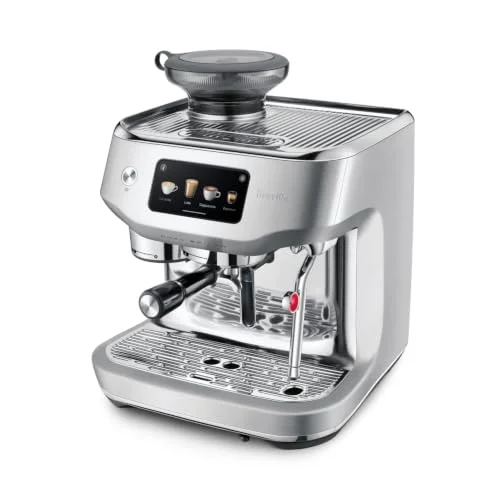
Breville Oracle Dual Boiler Espresso Machine
Built-in conical burr grinder, automatic dosing, motorized tamping, dual boiler, PID temperature control, manual steam wand. The pick if grinding, dosing and tamping are the part of the ritual you'd happily never think about again.
$2,999.95 Check price →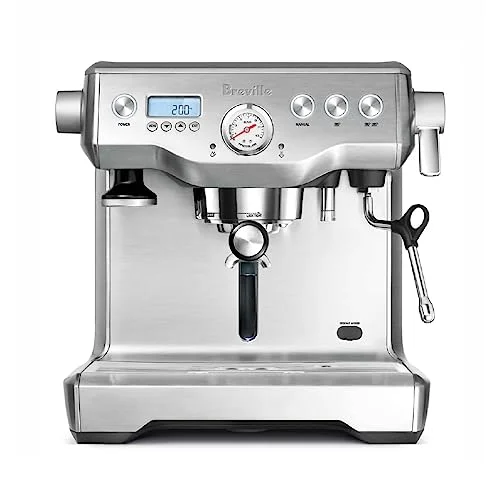
Breville BES920XL Dual Boiler Espresso Machine
Dual boiler, PID temperature control, manual steam wand — the same brewing foundation as the Oracle, with grinding, dosing and tamping left to you and whatever separate grinder you choose to pair with it. The pick if you already enjoy that part, or you'd rather put the $1,399.05 difference toward a serious standalone grinder instead.
$1,599.95 Check price →Repair and part costs: more automation, more that can need service
This is the part of the Oracle's premium that doesn't show up on the spec sheet but matters just as much as the convenience does. The BES920XL has two mechanical systems that can need service over its life: the brewing side and the steam side, both built around boilers, a pump and a group head — the same categories of wear that any serious semi-automatic eventually deals with.
The Oracle has those same two systems, plus a third: the grinder-doser-tamper assembly. A built-in grinder is a motor, a burr set and a hopper mechanism bolted to the same chassis as the brew group, and a motorized tamper is a moving part with its own actuator. More moving parts sharing one chassis generally means more total things that can eventually need attention, and when a grinder is integrated into the machine rather than sitting beside it, a grinder problem usually means the whole machine goes in for service rather than a single component getting swapped out.
That doesn't mean the Oracle is destined for more breakdowns than the BES920XL — we have no repair-frequency data for either model and won't pretend otherwise. It means the one with more automation also carries more surface area for something to eventually need a technician, and that risk is worth pricing in alongside the $1,399.05 up front, not treated as a footnote to it. If a machine ever needs grinder service, expect it to be down for coffee entirely during that repair, where a separate-grinder setup would let you keep brewing from pre-ground beans in the meantime.
Side by side
Prices are what we recorded while writing this.
| Machine | Automation | Boiler | Steam | Price | |
|---|---|---|---|---|---|
| Breville Oracle Dual Boiler | Auto grind, dose & tamp | Dual, PID | Manual wand | $2,999.95 | Price |
| Breville BES920XL Dual Boiler | Manual grind, dose & tamp | Dual, PID | Manual wand | $1,599.95 | Price |
Who the gap actually makes sense for
If this is nowhere near your budget to begin with, it's worth saying plainly: neither of these machines is where most people should start. Our guide to espresso machines between $250 and $350 covers the tier where a built-in grinder and a second boiler start showing up together for a fraction of either of these prices, and for a first machine that's usually the smarter place to learn on. Comparisons like our CASABREWS roundup and our Ninja roundup cover that same budget-conscious territory from different brand angles, in case either name is on your shortlist.
For buyers who are actually choosing between these two specific machines, the $1,399.05 makes sense in a narrow but real set of cases. It makes sense if you make multiple drinks back to back on a schedule — mornings before work, a household of two or three espresso drinkers — where shaving a repetitive manual step out of every single cup compounds into real time saved over months. It makes sense if consistency matters more to you than ritual: if you've found that your hand-tamped shots vary more than you'd like and you'd rather pay to remove that variable than practice it away. And it makes sense if you specifically dislike the grind-dose-tamp sequence rather than merely tolerating it — paying a premium to stop doing something you don't enjoy is a reasonable trade even when the dollar amount is large.
It makes much less sense if you're the kind of buyer who enjoys the manual, hand-worked part of espresso — dialing in a new bag of beans, adjusting dose and tamp pressure by feel — because that's precisely the part the Oracle takes away from you, and taking it away isn't an upgrade if you wanted to keep doing it. It also makes less sense if $1,399.05 would buy you a genuinely excellent standalone grinder to pair with the BES920XL instead, since you'd end up with two best-in-class pieces of equipment rather than one integrated unit, at a comparable total spend — the same logic we walk through on a pair of similarly priced prosumer dual boilers in Rancilio Silvia Pro X vs Diletta Alto. Either way, the one thing not worth doing is buying the Oracle purely to look serious about coffee and then grinding pre-ground beans out of habit — that wastes the entire premium you just paid for.
How we compared these
We compare published specifications, product class, what each machine includes out of the box and live pricing — we do not physically test these machines and we do not run a testing lab. Everything in the "what the Oracle still leaves to you" and "repair and part costs" sections above is a structural read on what each machine's design does and does not take off your plate, not a claim based on physical use of either unit. We show no star ratings and no review-derived sentiment anywhere on this page because Amazon's product data returns no verified rating or review count for either machine — inventing one, or paraphrasing reviews we haven't actually read, would be the same offense as making up a score, so we don't do either.
The general engineering facts here — what a dual boiler buys you over a single boiler, what PID control does that a thermostat doesn't, and the trade-off between integrated and standalone grinders — are standard background knowledge about espresso equipment rather than claims specific to these two products. Dollar figures and the price gap are computed directly from the prices listed above; where we round in the text ("roughly $1,400") we also give the precise figure so nothing is hidden behind a round number.
Frequently asked questions
Is the Breville Oracle just a Dual Boiler with a grinder bolted on?
Mechanically, yes, roughly — both machines share the same dual-boiler, PID-controlled brewing foundation. The Oracle adds a built-in conical burr grinder, automatic dosing into the portafilter, and a motorized tamper, which together replace the manual grind-dose-tamp sequence you perform by hand on the BES920XL. Everything downstream of that — brewing and steaming — works the same way on both.
Does the Oracle still require any manual skill?
Yes. You still load whole beans, choose and adjust the grind setting, lock in the portafilter and start the shot yourself, and both machines leave milk frothing entirely manual with a standard steam wand. The Oracle automates the grind-dose-tamp sequence specifically; it doesn't automate brewing, milk texturing, or the judgment calls around bean choice and grind adjustment.
Is the Oracle more expensive to maintain than the Dual Boiler?
It has one more mechanical system than the BES920XL — the integrated grinder, doser and tamper — in addition to the brewing and steaming systems both machines share. More moving parts sharing one chassis generally means more total surface area for something to eventually need service, and because the grinder is built in rather than separate, a grinder issue is more likely to take the whole machine out of service rather than a standalone accessory. We have no repair-frequency data for either specific machine.
Which one should I buy if the $1,399.05 price gap is the deciding factor?
If budget is the constraint, the BES920XL gets you the same dual-boiler, PID-controlled brewing foundation for $1,599.95, and you can put part of the difference toward a dedicated standalone grinder. If neither machine fits your budget at all, our guide to machines between $250 and $350 covers a tier where some of these features start appearing at a much lower price.