Quick answer
If you want the closest thing to a real espresso machine under $100, buy one with a stated pump and bar rating. The Chefman CraftBrew at $79.99 gets you a 15-bar pump, a digital panel and a steam wand in a stainless-and-black finish with a 1.5-liter reservoir. The AYCHIRO 20 Bar, also $79.99, matches it with a 20-bar pump, a pressure gauge you can watch while it brews, a steam wand, 1350W of heating power and a 37-oz tank. The AMZCHEF 20 Bar Home Espresso Coffee Machine at $89.99 is a third pump option with a larger 41-oz tank, though its listing states less about wand and wattage than the two below it — worth checking the current listing if milk drinks matter to you.
The Mr. Coffee 4-Shot Steam Espresso Maker at $54.99 and the IMUSA 4 Cup at $46.98 are the two cheapest machines here, and neither one's listing cites a bar rating or a pump — a real difference in how they brew, covered in detail below. They are not worse products for that; they are a different category of appliance sold under the same name.
Why there are no star ratings on this page
Amazon's product data returns no rating and no review count for any machine named in this guide, so we don't print one and we don't paraphrase review sentiment we can't verify. Every claim below traces back to what the product listing states, the price, or a general fact about how espresso brews that holds regardless of brand.
Things to know before you buy
- Under $100, "espresso machine" covers two different mechanisms: pump-driven, which can approach real brewing pressure, and steam-driven, which cannot. The difference changes what actually comes out of the spout.
- A bar number in the listing (15-bar, 20-bar) is the tell for a pump machine. Steam machines don't quote one, because there's no pump to rate.
- None of the five machines here include a grinder. Budget for correctly-ground espresso coffee, or a separate grinder, on top of the machine price.
- A steam wand at this price gives you hot, foamed milk, not necessarily silky microfoam — expect a learning curve on any of these, regardless of which one you buy.
- Every specification below comes from the product listing itself. Where a listing doesn't state something — wattage, dimensions, a milk accessory — we say so instead of guessing.
Why you should trust this guide
We do not physically test these machines and we do not run a testing lab. We compare what's published for each product — pump or steam mechanism, bar rating where one is stated, tank size, price and included accessories — against general, well-established facts about how espresso brews, and we say so explicitly whenever a listing leaves a detail unstated rather than filling the gap with a guess. Ilane Tall has covered the home-espresso category on this site since it launched, and this guide is built the way every guide here is: from listings and current prices, not from a taste panel we don't have. Our full buying guide covers machine classes generally; this page is specifically about what your money buys under $100.
Steam vs pump: how to tell them apart
Real espresso is brewed by forcing water through compressed, finely-ground coffee at roughly 9 bar of pressure — a fact of the method, not a marketing number, and one our guide to 9 bar covers in more depth. Getting anywhere near that pressure requires an electric pump, which is why every genuine espresso machine, cheap or expensive, is built around one.
A steam-driven machine skips the pump entirely. It heats water in a small boiler until steam pressure alone pushes it through the grounds, and steam pressure in a home appliance tops out far below 9 bar — enough to force water through coffee, not enough to do it the way an espresso machine does. What comes out is stronger than drip coffee, but it isn't espresso in the technical sense, and it won't build a proper crema (more on that next).
You can tell the two apart from the listing alone, without opening the box. A pump machine states a bar rating, because that number is the entire selling point: the AYCHIRO and AMZCHEF both cite 20 bar, and the Chefman CraftBrew cites a 15-bar pump specifically, not just a generic "bar" figure. A steam machine has nothing to gain by quoting a number that would be unimpressive, so it doesn't — the Mr. Coffee 4-Shot is named a "Steam Espresso" maker outright, and the IMUSA 4 Cup's listing states no bar rating and no pump at all, the same absence that marks every steam machine in this guide. If a listing under $100 doesn't mention bar pressure anywhere, assume steam until proven otherwise.
One caution in the other direction: a 20-bar number on the box is a pump's maximum rating, not the pressure that actually reaches the coffee puck during a shot. Both pump machines here reach that number on paper, but so does plenty of mediocre gear at every price point — the number tells you a pump exists, not that the machine is well engineered around it.
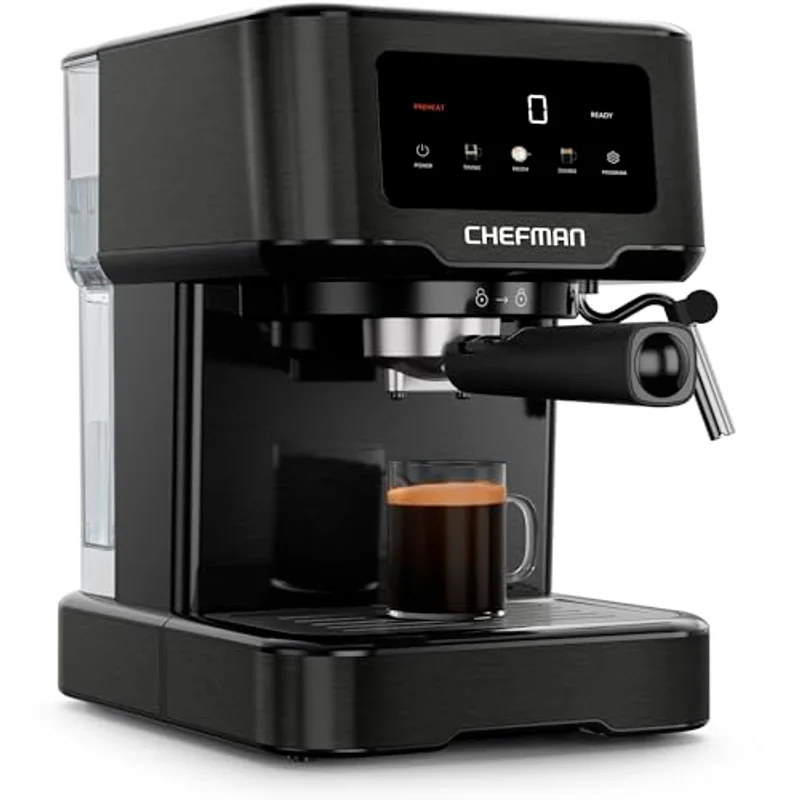
Chefman CraftBrew Espresso Machine
A 15-bar pump with a digital panel, a steam wand for latte and cappuccino, and a 1.5-liter removable water reservoir, in a compact stainless-and-black body. The clearest "real pump machine" in this price bracket.
$79.97 Check price →
What crema means on a machine this cheap
Crema is the reddish-brown foam that sits on top of a properly pulled shot — a mix of carbon dioxide and coffee oils emulsified by high pressure forcing its way through the grounds. It forms most reliably around 9 bar, which is exactly the pressure a steam-driven machine cannot reach. Any foam a steam machine produces on top of the cup is not crema in that technical sense; it's more likely to be from residual air or milk, not from oils pulled out of the coffee under pressure.
A pump machine rated at 15 or 20 bar can, in principle, generate real crema, because it has the mechanism crema depends on. Whether it actually does on a given shot depends on variables the bar number says nothing about — grind size, dose, tamp pressure, and how evenly the water distributes through the puck. None of the three pump machines here state a pre-infusion stage or a PID-held brew temperature, the two features that make crema more consistent on pricier machines. So expect real crema to be possible on the AYCHIRO, Chefman or AMZCHEF, but not guaranteed on every shot the way it would be on a machine built around getting that variable under control.
The practical takeaway: don't judge a sub-$100 pump machine by whether it produces café-quality crema on the first try. Judge it by whether it has the mechanism at all — and only three of the five machines here do.
The steam wand at this price
Two of the five machines explicitly list a steam wand: the AYCHIRO 20 Bar and the Chefman CraftBrew. Both let you steam and froth milk by hand, positioning the wand yourself and judging texture by feel rather than by an automatic sensor — a manual skill on every machine at this price, not a shortcoming specific to either one.
The AMZCHEF 20 Bar Home Espresso Coffee Machine is the one gap here: its listing states a 20-bar pump and a 41-oz tank, but doesn't mention a steam wand or any milk accessory. That's worth checking on the current listing before buying if lattes and cappuccinos are the point for you — we don't assert a feature the listing doesn't state, in either direction.
The Mr. Coffee 4-Shot Steam Espresso Maker takes a different approach entirely: it ships with a stainless steel frothing pitcher rather than a wand you aim yourself, which points to a separate steaming step using the machine's steam output rather than an integrated wand. The IMUSA 4 Cup's listing doesn't mention a frothing accessory or a wand at all, so if milk drinks matter, plan to check the listing directly rather than assume one is included.
None of the wands or accessories in this guide come with auto-purge, a temperature readout, or the kind of automatic microfoam control you'd find on a pricier machine. That's normal at this price and not a defect — it just means the technique is on you.
What breaks first
Sub-$100 espresso machines share a few structural weak points, and none of the five listings here state a filtration system or a built-in descaling alert, so assume you're responsible for tracking maintenance yourself on any of them.
The most common failure point across this price bracket is limescale inside a small boiler. A compact boiler heats and cools repeatedly through short brew cycles rather than holding a large reserve of hot water, and mineral buildup from tap water accelerates on exactly that kind of cycling. Our guide to water quality and descaling covers how often to run a descaling solution and why the water you use matters as much as the machine you buy.
Steam wands are the second common point of failure, because dried milk left inside the tip clogs the steam path — a problem on any machine with a wand, worse on cheaper ones without a self-purge cycle. A wand that stops frothing well is more often a cleaning issue than a hardware failure, and it's one of the dozen problems our troubleshooting guide walks through before you assume the machine needs replacing.
Plastic water reservoirs and drip trays are the third weak point on lighter, smaller-bodied machines — they crack or discolor faster than stainless components, though none of the five listings here specify housing material in enough detail to rank them on that point. Buying at this price means accepting a budget build, not accepting failure; regular descaling and a clean wand tip mostly decide which outcome you get.
The picks
Five machines under $100, ordered by how close each one gets to real espresso pressure. Every spec below comes from the product listing; where a listing doesn't state something, we've left it out rather than guessed.
01Best overall
Chefman CraftBrew Espresso Machine
The most complete pump machine under $100
15-bar pump · digital panel · steam wand · 1.5 L removable reservoir · stainless black
At $79.99 this is the fullest feature set in the bracket: a genuine 15-bar pump, a digital control panel, a steam wand for milk drinks, and a 1.5-liter removable reservoir — the largest stated tank of the three pump machines here. The stainless-and-black finish also reads less like a budget appliance than most of the field.
The trade-offNo grinder and no pre-infusion stage are stated, so consistency between shots depends entirely on how carefully you dose and tamp. Treat it as a starting point for learning technique, not a machine that compensates for skipping it.
02Best for visual feedback
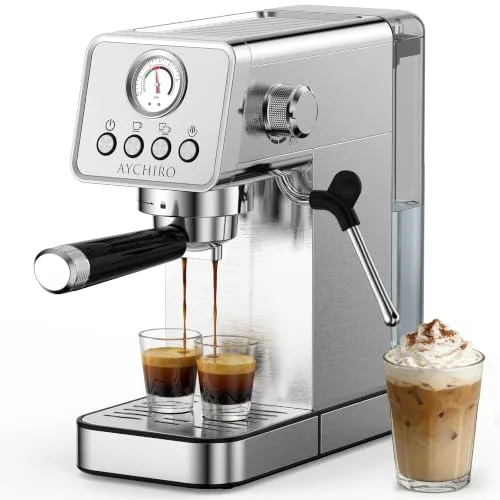
AYCHIRO 20 Bar Espresso Machine
Watch the pressure build instead of guessing
20-bar pump · pressure gauge · semi-automatic · steam wand · 1350 W · 37 oz tank
The pressure gauge is the differentiator: instead of trusting a spec sheet, you can watch the needle move while the shot pulls, which is a useful sanity check when you're still learning to judge a shot by taste alone. 1350W of heating power is the highest stated wattage of the five machines here, and the 37-oz removable tank is sized for more than one round without a refill.
The trade-offA pressure gauge tells you the pump is working, not that your grind and dose are correct — it's a diagnostic tool, not a shortcut to a better shot. It's also a newer, less established brand than the household names in this category.
03Largest tank
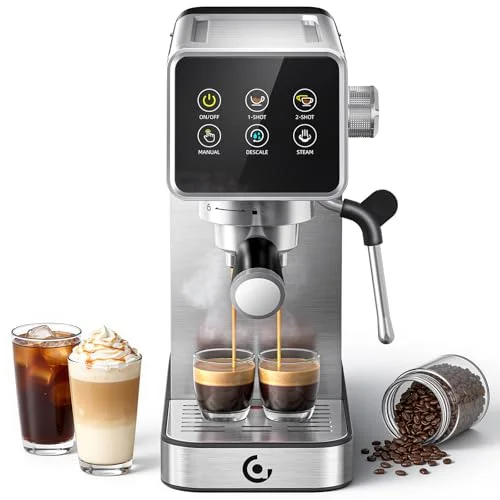
AMZCHEF 20 Bar Home Espresso Coffee Machine
More pump, less on the spec sheet
20-bar pump · 41 oz tank
A 20-bar pump and a 41-oz tank — the largest stated capacity of the three pump machines — at $89.99. It's a legitimate pump machine on the numbers it does publish, and the biggest tank means fewer refills if you're making more than one drink at a time.
The trade-offThis is the most expensive machine in the guide, yet its listing says the least: no steam wand, no wattage, and no accessories are stated one way or the other. Check the current listing directly before buying if any of those matter to you — we won't assert a feature that isn't in the listing.
04Steam-driven, with milk gear
Mr. Coffee 4-Shot Steam Espresso Maker
A steam machine that at least ships with a frothing pitcher
Steam-driven · 4-shot capacity · stainless steel frothing pitcher included
Named a "Steam Espresso" maker in its own listing, so there's no ambiguity about the mechanism: this builds pressure from boiler steam, not a pump. What sets it apart from the cheaper IMUSA below is the included stainless steel frothing pitcher, a real accessory for milk drinks rather than nothing at all.
The trade-offNo bar rating is stated because there's no pump — what comes out will be stronger than drip coffee but won't reach real espresso pressure or build genuine crema. Buy this for a strong milky drink at a low price, not for a shot that behaves like café espresso.
05Floor price
IMUSA 4 Cup Electric Espresso Cappuccino Coffee Maker
The cheapest way into this category, full stop
Steam-type · 4 Cup · no bar rating stated
At $46.98 this is the absolute floor of the category — no bar rating, no pump, and no milk accessory stated anywhere in the listing, the same pattern shared by every steam machine in this guide. What you get is a simple, compact way to make a strong, hot, espresso-style drink for less than the cost of a week of café coffee.
The trade-offThis is the least documented listing of the five: no wattage, no dimensions, and nothing on milk frothing. Treat it as an entry point to find out if the habit sticks, not a machine to build a coffee routine around.
How the five compare
Same five machines, side by side. Prices are what each listing states — confirm the live price before buying.
| Machine | Mechanism | Milk | Tank | Price | |
|---|
 Chefman CraftBrew Chefman CraftBrew | 15-bar pump | Steam wand | 1.5 L | $79.97 | Price |
 AYCHIRO 20 Bar AYCHIRO 20 Bar | 20-bar pump | Steam wand | 37 oz | $79.99 | Price |
 AMZCHEF 20 Bar AMZCHEF 20 Bar | 20-bar pump | Not stated | 41 oz | $89.99 | Price |
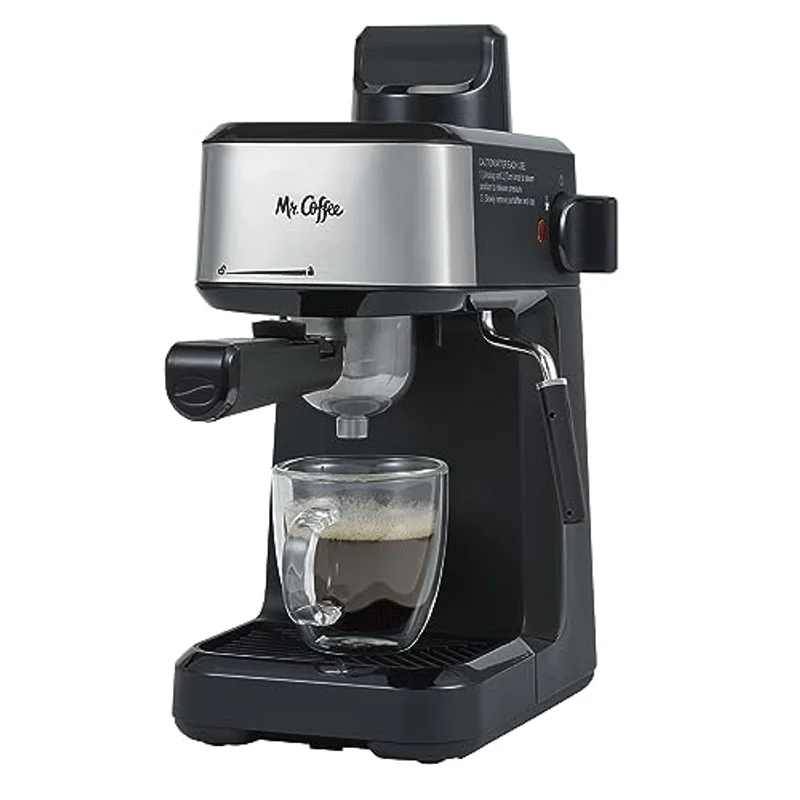 Mr. Coffee 4-Shot Mr. Coffee 4-Shot | Steam-driven | Frothing pitcher | Not stated | $54.99 | Price |
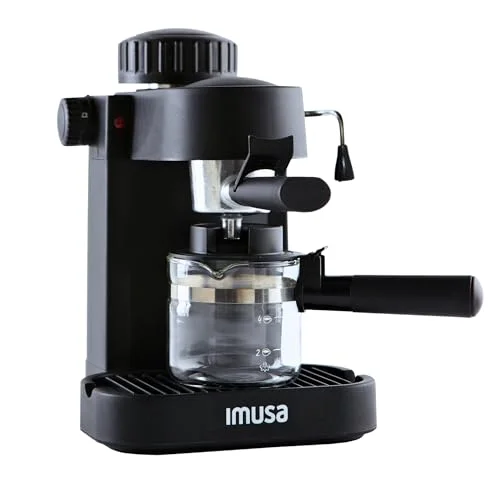 IMUSA 4 Cup IMUSA 4 Cup | Steam-type | Not stated | Not stated | $46.98 | Price |
When to spend $80 more instead
Adding roughly $80 to the top of this bracket — landing somewhere around $170 to $180 total — moves you into a different tier of machine, and it's worth knowing what that jump actually buys before you decide to stay under $100.
The main thing that extra money unlocks is precision you can't get here: pre-infusion stages that wet the coffee bed gently before full pressure hits it, brew-temperature control instead of a single fixed setting, or a built-in grinder so pre-ground coffee stops being a variable at all. None of the five machines in this guide offer any of those — every one of them is a fixed-temperature machine you dose and tamp by hand, with results that depend entirely on your own technique. Our guide to machines with built-in grinders covers what that next tier looks like once a grinder is part of the price.
The honest case for staying under $100 is that you don't yet know if the habit will stick. A $79.99 pump machine and a pricier one both ask you to learn the same skill — dosing, tamping, judging a shot by sight and taste — and neither does that learning for you. If you're testing the waters, the Chefman or AYCHIRO gets you a real pump to practice on for far less than finding out you don't like the routine on a $200 machine. If you already know you'll keep making espresso every morning, the extra $80 buys real headroom instead of more of the same fixed-temperature, no-pre-infusion experience you'd get here. Our guide for espresso machines for beginners covers that decision from the other direction — forgiving machines built for the learning curve rather than a bare-minimum price.
One route to skip: if espresso specifically is the goal, don't buy a $65 steam machine as a "trial" and plan to upgrade later. A steam machine can't produce what a pump machine produces no matter how well you dial it in, so the trial only tells you whether you like strong, steam-brewed coffee — a different question. If budget forces a choice, the $79.99 pump machines here answer the real question better than a cheaper steam machine does.
How we compared
We compare what's published in each listing — pump or steam mechanism, bar rating where one is stated, included accessories, tank size and price — against general, well-established facts about how espresso brews, and we read marketing language skeptically: a 20-bar figure describes a pump's maximum rating, not the roughly 9 bar that actually reaches the coffee. We do not physically test these machines, we do not run a testing lab, and we do not publish ratings we cannot verify: Amazon's product data returns no rating and no review count for any machine named here, so there are no stars and no invented scores anywhere on this page. Where a claim is a judgment rather than a specification — that the Chefman is the most complete machine here, that a steam machine is a poor trial for whether you'll like real espresso — we've said so in our own voice and shown the reasoning, so you can weigh it yourself rather than take our word for it.
Frequently Asked Questions
Is an espresso machine under $100 actually espresso?
Only if it has a pump. Real espresso is brewed at roughly 9 bar of pressure, which requires an electric pump — the Chefman CraftBrew, AYCHIRO 20 Bar and AMZCHEF 20 Bar here all have one. The Mr. Coffee 4-Shot and IMUSA 4 Cup are steam-driven, meaning boiler steam alone pushes the water through, at pressure far below what a pump reaches. What comes out is stronger than drip coffee but isn't espresso in the technical sense.
What is the difference between a steam machine and a pump machine?
A pump machine uses an electric pump to force water through the coffee at high pressure, close to the roughly 9 bar that real espresso needs, and a listing with a stated bar rating (15-bar, 20-bar) is how you spot one. A steam machine has no pump; it relies on steam pressure building in a small boiler, which tops out well below espresso pressure and won't build genuine crema. Neither the Mr. Coffee 4-Shot nor the IMUSA 4 Cup states a bar rating, which is consistent with both being steam-driven.
Do any of these machines include a grinder?
No. None of the five machines in this guide list a built-in grinder, so budget for pre-ground espresso coffee that's correctly milled for the brew method, or a separate grinder, on top of whichever machine you buy. Our guide to machines with built-in grinders covers the next price tier up, where that feature starts to appear.
Will the steam wand on a cheap espresso machine actually froth milk well?
It will froth milk, but expect to do the work yourself — none of the wands or accessories in this guide have automatic temperature control or microfoam sensors, so texture depends on your technique regardless of which machine you buy. The AYCHIRO and Chefman both state a steam wand; the Mr. Coffee ships with a stainless steel frothing pitcher instead, a different method for the same goal. The AMZCHEF and IMUSA listings don't mention a milk accessory at all, so check the current listing before assuming one is included.
Keep reading