Why Your Espresso Tastes Bitter (and How to Fix It)
Bitterness is usually over-extraction, and over-extraction is usually one of four things: a grind that's too fine, water that's too hot, a dose that's too small, or a shot that's allowed to run too long. Here's how to find which one is yours and fix it in a single test bag of beans.
Reader-supported: we may earn a commission if you buy through our links, at no extra cost to you. Prices are the ones we recorded in late August 2026 and they move constantly — confirm the live price before buying.
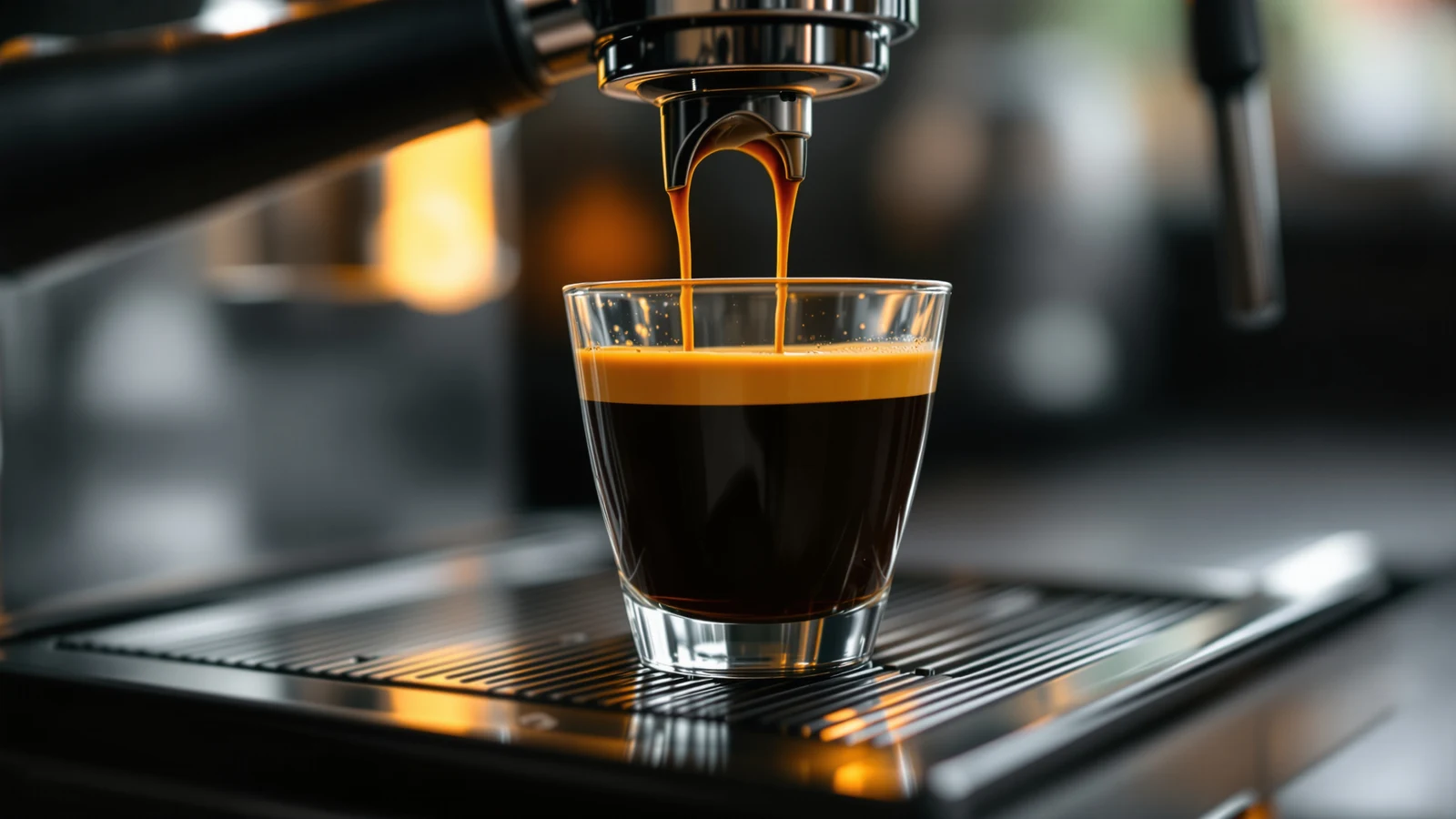
Bitter, sour, and what each one tells you
Espresso extraction is a race against time and surface area. Hot water forces its way through a compressed bed of ground coffee in roughly 25 to 30 seconds, and what dissolves out, in what order, is not random. The pleasant compounds — sugars, fruit acids, most of the aromatics — dissolve first and fastest. The harsh compounds, mainly the chlorogenic acid lactones and phenolic compounds that read as bitter and astringent, need more contact time or more heat to come out in volume.
That ordering is why the two failure modes are opposites. Pull a shot too fast — water finds the path of least resistance through a bed that's too coarse, too loosely packed, or too small a dose — and it stops before the sugars and acids have balanced each other out. You get something sour, thin and salty-sharp: under-extraction.
Pull a shot too slow, or too hot, or through a bed packed too fine, and the water keeps dissolving well past the point where the good compounds are already out. It starts pulling the harsh ones in volume: over-extraction, which reads as bitter, dry, and often accompanied by a burnt or ashy note that has nothing to do with the roast.
Both failures can look similar at first sip — "this tastes bad" — which is why the fix is so often wrong. Someone tastes bitterness, assumes the roast is over-done or the beans are stale, and buys a different bag. The new bag tastes bitter too, because the machine and the grind didn't change. Bitterness is a process problem before it's ever a bean problem, and it's usually one of four specific things: grind, heat, dose or time. The rest of this guide goes through each in the order we'd check them, then gives you a single ten-minute test to confirm which one is yours.
One honest caveat up front: taste is personal, and a small amount of bitterness is simply what a darker roast tastes like. This guide is about the bitterness that shows up as a sudden change, or that never seems to go away no matter which beans you buy — the signature of a process problem, not a roast preference.
Grind too fine: the most common cause
Grind size is the single biggest lever on extraction, because it controls both the contact time and the surface area at once. A finer grind packs more particles into the same volume, creates more surface area for water to dissolve compounds from, and simultaneously restricts the paths water can take through the bed — so the shot runs slower for a fixed dose. Fine and slow reinforce each other, which is exactly why a too-fine grind is the fastest route to bitter, over-extracted espresso.
This is also the most common cause because it's the easiest mistake to make without noticing. Grinders drift out of calibration, humidity changes how beans fracture, and a fresh bag from a different roaster can need a noticeably different setting than the last one — even at what looks like the same dial number. If a shot that used to taste fine suddenly turns bitter and starts dripping in slow motion rather than flowing, grind is the first thing to check, not the beans.
The tell is timing, not taste alone: a double shot that should land around 25-30 seconds but is instead dribbling out over 45 seconds to a minute is almost always ground too fine. Coarsen the grind one or two clicks, keep everything else the same, and taste again before touching anything else. This is also where pre-ground coffee fails completely — it's milled to one fixed size meant to work across every brew method, which for espresso is both too coarse to be right and impossible to adjust when it isn't. If you're grinding straight into the basket, a built-in burr grinder with a wide range of settings gives you the room to correct this in small enough steps that you don't overshoot into sour territory instead.
The XIXUBX Espresso Machine with Grinder is built around exactly this correction: it pairs a built-in grinder with PID temperature control and programmable settings, so grind and heat can each be dialed independently rather than fighting each other. See it in the picks section below.
Water too hot, and the machines that run hot
Temperature accelerates extraction the same way it accelerates most chemical reactions: hotter water dissolves compounds faster and in a different order, pulling more of the bitter, harsh fraction out of the grounds in the same amount of time. Espresso is typically brewed with water in roughly the 195-205°F range at the puck, and machines without steady electronic temperature control tend to run toward the hot end of that band, or overshoot it during a session, rather than sitting in the middle of it.
Machine class matters here more than most buying guides admit. A boiler that's simply switched on and left to heat has no way to hold a set temperature once it's reached — it can keep climbing, especially on a second or third shot pulled back-to-back. A machine with electronic temperature control (commonly marketed as PID) reads the actual water temperature and holds it at a target instead, which is the more reliable way to keep a shot from running hot regardless of how many drinks you've already pulled that morning.
You cannot see water temperature, so the practical tell is indirect: bitterness that gets worse on the second or third shot of a session, when a simple thermostat-controlled boiler has had time to creep past where it started, points at heat rather than grind. If coarsening the grind by a click or two doesn't fix it, or the bitterness only shows up later in a session, temperature control — not grind — is the more likely lever.
Our companion guide on PID temperature control goes through what that electronics actually does to a shot and which machines carry it; the short version is that a machine which holds temperature rather than merely reaching it removes one entire variable from your troubleshooting.
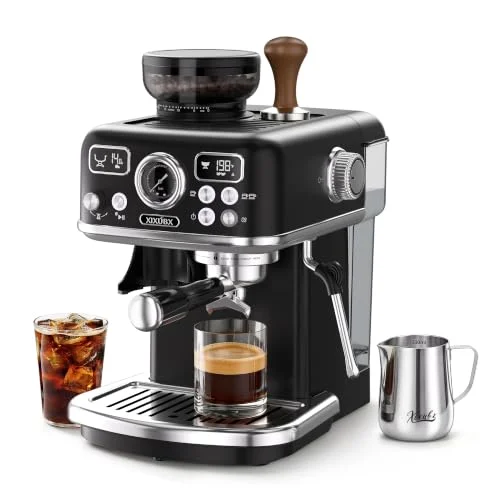
XIXUBX Espresso Machine with Grinder
Built-in grinder paired with PID temperature control and programmable settings — the combination that lets you correct grind and heat independently instead of guessing which one moved. 12.61"D x 9.5"W x 14.34"H.
$169.99 Check price →Dose and time: the two numbers to change first
Grind and heat get most of the attention, but dose and time are the two numbers you can change in seconds without touching a single setting on the machine, which is why we'd check them before anything mechanical.
Dose is the dry weight of coffee in the basket. A double shot conventionally starts around 18 grams in for about 36 grams of liquid out — a 1:2 ratio — and that dry weight has to be right for the basket it's sitting in. Too little coffee in a basket sized for more, and water channels through thin spots in the bed almost immediately, over-extracting the little coffee that's there while still tasting thin. This is a subtler cause of bitterness than a fine grind, because it feels counterintuitive: less coffee, not more grind, produced the bitter cup. Weighing the dose, even with an inexpensive kitchen scale, removes the guesswork.
Time is simply how long water is in contact with the grounds, and it's the variable most people never think to shorten deliberately. If a shot tastes bitter and the grind and dose both look right, stopping the shot a few seconds earlier — pulling a 25-second shot instead of a 32-second one — is a legitimate, immediate fix rather than a workaround. A shot-timer or a machine with programmable shot volume takes the guesswork out of this, because "stop it a bit earlier" is hard to repeat by eye and easy to repeat by a number on a display.
The order to check these in, practically: dose first (weigh it, don't eyeball it), then time (watch the clock, not just the cup), then grind, then temperature. Dose and time are free and instant to correct; grind takes a few pulls to dial in; temperature usually means living with what the machine gives you, or buying a machine that controls it.
The picks that make correction easy
Not every machine makes these corrections equally easy. The three below each remove one common obstacle to fixing bitterness — a fixed grind, no control over shot volume, or a fixed, unmanaged boiler temperature — which is why we keep coming back to them in this context rather than because they're the cheapest or most powerful machines we track.
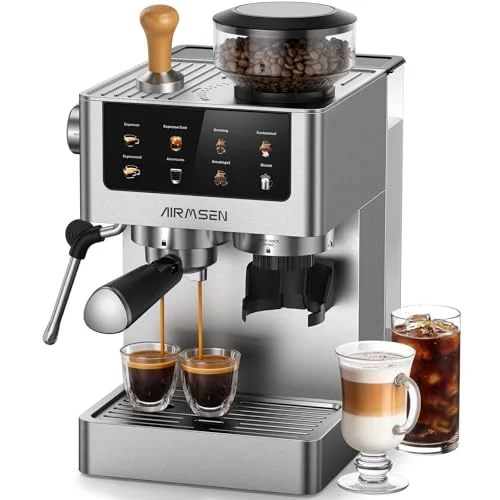
AIRMSEN Espresso Machine with Burr Grinder
A built-in burr grinder plus a milk frother steam wand in one stainless body, at $179.99. The grinder gives you the adjustment range to walk a fine, choked shot back toward balance in small steps, rather than jumping between two coarse presets.
$179.99 Check price →XIXUBX Espresso Machine with Grinder
PID temperature control plus programmable settings, at $179.99. This is the pick for anyone whose bitterness gets worse a shot or two into a session — the sign a simple thermostat boiler is the culprit, not the grind.
$169.99 Check price →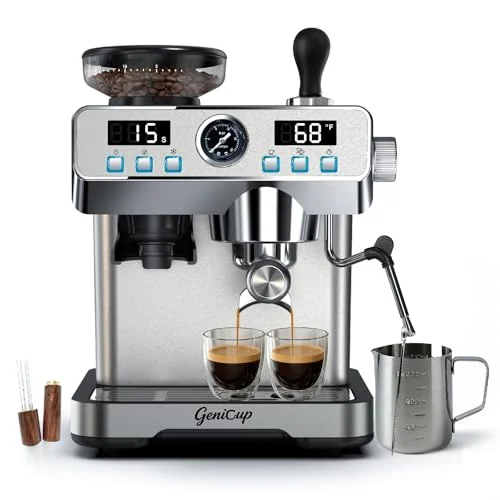
GeniCup Espresso Machine with Grinder
A built-in grinder and a 68oz water tank at $179.99, sized for a household running the ten-minute dial-in routine below more than once without refilling between test shots.
$179.99 Check price →None of these three publish a rating or review count we can verify, so we're not going to invent one. If you want the fuller field of built-in-grinder machines beyond these three, our roundup of the best espresso machines with built-in grinders compares more of them side by side. And if a capsule machine's fixed grind and dose sound simpler than any of this, our espresso machine versus pod machine comparison covers that trade-off directly.
A ten-minute routine to dial in a new bag
Every new bag of beans needs this, and skipping it is the single most common reason a new bag tastes wrong for a week before someone gives up on it. Roast, origin and even the time since roasting all change how a bean fractures and how fast it extracts, so a grind setting that was correct for the last bag is only a starting point for this one, not a guarantee.
Weigh a dose. Start at 18 grams for a double shot in a standard double basket — check your basket's stated capacity if it isn't a standard 18-gram double, since an over- or under-filled basket will channel water unevenly regardless of grind. Use a kitchen scale if you don't have a dedicated coffee scale; the precision needed here is a gram, not a tenth of a gram.
Tamp level, lock in, and start the timer the moment you start the pump. Let it run to 36 grams of liquid out — roughly double the dry dose — and stop there rather than at a fixed time, since weight-in to weight-out is the ratio that actually matters.
Taste, then adjust exactly one variable. If it's bitter and the shot ran fast (under 20 seconds), that's a sign of channeling rather than a plain over-extraction and worth re-tamping before you touch the grind. If it's bitter and the shot ran on time or slow (25-35 seconds and dry, ashy tasting), coarsen the grind one click. If it's sour and thin, and the shot ran fast, go finer one click. Change one thing, pull one more shot, taste again. Two or three shots in, most beds settle into a repeatable range — write the setting down, because you'll be back here with the next bag.
If you've moved the grind two full clicks each direction and nothing tastes balanced, stop adjusting grind and check dose and basket level instead — a grinder rarely needs more than two or three clicks of correction for a new bag, and chasing it further usually means the actual problem is somewhere else in the routine.
Other causes worth ruling out
Grind, heat, dose and time cover the large majority of bitter shots, but three other things are worth a quick check before you conclude the machine or the beans are at fault.
Old or oily beans. Coffee oils that have migrated to the surface of very dark-roasted or aged beans can taste harsh and bitter on their own, independent of extraction. If the bag is more than a few weeks past its roast date, or the beans look visibly oily, that's a beans problem, not a technique problem — the fix is a fresher bag, not a grind change.
Limescale. Mineral buildup inside a boiler changes how heat transfers to the water and can leave a chalky, bitter aftertaste that's easy to mistake for over-extraction. Descaling frequency depends on your water hardness and the manufacturer's schedule — worth ruling out if bitterness has crept in gradually over months rather than appearing suddenly.
Basket mismatch. A dose sized for a 54mm basket poured into a 58mm one behaves like an under-dosed shot even if the gram weight looks right, because the bed depth and surface area are both wrong for that weight. Our guide to portafilter and basket sizes covers which dose ranges actually suit 51mm, 54mm and 58mm baskets.
One thing not to do
Don't chase bitterness by switching beans repeatedly. If the machine is running hot, or the grind is too fine, the next bag will taste bitter too — you'll just have spent more money finding that out. Fix the process first with one bag, then decide whether a different bean is what you actually want.
How we compared these
We compare published specifications, what ships in the box, machine class and live pricing, and we read manufacturer claims sceptically — a "20 bar" pump rating describes the pump's maximum, not the roughly 9 bar of pressure at the coffee puck, a distinction our guide to 9-bar pressure goes through in full. We do not physically test these machines, we do not run a testing lab, and we do not publish ratings we cannot verify: none of the three machines named here carry a published rating or review count we can confirm, so there are no stars and no invented scores on this page.
The extraction chemistry described above — which compounds dissolve first, how grind size and temperature change the rate, the standard 18g-in/36g-out ratio — is standard, widely published coffee-science background rather than a claim about any specific product. Anything we say about a named machine is drawn from its published specification sheet or listing, never from physical use of the unit.
Frequently asked questions
Why does my espresso suddenly taste bitter when it didn't before?
A sudden change almost always means one variable moved: a new bag of beans that needs a different grind setting, a grinder that's drifted out of calibration, or a boiler that's started running hotter than it used to. It's rarely the machine "getting worse" on its own. Start by coarsening the grind one click and timing the shot — if it's running slower than 30 seconds for a double, that's your answer.
Is bitter espresso always over-extracted?
Mostly, but not always. Very dark-roasted or aged beans can carry a harsh, bitter surface-oil taste independent of how they're pulled, and limescale buildup in a boiler can leave a chalky bitterness that mimics over-extraction. If correcting grind, dose and shot time doesn't help, check the bean's roast date and the machine's descaling schedule next.
Should I fix grind or water temperature first?
Check dose and shot time first, since both take seconds to verify with a scale and a timer and cost nothing to adjust. If those look right, adjust grind next — it's the single biggest lever and the most common cause. Only look at water temperature if bitterness gets worse specifically on the second or third shot of a session, which points at a boiler that isn't holding its temperature rather than a grind problem.
What's the ideal ratio of coffee to water for espresso?
A standard starting point is 18 grams of dry coffee for about 36 grams of liquid espresso out — a 1:2 ratio — pulled in roughly 25 to 30 seconds. That's a starting point to adjust from, not a fixed rule: your basket's stated capacity and your taste preference both shift it.
Our top picks for fixing bitterness
XIXUBX with Grinder
PID temperature control isolates heat as a variable. $179.99.
AIRMSEN with Burr Grinder
Adjustable burr grinder for fine grind correction. $179.99.
GeniCup with Grinder
68oz tank for repeated dial-in test shots. $179.99.