Portafilter and Basket Sizes: 51mm, 54mm, 58mm
The diameter stamped inside your portafilter never appears on the front of the box, and it decides which baskets, tampers and distributors fit that machine for as long as you own it. Get it wrong once and every accessory you buy afterward is a gamble.
Reader-supported: we may earn a commission if you buy through our links, at no extra cost to you. Prices are the ones we recorded between August 31 and September 5, 2026 and they move constantly — confirm the live price before buying.
The short answer
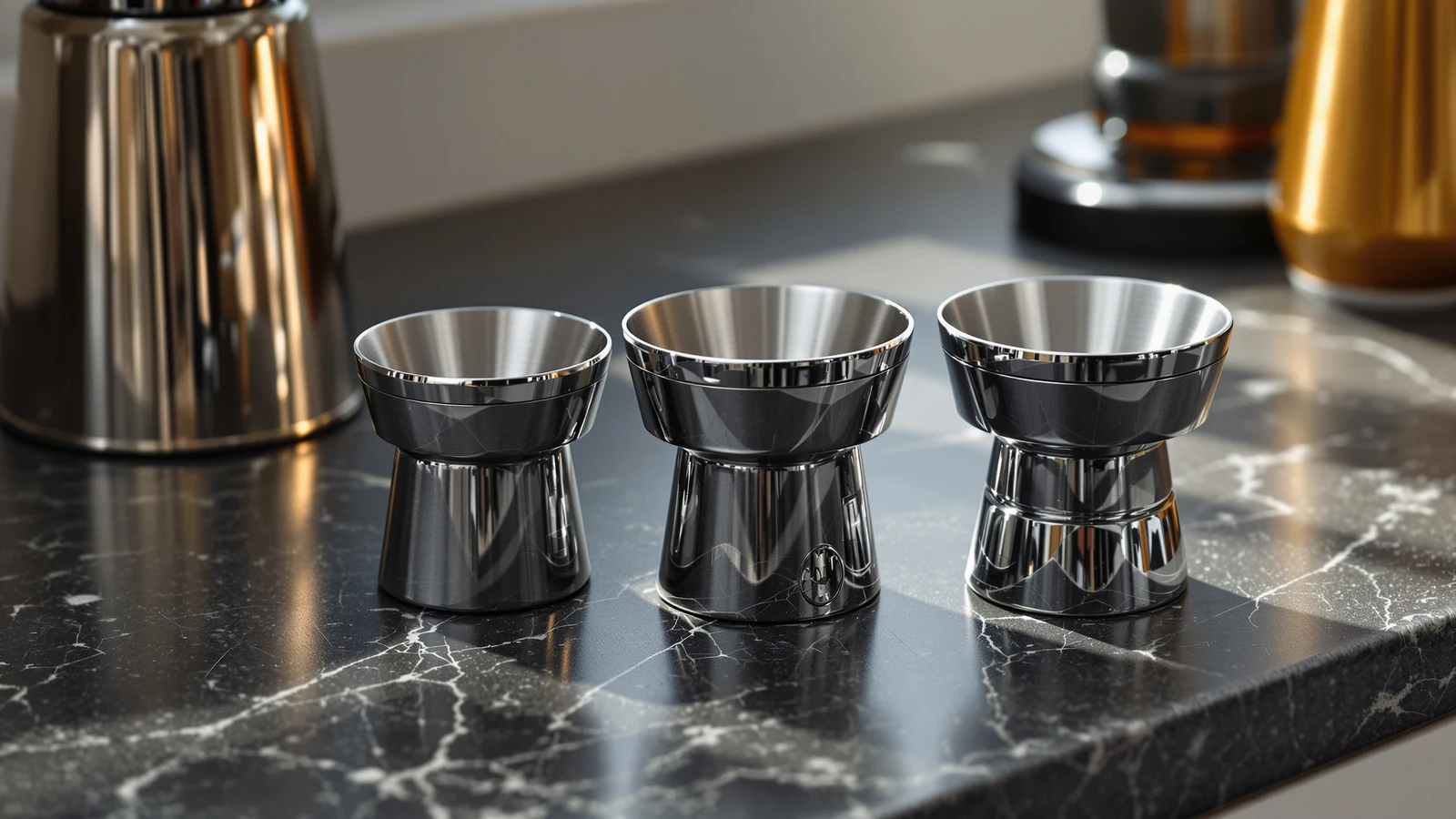
Portafilter diameter is a fixed dimension set by the machine, not a preference you get to make later. Home machines cluster around three sizes — roughly 51mm, 54mm and 58mm — and every basket, tamper and distributor tool you buy afterward has to match that number exactly, because a tamper or basket sized for one diameter simply will not seat in a different one.
The practical takeaway: before you buy a tamper, a bottomless portafilter, a precision basket or a distribution tool, find the portafilter diameter for your specific machine and buy to that number. The manufacturer's listing or manual is the only reliable source — the size is not something you can estimate by eye from a product photo.
What the diameter actually changes about the puck
Espresso is brewed by forcing water at roughly 9 bar through a compressed bed of ground coffee, and the portafilter basket is the container that shapes that bed. Diameter sets the surface area the water has to pass through, and surface area is what everything else in the recipe is built around.
A wider basket at the same dose spreads the coffee into a thinner puck; a narrower basket at the same dose stacks it taller. Puck height and puck density both affect how evenly water distributes through the bed, which is why baskets are typically labeled with a dose range rather than a single number — an 18-gram dose behaves differently in a 51mm basket than it does in a 58mm one, and recipes that assume one diameter do not transfer cleanly to another.
This is also why the diameter is fixed rather than adjustable. The portafilter's metal collar, the group head it locks into, and the basket's rim are all machined to one dimension. There is no version of "make the basket a bit bigger" on an existing machine — the basket, the portafilter, and the group head are one matched system.
51mm, 54mm and 58mm: who uses which
Home and semi-commercial espresso machines are not standardized on a single portafilter diameter, and the size a given machine uses generally tracks its size class and price tier.
51mm shows up on compact, budget-oriented machines, where a smaller group head keeps the whole unit narrower and lighter. The CASABREWS 3700 Essential is a machine in this compact class — at 12.6 by 5.7 by 12.2 inches it is built around a small footprint, and machines this size are the ones most likely to use a narrower portafilter. We have not been given a portafilter diameter figure for this specific unit, so if you plan to buy replacement baskets or a bottomless portafilter for it, confirm the exact number from the manufacturer's listing rather than assuming 51mm.
54mm is the size most associated with prosumer semi-automatic machines in the Breville line. It sits in the middle: large enough to hold a proper 18-to-22-gram double-shot dose without stacking it too tall, small enough to keep the machine's group head compact. It is common enough in this tier that a wide range of third-party baskets, bottomless portafilters and tampers are made specifically to fit it.
58mm is the diameter associated with commercial and commercial-style espresso equipment, and it is the size most widely supported by third-party accessory makers, because it has been a de facto commercial standard for decades. A 58mm portafilter gives you the widest bed at a given dose of the three sizes, which some baristas prefer for even extraction at higher doses, and the accessory market for 58mm — precision baskets, bottomless portafilters, calibrated tampers, distribution tools — is the deepest of the three.
None of the four machines in our database that we cover below have a manufacturer-confirmed portafilter diameter in our records beyond the general size-class pattern above. Where we reference a diameter for a specific unit in this article, we are stating it because it is publicly documented for that model; where we are not certain, we say so rather than guess.
A note on what we can confirm
Our product database does not carry a verified portafilter-diameter field for every machine we track, and Amazon's own product data is inconsistent about listing it. Where we know a number with confidence we state it; where we do not, we tell you to check the listing or manual rather than publish a guess. Getting this wrong is exactly the mistake this article exists to prevent.
Pressurized versus non-pressurized baskets
Independent of diameter, every portafilter basket is built one of two ways, and the difference matters as much as the size itself.
A pressurized basket (sometimes called a crema-enhancer or dual-wall basket) has a second perforated plate inside the basket, below the visible holes, with only one or two small exit holes. That inner plate restricts flow and builds back-pressure inside the basket regardless of how fine or coarse the grind is, which is what lets an inexperienced user pull a passable-looking shot with pre-ground coffee and an inconsistent tamp. It compensates for grind and dose mistakes by forcing the pressure mechanically.
A non-pressurized basket (single-wall) is just a perforated cup with no internal restrictor. All of the resistance the water meets has to come from the coffee bed itself — the grind size, the dose and the tamp. This is the basket type used in essentially all commercial equipment and by anyone dialling in shots deliberately, because it gives you an honest read on whether your grind and dose are correct. A pressurized basket will mask a bad grind; a non-pressurized one will not.
Entry machines with a built-in steam wand and no grinder, like the CASABREWS 3700 Essential at $99.99, commonly ship with a pressurized basket in the box precisely because they are aimed at first-time buyers who may start with pre-ground coffee. That is a sensible default for the box contents — it is not a reason to stay on pressurized baskets once you own a grinder and want to dial in a real shot. Swapping to a non-pressurized basket of the correct diameter is one of the cheapest upgrades available on a compact machine, provided you buy the basket in the portafilter's actual diameter.
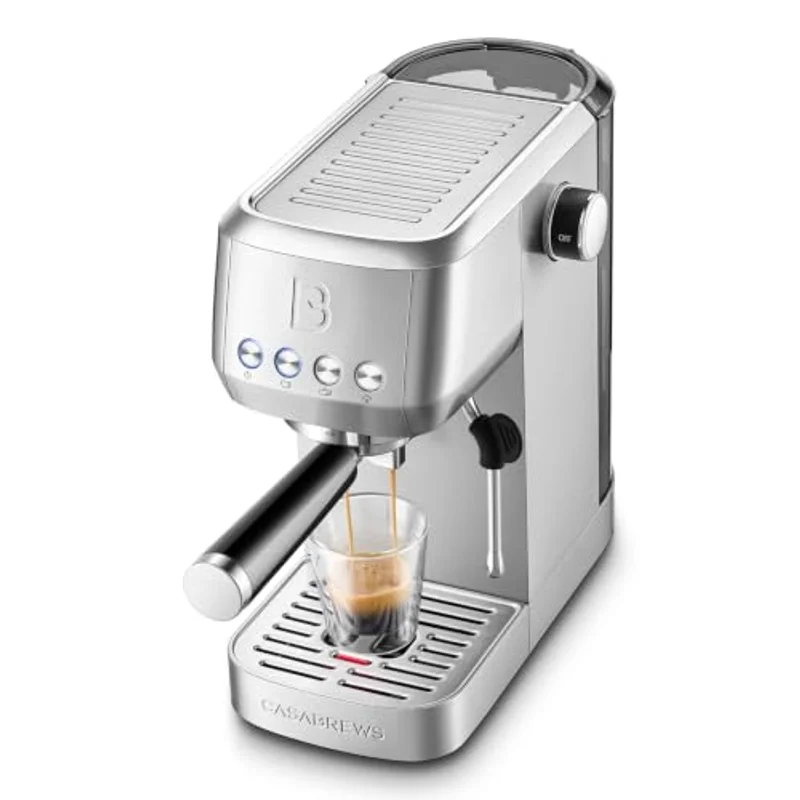
CASABREWS 3700 Essential
Stainless steel semi-automatic with steam wand, 12.6 by 5.7 by 12.2 inches. A compact-class machine — the class of unit most likely to use a narrower portafilter and a pressurized starter basket. Confirm the exact portafilter diameter from the listing before buying replacement baskets.
$99.99 Check price →Tampers, distributors, and what will not fit later
Once you know your portafilter's diameter, three categories of accessory are sold against that exact number, and getting any one of them wrong wastes the purchase.
Tampers are metal or plastic discs sized a millimeter or two under the basket's inner diameter, so the disc presses the coffee bed evenly without scraping the basket wall. A tamper bought for a 58mm basket will not seat correctly in a 54mm or 51mm basket — it will either not fit past the rim or leave an uneven ring of ungrounded coffee at the edge. Tampers are sold explicitly by diameter for this reason, and the number on the tamper's packaging has to match the basket, not the machine model name.
Distribution tools — the flat rotating discs used to level grounds before tamping — work the same way: they are machined to sit just inside a specific basket diameter and spin flush against the basket wall to even out the grounds. A distributor built for one diameter will rattle loosely or jam against the rim in another.
Bottomless (naked) portafilters, which let you watch the shot extract from underneath to diagnose channeling, are sold as a whole replacement portafilter unit matched to one machine's group-head diameter and thread pattern. This is the accessory where getting the size wrong is most expensive, because you are not just buying a basket-sized part — you are buying a part that has to physically lock into your specific machine's group head.
The pattern across all three: basket diameter is the number that governs the accessory market, and it is fixed the moment you choose a machine. A grinder upgrade, a better tamper, a bottomless portafilter — all of it is downstream of the diameter decision you made, often without realizing it, on day one. Our built-in versus separate grinder guide covers the other half of the accessory-compatibility question; portafilter diameter is the piece that guide does not.
The picks, by portafilter size
We are not aware of a single home machine on the market at every price point with a manufacturer-confirmed 58mm portafilter — that diameter is mostly the domain of dedicated prosumer and commercial-style units. Within the machines in our database, here is what we can say with the confidence our records support.
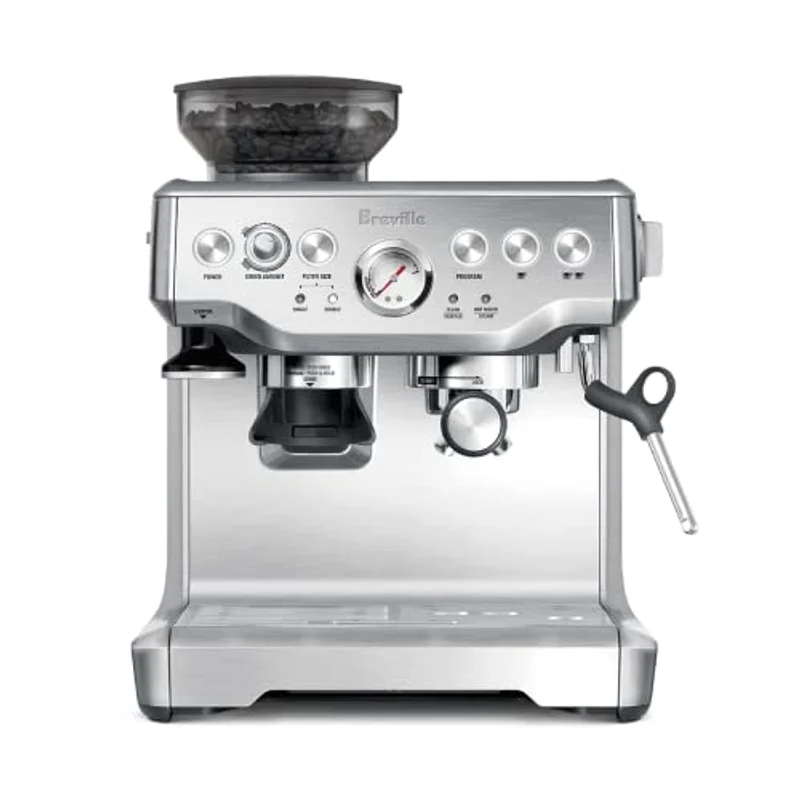
Breville BES870XL Barista Express
Semi-automatic with a built-in conical burr grinder and a 54 mm stainless portafilter — the size class that anchors most of the third-party 54mm basket, bottomless-portafilter and tamper market aimed at Breville prosumer machines. Ships with a razor dose-trimming tool and both single and dual-wall baskets.
$699.95 Check price →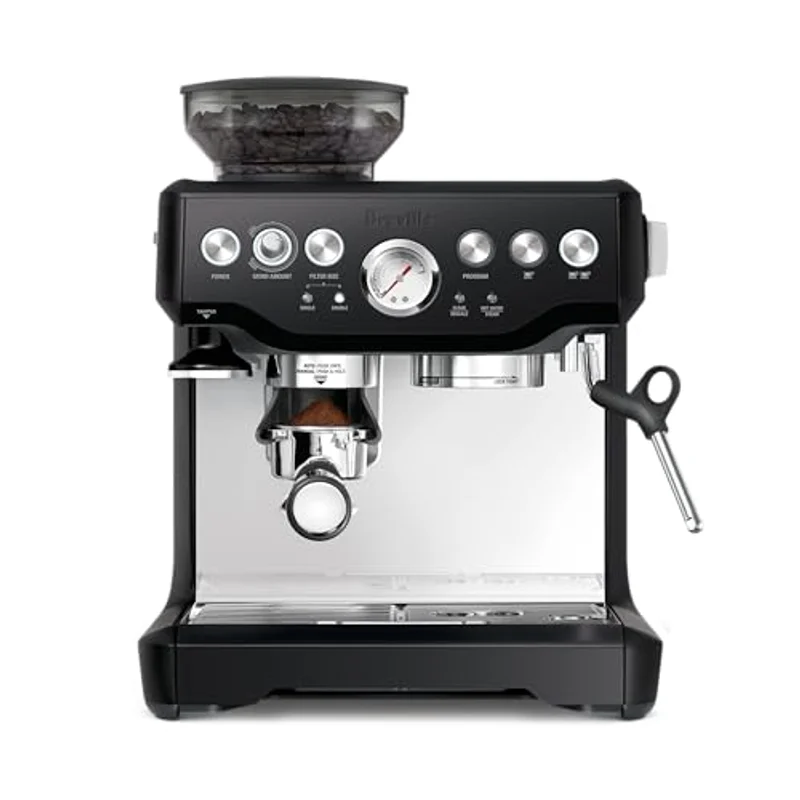
Breville BES870BTR Barista Express, Black Truffle
The same Barista Express platform as above, in the Black Truffle finish. Same 54 mm portafilter class and the same accessory compatibility — the color is the only difference the listing documents, so buy on price and finish preference between the two.
$688.99 Check price →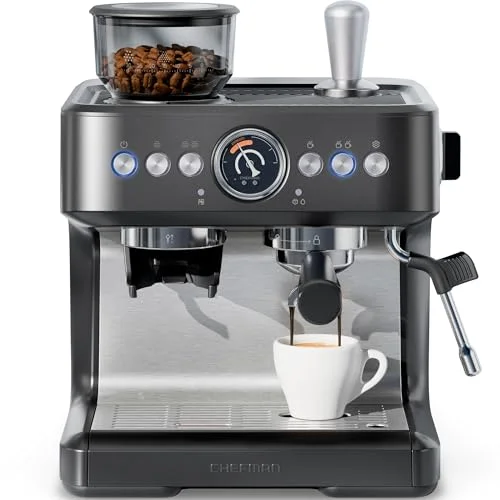
Chefman Crema Deluxe with Double Boiler
A double-boiler machine with a built-in grinder offering 30 grind settings, able to froth milk and pull a shot at the same time. Our listing does not document a specific portafilter diameter for this unit, so if you plan to buy replacement baskets, a bottomless portafilter or a matched tamper, confirm the exact diameter from the current Amazon listing or the manufacturer's manual before ordering.
$399.99 Check price →The CASABREWS 3700 Essential, covered above in the pressurized-basket section, rounds out the compact end of this list: a 12.6 by 5.7 by 12.2 inch machine at $99.99 that is a reasonable candidate for a narrower portafilter simply by virtue of its size class, though we do not have a manufacturer-confirmed diameter for it in our records either.
| Machine | Class | Grinder | Confirmed diameter | Price | |
|---|---|---|---|---|---|
| Breville BES870XL Barista Express | Semi-auto, prosumer | Built-in burr | 54 mm | $699.95 | Price |
| Breville BES870BTR Barista Express | Semi-auto, prosumer | Built-in burr | 54 mm | $688.99 | Price |
| Chefman Crema Deluxe | Semi-auto, double boiler | Built-in, 30 settings | Check listing | $399.99 | Price |
| CASABREWS 3700 Essential | Semi-auto, compact | None | Check listing | $99.99 | Price |
Checking the size before you buy accessories
The manufacturer's own listing or manual is the only source we would trust for a portafilter diameter, and there are three practical ways to find it before you order a basket, tamper or bottomless portafilter.
First, search the exact model number — not just the brand name — plus "portafilter diameter" or "basket size," and look for the manufacturer's own specification page or manual rather than a third-party accessory listing's assumption. Accessory sellers sometimes list a diameter based on what generally fits a brand's product line, which is not the same as a confirmed number for your specific model.
Second, if you already own the machine, measure the inside rim of the current basket directly with calipers or a ruler, rather than the outside of the portafilter handle — the basket's inner diameter is the number every accessory is sized against.
Third, when in doubt, contact the manufacturer directly or check the model's official manual, which is usually available as a PDF from the manufacturer's support page. This matters more the smaller and newer the brand is: established prosumer lines like Breville's 54mm portafilters are extremely well documented across the accessory market, while newer or smaller-brand machines may have a diameter that is genuinely undocumented outside the manual itself.
Whatever you do, do not guess from a product photo or assume a diameter because a machine looks similar in size to one you already know. The three common sizes are close enough in appearance that visual estimation is unreliable, and a wrongly sized tamper or basket is money spent on a part that will never seat correctly.
How we compared these
We compare published specifications, what ships in the box, machine class and live pricing, and we are explicit about the limits of what we can verify: we do not physically test these machines, we do not run a testing lab, and we do not publish ratings we cannot verify. Amazon's product data returns no rating and no review count for the machines on this site, so there are no stars and no invented scores anywhere on this page.
Portafilter diameter is a field our product database does not carry for every machine we track, and where we could not confirm a manufacturer-stated number for a specific unit, we said so directly rather than estimate one from the machine's size class or price tier. The general facts referenced here — that espresso brews at roughly 9 bar, that pressurized baskets use an internal restrictor plate, that basket diameter sets bed surface area at a given dose — are standard background rather than claims about any specific product. The rest of our method sits on our main espresso machine guide.
Frequently asked questions
Can I put a 58mm basket in a 54mm portafilter?
No. The basket has to match the portafilter's inner diameter exactly to seat against the rim and lock under the retaining clips. A 58mm basket is physically larger than a 54mm portafilter's opening and will not fit; forcing it risks damaging the portafilter. Always buy baskets, tampers and distributors to your specific portafilter's documented diameter, not to a size you assume from the machine's brand or price tier.
How do I find out my portafilter's diameter if the listing doesn't say?
Search the exact model number plus "portafilter diameter" and look for the manufacturer's own manual or specification page rather than a third-party accessory seller's assumption. If you already own the machine, measuring the basket's inner rim directly with calipers is the most reliable method. When neither turns up an answer, contact the manufacturer directly before buying accessories.
What's the difference between a pressurized and non-pressurized basket?
A pressurized basket has a second perforated plate inside with one or two small exit holes, which mechanically restricts flow and builds back-pressure regardless of grind or tamp quality — useful for beginners using pre-ground coffee. A non-pressurized basket is just a perforated cup with no restrictor, so all the resistance comes from the coffee itself, giving an honest read on grind and dose once you own a grinder.
Does portafilter size affect how much coffee I should dose?
Yes. Basket manufacturers generally publish a dose range for a given diameter, because a wider basket spreads a given dose into a thinner puck while a narrower basket stacks the same dose taller. A dose that works well in a 58mm basket will sit differently in a 51mm one, so recipes and dose figures should be treated as specific to the basket diameter they were developed on, not transferred directly across machines.