The pattern behind most regret
Most unhappy espresso-machine owners did not buy a bad machine. They bought a machine that was wrong for the specific way they were going to use it, and the mismatch didn't show up at checkout — it showed up in week two or three, after the novelty wore off and the daily routine set in.
That mismatch almost always traces back to one of a few decisions made in the first ten minutes of shopping: trusting a number on the box instead of the spec underneath it, assuming the grinder question could be answered later, underestimating how much practice a steam wand actually takes, or measuring the machine's footprint and nothing else about where it has to live. None of these are exotic mistakes. They are the default path, because the marketing on every listing is built to encourage exactly these shortcuts.
This guide is not a ranking of machines. It is a walk through the five decisions that most often go wrong, with the four machines we reference used only to show what a decision looks like in practice at a real price point — not as a verdict on which is "best."
Mistake 1: buying on bar-pressure marketing alone
Almost every budget and mid-range espresso machine advertises its bar rating in the title: 15 bar, 19 bar, 20 bar. It is the single most prominent number on the listing, and it is also the number that tells you the least about what lands in the cup.
Espresso is brewed at roughly 9 bar of pressure at the coffee puck. The bar figure printed on the box is the pump's maximum rating, not the pressure actually applied during a shot — and every pump machine sold today, including ones rated well above 9 bar, brews in the same range once the portafilter is locked in and the shot is pulling. A machine advertised at 20 bar does not pull a stronger, better, or more "authentic" shot than one advertised at 15. It pulls the same shot, because both are capped by the same physics long before the pump's theoretical ceiling matters.
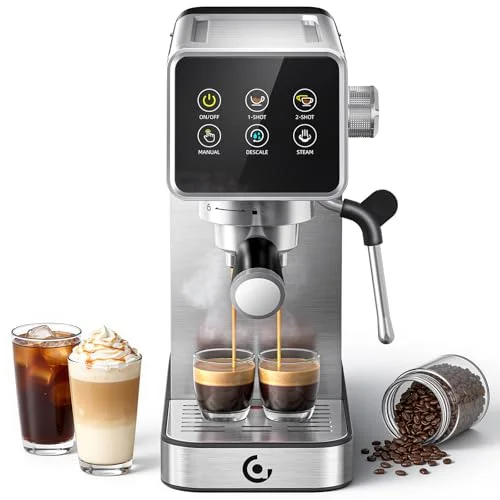
The AMZCHEF 20 Bar Home Espresso Coffee Machine ($89.99 as of September 2, 2026) is a reasonable example of what the number is actually selling: at under $90, it is a competent, straightforward entry point, and the "20 bar" in its name is marketing shorthand for "has a real pump," not a claim about cup quality above and beyond a 15-bar machine at the same price. That's not a knock on the machine — a 41oz tank and a real pump for well under $100 is a legitimate starting point. It's a knock on using the bar number as a tiebreaker between two otherwise similar machines, which is exactly how most listings are written to be read.
What the bar number does not tell you, and what actually separates machines at a given price: whether there's a grinder built in, what the tank holds, how the steam system works, and what's in the box beyond the machine itself — covered in our guide to what actually comes in the box with an espresso machine. Buying on the headline bar figure means skipping every one of those questions, which is how a buyer ends up with a machine that technically "passed" the spec they were checking and still disappoints them at home.
Mistake 2: skipping the grinder question, then buying pre-ground anyway
This mistake has a specific, recognizable shape. A first-time buyer picks a machine without thinking hard about the grinder — sometimes because the listing doesn't make grinder status obvious, sometimes because "I'll figure out beans later" feels like a reasonable thing to defer. Then, at checkout or in the first week, they buy a bag of pre-ground coffee because it's what's available at the grocery store, and it feels like the path of least resistance for a first attempt.
It is the single most common way a new espresso machine produces disappointing shots regardless of how good the machine itself is. Pre-ground coffee is milled to one fixed particle size meant to work across every brewing method on the shelf — drip, percolator, French press, espresso — which means it is a compromise that serves none of them well, and it is particularly unforgiving for espresso, which is the least tolerant brew method for grind-size mismatch. Too coarse for the machine's extraction window, and it cannot be adjusted after the fact, because the grinding already happened somewhere else, under conditions the buyer has no control over. On top of that, ground coffee stales within days because grinding multiplies the surface area exposed to air — so a bag that's been sitting on a shelf is often already past its useful window before it's even opened.
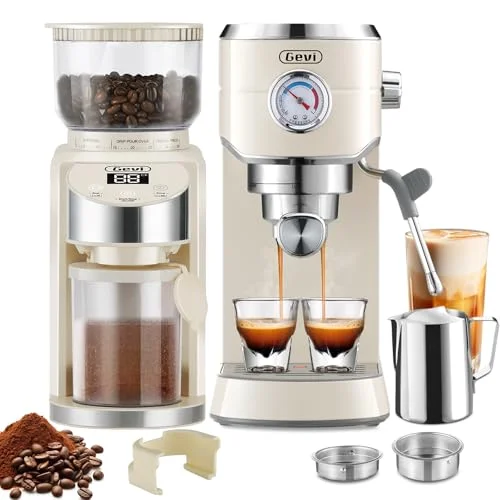
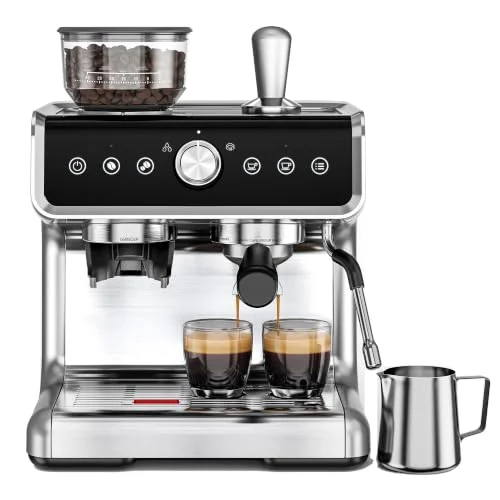
The fix is deciding the grinder question before the machine question, not after. A machine with a grinder built in removes the decision entirely: you grind fresh, whole beans straight into the brewing process, with no separate purchase and no separate step to skip under time pressure on a weekday morning. The Gevi 20 Bar Espresso Machine with Conical Burr Anti-Static Coffee Grinder ($199.49 as of October 6, 2026) is built around exactly that integration — a conical burr grinder paired with the brewing side in one unit measuring 12.28"D x 10.31"W x 12.4"H, so fresh grounds go straight into the basket rather than through a bag, a scoop, and a counter in between. The EUHOMY Espresso Machine with Grinder and Milk Frother ($309.99 as of September 29, 2026) does the same, adding a milk frother to the bundle, in its "Large" size variant.
None of this means a separate grinder is wrong — plenty of serious home setups use one, and it's a legitimate route if you're confident the habit will stick. It means the grinder decision has to be made deliberately, before the machine arrives, rather than defaulted into by reaching for whatever bag of coffee is already in the pantry.
Mistake 3: underestimating the learning curve on a manual wand
A manual steam wand is a knob, a nozzle, and a pitcher of milk — and it looks, in a product demo video, like the simplest part of the whole machine. It is not. Texturing milk to the right temperature and microfoam consistency by hand takes repetition: judging the angle of the pitcher, the depth of the nozzle tip, and the point at which steady steaming turns into stretching foam versus just heating liquid. The first several attempts for most people produce milk that's either too thin, too hot, or full of large bubbles instead of microfoam — not because the machine is faulty, but because the technique has a real learning curve that a listing photo doesn't convey.
This matters because the mismatch between expectation and reality is where a lot of regret sets in. A buyer who expects café-quality latte art by the second morning and gets inconsistent, bubbly milk instead often concludes the machine is the problem. More often, the machine is fine and the technique simply hasn't had time to develop — manual wands reward the first few weeks of deliberate practice, not the first few uses.
Machines with manual wands, including the AMZCHEF at the budget end and the Gevi at the mid-range, give you more control once you've put in that practice time — adjustable steam output and the ability to dial in exactly the microfoam texture you're after. The trade-off, stated plainly, is that control has to be earned through repetition rather than delivered automatically. If a buyer is not interested in that learning curve and wants consistent milk from day one, that is a real reason to look at a machine with automated steaming instead of a manual wand — a different category of trade-off than bar pressure or grinder presence, but one that follows the same pattern: know which side of it you're buying into before the machine arrives, not after the third disappointing flat white.
Gevi 20 Bar Espresso Machine with Conical Burr Grinder
Grinder and brewing integrated into one 12.28"D x 10.31"W x 12.4"H unit — the decision that removes the pre-ground shortcut before it happens. Manual steam wand, so the milk side still has a learning curve.
$199.49 Check price →
The picks, matched to realistic skill levels
Rather than a single "best" recommendation, the honest version of this is matching a realistic starting skill level — and a realistic appetite for a learning curve — to a machine class. These are the only four machines referenced in this guide, and each maps to a different point on that curve.
01Lowest-risk start
AMZCHEF 20 Bar Home Espresso Coffee Machine
For someone testing whether the habit will stick
20 bar pump · no built-in grinder · 41oz tank
The lowest financial commitment of the four, and a reasonable way to find out whether daily espresso is a habit worth investing further in before spending more. No grinder is included, so plan for a separate burr grinder or accept a real ceiling on cup quality from pre-ground coffee — see the grinder mistake above before deciding to skip that step.
The trade-offThe "20 bar" figure on the box is a pump maximum, not a cup-quality claim — don't let it be the deciding factor over the grinder and tank questions.
02Grinder decided for you
Gevi 20 Bar Espresso Machine with Conical Burr Grinder
For someone ready to commit to fresh grounds, not pre-ground
Built-in conical burr grinder · manual steam wand · 12.28"D x 10.31"W x 12.4"H
This is the machine for a buyer who has already decided the grinder question matters and doesn't want a second appliance or a second habit to maintain. The footprint — 12.28 inches deep by 10.31 wide by 12.4 tall — is worth measuring against your counter and any cabinet above it before ordering, since bean-to-cup machines run taller than grinder-less ones.
The trade-offThe steam wand is manual, so the milk side of the learning curve still applies in full — the grinder question is solved, the technique question isn't.
03Grinder plus milk, bundled
EUHOMY Espresso Machine with Grinder and Milk Frother
For someone who wants the grinder question and the milk question both answered in one box
20 bar pressure · built-in grinder · milk frother included · Large size variant
Bundling a grinder and a milk frother into one unit removes two of the five mistakes in this guide at once — there's no pre-ground shortcut available, and no separate decision about whether to add milk-frothing capability later. The "Large" size variant means confirming counter clearance matters even more here than with the Gevi — check the listing for exact dimensions before ordering, since we don't have a precise footprint figure to pass along beyond the size class itself.
The trade-offBundling more into one unit raises the price and the footprint together — this is not the machine for a tight counter or a tight budget.
04Zero learning curve, by design
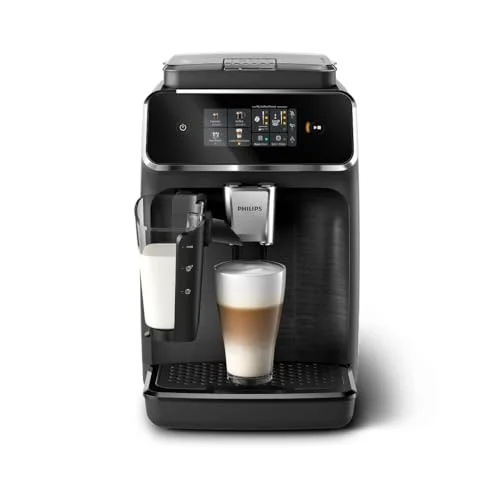
PHILIPS 2300 Series Fully Automatic Espresso Machine
For someone who wants no manual-wand curve at all
Fully automatic · LatteGo milk system
This is the direct answer to the manual-wand mistake: a fully automatic machine with the LatteGo milk system removes the steam-wand technique question by design rather than asking you to practice it. If the honest self-assessment from the wand section above is "I am not going to practice this," a fully automatic machine at this price point is the more realistic purchase than a semi-automatic one with a wand that will mostly go unused.
The trade-offAutomation is a different, higher price tier than the other three machines here — it buys consistency and convenience, not a cheaper way to the same cup.
Mistake 4: ignoring tank size and counter clearance before ordering
Tank size and counter clearance fail in the same way: both are easy to check before ordering and easy to assume are "close enough" without actually measuring. Neither assumption holds up well in practice.
A water tank's capacity decides how often the machine needs refilling, and that frequency matters more for a household of two or three than for someone living alone — our water tank size and refill frequency guide goes through the math in more detail. The AMZCHEF's 41oz tank is on the smaller side of the home espresso category; fine for one or two drinks a day, more of a chore if multiple people in the house are drawing from the same reservoir without checking it first.
Counter clearance is the more commonly skipped check, and it causes a specific, avoidable failure: a buyer measures the width of the space on the counter, confirms the machine fits, and orders it — without accounting for height with the water tank removed, or clearance above the machine for refilling or bean-hopper access. The Gevi's listed footprint of 12.28"D x 10.31"W x 12.4"H is a reminder that depth matters as much as width, especially on a counter with an overhead cabinet or a backsplash outlet in a specific spot. Measure height to any cabinet above the intended spot, and measure with enough clearance to lift a lid or pull out a tank, not just enough to set the machine down. If a product listing doesn't give you a clear footprint figure — as is the case for some size "variants" rather than precise dimensions — treat that as a reason to check the actual listing photos and buyer-provided measurements before ordering, not a reason to guess.
Noise is worth the same kind of upfront check, for the same reason: it's invisible until the machine is running on a shared counter every morning. Our guide to espresso machine noise levels covers what to expect from vibration pumps, rotary pumps, and grinder motors before one of them is running next to a bedroom wall.
Mistake 5: the upgrade regret — buying too small a machine to save $100
This is the mistake that shows up latest, and it is also the most expensive one in the long run. A buyer compares two machines a tier apart, picks the cheaper one to save roughly $100, and finds within a few months that the cheaper machine's tank is too small for the household, or its lack of a grinder means a second purchase anyway, or its lack of a milk system means buying a separate frother to get the drinks the household actually wants.
The math that makes this a regret rather than a reasonable trade-off is straightforward: $100 saved up front, followed by a second purchase of $80–200 for the grinder or frother that should have been included, plus the sunk cost of a machine that still lacks whatever else was skipped. The AMZCHEF at $89.99 and the Gevi at $199.49 are a real example of this gap — roughly $110 apart, and that gap buys a built-in grinder, which is exactly the feature most likely to get added separately later if it's skipped now. Buying the Gevi first, if the grinder question has already been answered as "yes, I want this built in," is usually cheaper than buying the AMZCHEF and a standalone grinder afterward.
None of this is an argument for always buying the most expensive machine in a comparison. It's an argument for identifying, before ordering, which features are actually going to get used — grinder, milk system, tank size — and treating a $100 gap between two machines as the price of one of those features, not as a discount on an otherwise identical product. The PHILIPS 2300 Series at $699.99 is the clearest version of this trade-off taken to its logical end: it costs roughly $500 more than the EUHOMY bundle, and that $500 buys full automation rather than a feature that could be bolted on later. Whether that trade is worth it depends entirely on whether a manual wand's learning curve, discussed above, is something you're actually willing to practice.
One thing not to do
Do not decide between two machines based on the single biggest number on the listing — bar pressure, grind settings, wattage — without first checking whether the smaller gap in price between them is actually the price of a feature you'll want in week three. A $100 difference is rarely "the same machine, cheaper." It is usually a grinder, a tank size, or a milk system you'll end up buying separately anyway.
How we compared these
We compare published specifications, what ships in the box, machine class, tank size, footprint where listed, and live pricing — we do not physically test these machines, and we do not run a testing lab. The four products referenced in this guide are the only ones named, each tied to the database price and date recorded above: the AMZCHEF at $89.99 (recorded September 2, 2026), the Gevi at $199.49 (recorded October 6, 2026), the EUHOMY at $309.99 (recorded September 29, 2026), and the PHILIPS 2300 Series at $699.99 (recorded October 4, 2026).
We publish no star ratings, review counts, or paraphrased review sentiment for any of these machines, because we have no verified review data for them — inventing sentiment would be the same offence as inventing a score. Where a size variant is given rather than precise dimensions (as with the EUHOMY's "Large" variant), we say so rather than guessing at a footprint we don't have, and we point you to the live listing to confirm it. General coffee facts referenced here — that espresso brews at roughly 9 bar at the puck, that pre-ground coffee is a fixed-size compromise, that grinding increases surface area and accelerates staleness — are standard background rather than claims about any specific product.
Frequently asked questions
Does a higher bar rating mean a better espresso machine?
No. Espresso is brewed at roughly 9 bar of pressure at the coffee puck, and the bar figure printed on a machine's box is the pump's maximum rating, not the pressure actually delivered during a shot. A machine advertised at 20 bar does not out-brew one advertised at 15 bar — both are capped by the same brewing physics. Judge machines on grinder presence, tank size, and what's included instead.
Can I skip buying a grinder and just use pre-ground coffee?
You can, but it sets a real ceiling on cup quality. Pre-ground coffee is milled to one fixed size meant to work across every brewing method, which is too coarse and inconsistent for espresso's narrow extraction window, and it cannot be adjusted after the fact. It also stales within days because grinding multiplies the surface area exposed to air. If a machine doesn't include a grinder, budget for a separate burr grinder rather than defaulting to pre-ground.
Why is a manual steam wand harder than it looks in product videos?
Texturing milk by hand requires judging pitcher angle, nozzle depth, and timing to get consistent microfoam rather than large bubbles or overheated milk — skills that take repeated practice, not a single attempt. Most first tries produce inconsistent results regardless of the machine's quality. If you don't want that learning curve, a fully automatic machine with an integrated milk system removes the manual step entirely.
Is it worth paying $100 more for a machine with a grinder built in?
Often yes, if you already know you want fresh-ground coffee. A $100 gap between two otherwise similar machines frequently represents the cost of a feature — a built-in grinder, a larger tank, a milk system — that gets bought separately later anyway if it's skipped now. Buying it built in up front is usually cheaper than buying the cheaper machine plus the missing piece afterward.
Keep reading