Philips 2200 Series vs 2300 Series: What the Extra $300 Actually Buys
Both machines are fully automatic with a 100% ceramic grinder and the same AquaClean filter system — on paper, siblings. The 2300 Series swaps the 2200's classic milk frother for Philips' LatteGo system and asks $330 more for it. Here is exactly where that money goes, and where it doesn't.
Reader-supported: we may earn a commission if you buy through our links, at no extra cost to you. Prices are the ones in our database as of late October 2026 and they move constantly on Amazon — confirm the live price before buying.
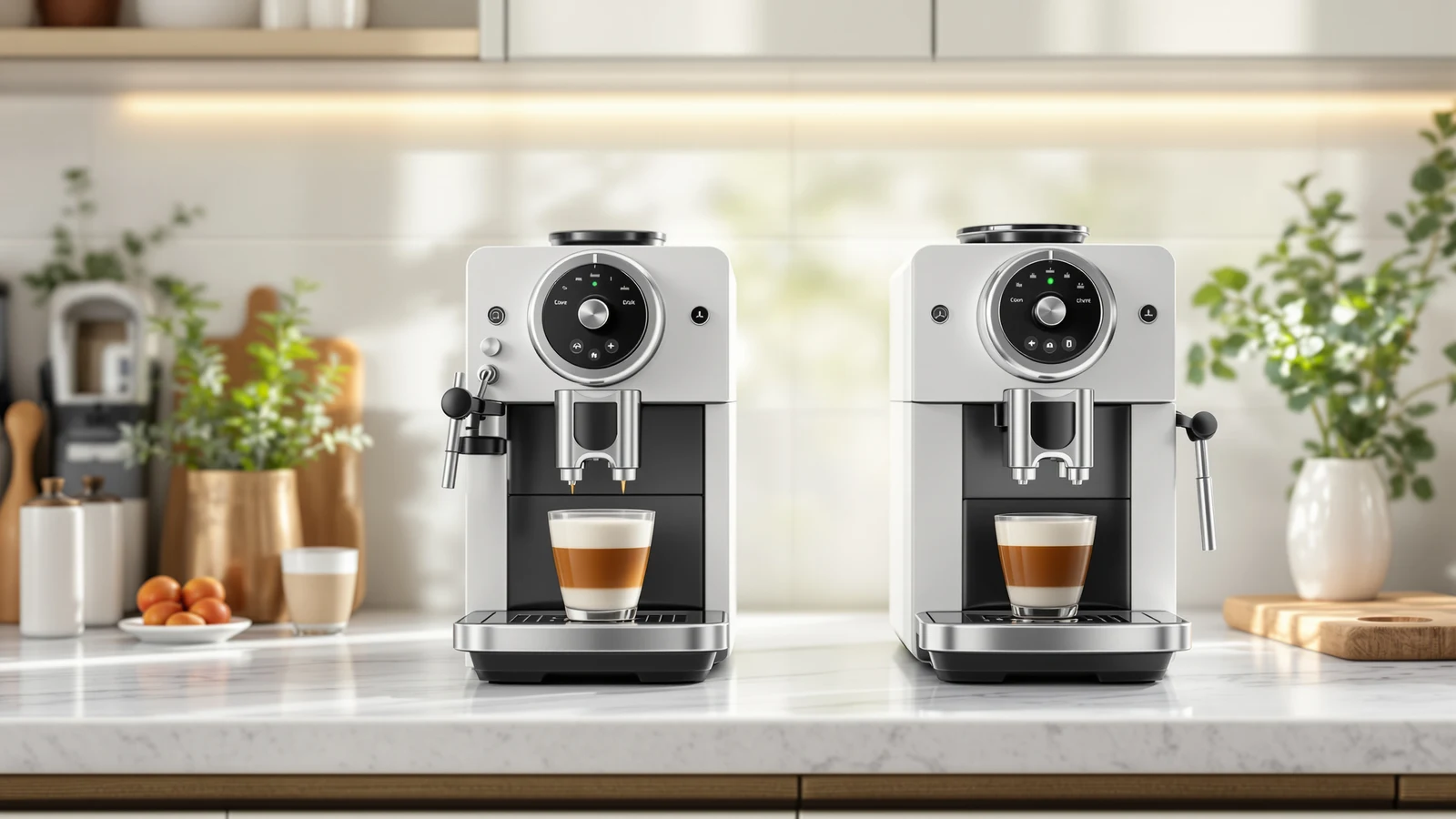
The short answer
If you drink black espresso and Americanos, buy the Philips 2200 Series (EP2220/14) at $371.79 and stop reading the milk section. The grinder and the filter system — the two things that actually make the coffee — are the same class of part on both machines, so you are not downgrading anything that touches the bean.
If milk drinks are the point — a cappuccino or latte most mornings, for more than one person — the Philips 2300 Series at $499.99 is built around exactly that case. Its LatteGo system is the entire reason the price jumps $330.00, and it is a real difference in the cup and at the sink, not a marketing refresh of the same frother. Everything else about to be compared here is really a conversation about whether that single system is worth the gap.
What stays identical
Start with what Philips did not change, because it is most of the machine and it is easy to miss while reading about the shinier feature.
Both the 2200 and the 2300 run a 100% ceramic grinder. Ceramic burrs are the quiet upgrade super-automatic machines have made over the last several product generations: they run cooler than steel under sustained use, they do not rust if moisture gets in, and they hold an edge longer against the grit and oil in whole coffee beans. None of that is specific to either Philips model — it is a property of the grinder material itself — but it means the part of the machine that decides how evenly your espresso extracts is not where the $330.00 premium is spent. You are grinding through the same class of burr whichever one you buy.
Both machines also use the AquaClean filter system. The mechanism is the same on each: water passes through a cartridge before it reaches the boiler, which keeps mineral buildup out of the machine's internals rather than relying purely on a chemical descaling cycle later. It is a maintenance feature, not a coffee-quality one, and it is identical in kind across both series — Philips did not reserve a better filtration setup for the pricier machine.
Put those two together and the honest framing is this: the 2300 is not "a better 2200." It is the same core brewing and filtration hardware wrapped around a different milk system. If a seller or a review elsewhere implies the 2300 extracts noticeably better espresso because it costs twice as much, that is not something either machine's published specifications support.
This matters more than it sounds, because it's the opposite of how most price tiers in home espresso work. Usually a higher number on the box buys a bigger boiler, a wider portafilter, or a grinder with more adjustment range — upgrades that touch what's in the cup directly. Here, Philips kept the part that decides extraction quality constant across both machines and spent the price difference entirely on the milk side. That's a narrower, more honest kind of upsell than most of this category offers, and it's also why the decision below comes down to one question rather than a dozen.
LatteGo: the one real upgrade
The 2200's milk side is a Classic Milk Frother — the traditional panarello-style wand design that has shipped on Philips automatics for years. You steam and froth milk by hand with it, the way you would on a simpler semi-automatic machine, and that manual step is both its limitation and, for some people, the point: more control over how much foam you make, at the cost of doing it yourself every time and cleaning a wand afterward.
The 2300 replaces that with Philips' LatteGo Milk System, which is the headline reason the price moves. LatteGo is a two-piece, tube-free milk container that clicks onto the front of the machine: milk is drawn from a jug through the two detachable parts and emerges as microfoam at the push of a button, with no internal tubing for milk to sit and sour in overnight. The parts separate by hand and are dishwasher-safe, which is the detail that actually changes a daily routine — a frother you rinse in seconds each morning gets used; one that needs a brush and a few minutes of disassembly tends to get skipped, and skipped cleaning on any milk system is a hygiene problem waiting to happen.
What it changes in the cup is texture and consistency more than flavor. An automated system like LatteGo produces the same microfoam density shot after shot because it is not relying on your wrist angle and timing; a manual wand can produce better foam than that in a skilled hand, or noticeably worse foam on a rushed Tuesday. If your household's cappuccino quality currently depends on whoever is making it, that is the exact inconsistency LatteGo is designed to remove.
One thing we are not going to do is hand you a number for how much faster or easier LatteGo is to clean in minutes, or a bean-to-cup count, because our product data doesn't carry those figures for either machine — we're going on Philips' own description of the system's design, not a stopwatch we ran ourselves.
Touch display and coffee variety, compared honestly
Here is where the two listings stop being symmetrical, and it's worth saying so plainly rather than papering over the gap.
The 2200's listing is specific: an Intuitive Touch Display and 2 Coffee Varieties. That is a deliberately simple interface — two drink choices, selected on a touchscreen, with the rest of the machine's personality expressed through the Aroma Seal valve that keeps beans fresher in the hopper between brews.
The 2300's listing, by contrast, doesn't break out a display type or a variety count the way the 2200's does — it is marketed primarily around the LatteGo system, and our product database doesn't carry a confirmed figure for either spec on this unit. We are not going to guess whether the 2300 matches, exceeds, or simplifies the 2200's two-variety interface, because guessing would be inventing a specification, which is the one thing we won't do on this page. If the exact display type or drink-variety count matters to your decision — and for a machine you'll touch every morning, it reasonably might — check the current Amazon listing before you buy rather than assuming parity with the 2200.
What we can say with confidence is the shape of the trade-off: the 2200 tells you precisely what you're getting on the interface side and keeps the drink menu narrow, while the 2300's page foregrounds the milk system and leaves the display details for you to confirm. That asymmetry in how Philips chose to market the two machines is itself useful information — it suggests the display isn't the selling point on the pricier model, LatteGo is.
Descaling and cleaning, on both
Maintenance is where the "same grinder, same filter" framing earns its keep, because it means the upkeep routine for the core machine doesn't change between the two.
Both machines run the AquaClean filter system, and the mechanism's purpose is the same on each: filtering incoming water before it reaches the boiler reduces how often a full chemical descaling cycle is needed, because less mineral scale accumulates in the first place. Replacing the AquaClean cartridge on schedule is the maintenance task that matters most for either machine's longevity — more than any milk-system cleaning — since limescale buildup in the boiler and brew unit is what eventually degrades a super-automatic's heating and pressure consistency.
Where the two genuinely diverge is milk-side cleaning, and it follows directly from the hardware difference covered above. The 2200's Classic Milk Frother wand needs a manual wipe-and-purge after every milk drink, the way any panarello wand does, to keep dried milk from caking around the tip. The 2300's LatteGo container separates into two dishwasher-safe pieces with no internal tubing, which is a meaningfully lower-effort routine if you make milk drinks daily — there's simply less for old milk to hide inside. Neither machine's brew unit cleaning depends on which milk system you chose; that part of the upkeep is identical.
The honest summary: buying the 2300 doesn't buy you out of descaling, and buying the 2200 doesn't saddle you with worse descaling. It buys you an easier milk-cleaning routine specifically, on top of the same core maintenance either machine requires.
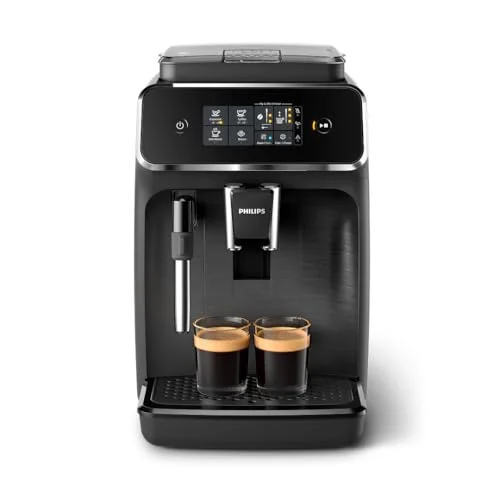
Philips 2200 Series (EP2220/14)
100% ceramic grinder, AquaClean filter system, Aroma Seal, Intuitive Touch Display, 2 Coffee Varieties, Classic Milk Frother. Black. Listing shown is the Large configuration.
$371.79 Check price →Side by side
The same two machines, on the specifications our database confirms for each. Where a cell says "not confirmed," that's a gap in the published data, not a claim we're declining to make for other reasons.
| Machine | Grinder | Filter | Milk system | Display / varieties | Price | |
|---|---|---|---|---|---|---|
| Philips 2200 Series | 100% ceramic | AquaClean | Classic manual frother | Intuitive Touch Display · 2 varieties | $371.79 | Price |
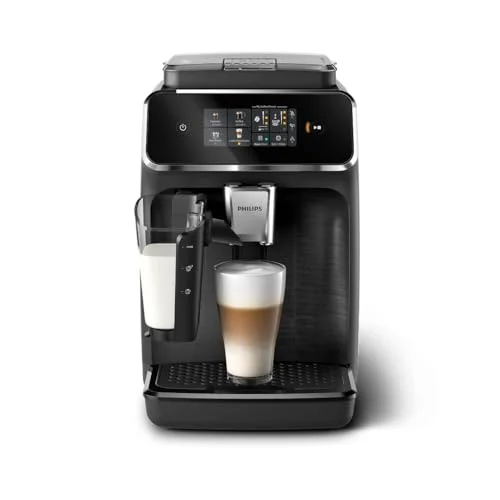 Philips 2300 Series | 100% ceramic | AquaClean | LatteGo (automatic, 2-piece, dishwasher-safe) | Not confirmed in our data | $499.99 | Price |
The picks
With the grinder and filter ruled out as a differentiator, this comes down to who is actually going to stand in front of the machine each morning.
Buy the 2200 if you drink mostly espresso or Americano
$371.79. Same ceramic grinder and AquaClean filter as the 2300, a simpler two-drink touch interface, and a manual frother that costs nothing extra if you rarely use it. The right default unless milk is the whole point.
$371.79 Check price →Buy the 2300 if a cappuccino or latte is your daily order
$499.99. Same grinder, same filter, plus LatteGo: consistent automated microfoam and a milk container that's dishwasher-safe in two pieces, with no tubing to clean. Worth the $330.00 premium specifically for households that make milk drinks most days.
$499.99 Check price →Is $330 worth it for a daily cappuccino?
Our database puts the 2200 at $371.79 and the 2300 at $499.99 — a $330.00 gap at the prices we last recorded, close enough to the round $300 figure that headlines (including this one) tend to use, but worth stating exactly since both prices move on Amazon independently and the gap will drift day to day. Always check the live prices before assuming the math still holds.
For a household that drinks straight espresso, long black coffee, or an occasional Americano, that $330.00 buys almost nothing you'd notice, because the grinder and filtration — the parts that shape those drinks — are identical in class across both machines. In that case the 2300 is $330.00 spent on a milk system you won't touch, and the 2200 is the better buy on value alone.
For a household making a cappuccino or latte most mornings, run the comparison the other way: the alternative to paying $330.00 once is a manual steam wand used daily, for as long as you own the machine. A wand that needs purging and wiping after every drink, with foam quality that varies by who's making it and how rushed they are, is a real recurring cost in time and consistency — it just doesn't show up on a price tag. Measured against years of that routine, $330.00 for an automated, dishwasher-safe milk system reads less like a premium and more like paying once to remove a daily chore.
The deciding question isn't "which machine is better" — on the grinder and filter, neither is. It's "how often does milk actually happen in this kitchen." Count your own cappuccinos for a week before you decide, not ours.
It's also worth placing both prices in the wider market for context. The 2200's $371.79 sits just above the $250–$350 band where a built-in grinder first becomes standard on semi-automatic machines — our guide to that price band covers what else shows up near there. The 2300's $499.99 sits at the upper end of what most households spend on a single home machine at all, which is exactly why it's worth being precise about what that money buys rather than taking "flagship" as a synonym for "better coffee." In this pair, it mostly isn't; it's better milk.
How we compared these
We compare published specifications, what's named in each listing, and live pricing — we don't physically test these machines, we don't run a testing lab, and we don't publish ratings we can't verify. Amazon's product data returns no rating or review count for either machine, so there are no stars on this page and nothing paraphrased from reviews we haven't read.
Where the 2300's listing doesn't name a spec the 2200's does — the display type and coffee-variety count, specifically — we've said so directly rather than assuming the two machines match. The general facts used here (ceramic burrs running cooler and holding an edge longer than steel, water filtration reducing descaling frequency, limescale as the main cause of boiler wear in super-automatics) are standard background for this machine class, not claims about either specific product.
Frequently asked questions
Does the 2300 Series grind coffee better than the 2200 Series?
No evidence of that in the published specifications. Both machines use a 100% ceramic grinder, which is the same class of part on each listing. The $330.00 price difference is tied to the milk system, not the grinder or the brewing side of either machine.
What exactly is LatteGo, and why does it cost more?
LatteGo is Philips' automatic milk system on the 2300 Series: a two-piece, tube-free container that clicks onto the machine, draws milk from a jug, and produces microfoam automatically, with both parts separating for dishwasher cleaning. It replaces the 2200's manual Classic Milk Frother wand, which requires hand-steaming and a manual wipe-down after each use. That upgrade is the primary reason for the price gap between the two series.
Do both machines need the same descaling routine?
Yes. Both the 2200 and the 2300 use the same AquaClean filter system, which filters incoming water before it reaches the boiler to reduce how often a full chemical descaling cycle is needed. That part of the maintenance routine doesn't change based on which milk system you choose; only the milk-side cleaning differs, and LatteGo's dishwasher-safe two-piece design is less effort there than a manual wand.
Is the 2300 Series worth $330 more than the 2200 Series?
It depends entirely on how often milk drinks happen in your kitchen. If you mostly drink straight espresso or an Americano, the grinder and filter are identical in class on both machines, so the 2300's extra cost buys a milk system you won't use. If a cappuccino or latte is a daily habit, the automated, easier-to-clean LatteGo system is a real, repeated difference rather than a cosmetic one, and the premium is paying to remove a daily manual step.