Best Breville Espresso Machines Compared (2026)
Breville sells six current espresso machines spanning $249.95 to $1,599.95, and the brand name alone tells you almost nothing about which one you'd actually get along with. The real differences are a built-in grinder, a touchscreen, an automated tamp, and — at the top — a second boiler. Here is what each jump in price actually buys.
Reader-supported: we may earn a commission if you buy through our links, at no extra cost to you. Prices are the ones we recorded on September 27, 2026 and they move constantly — confirm the live price before buying.
The short answer
If you want the least expensive real Breville espresso, buy the Bambino at $249.95 — no built-in grinder, but a genuine 9-bar pump and an automatic microfoam steam wand in a machine smaller than a toaster. If you want one machine that grinds, doses and brews with almost no manual steps, the Barista Touch Impress at $1,199.95 is the top of that line: a touchscreen that walks you through the shot and an auto-tamping puck system that removes the one step most beginners get wrong. If you have outgrown single-boiler machines and want to steam milk and pull a shot at the same time, at the same temperature stability a café uses, the Dual Boiler at $1,599.95 is the only machine here built for that.
Most people land in the middle. The jump from $249.95 to $499.95 buys a built-in grinder and dose control — arguably the single biggest quality-of-life change in this lineup. The jump from $499.95 to $799.95 buys a touchscreen and guided workflows. The jump from $799.95 to $1,199.95 buys automated tamping. The jump to $1,599.95 buys a second boiler and a lever-actuated group head built for someone who already knows they want that. Each step is real, and each step is also optional — the trick is knowing which one you'd actually use.
The six tiers, in order
Breville's home espresso range reads as a ladder, and walking it in price order is the clearest way to see what each rung adds.
The Bambino at $249.95 is the floor: a compact, pump-driven machine with an automatic milk-texturing steam wand and no grinder. The Bambino Plus at $399.95 is the same chassis with a more capable automatic milk system — still no grinder. The Barista Express at $499.95 is where the built-in conical burr grinder arrives, along with dose control, a razor dose-trimming tool and a manual steam wand. The Barista Touch at $799.95 keeps that grinder and adds a touchscreen interface that walks you through grind, dose and shot time instead of leaving every dial to you. The Barista Touch Impress at $1,199.95 keeps the touchscreen and adds Breville's "Impress" puck system, which automates the tamp itself. The Dual Boiler at $1,599.95 drops the touchscreen and the grinder entirely, returning to full manual control, but adds a second boiler so the machine can brew and steam simultaneously at independently held temperatures — the one spec none of the other five can match.
Notice the Dual Boiler is not simply "the most automated Breville." It is the most manual machine in this lineup at the highest price, because the money there goes into plumbing and thermal stability rather than automation. That is worth sitting with before assuming price and hand-holding always move together.
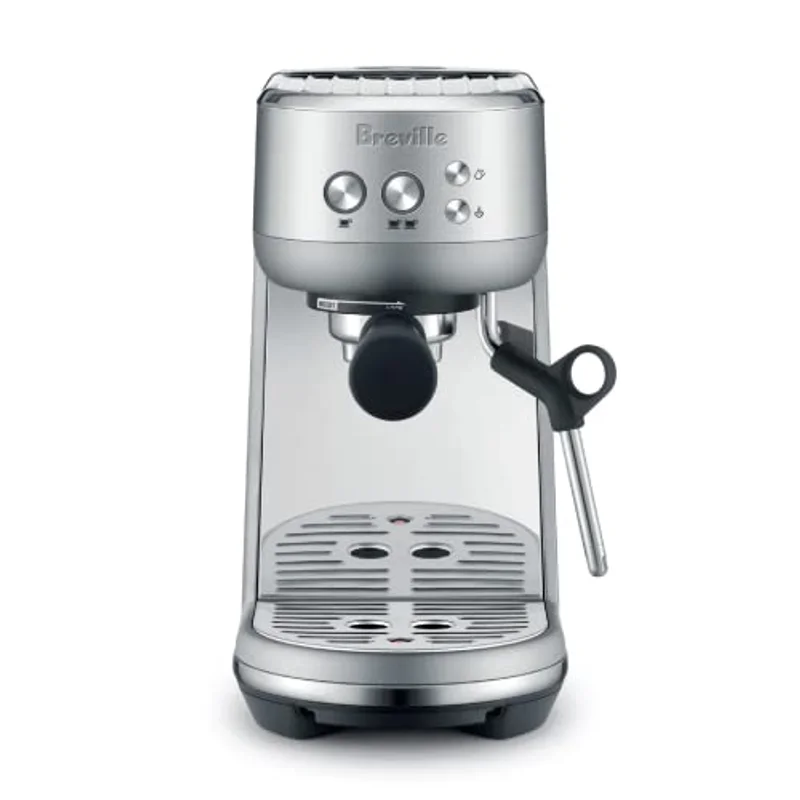
Breville BES450BSS Bambino
The entry point: a 9-bar pump, an automatic microfoam steam wand, and a footprint small enough for a narrow counter. No built-in grinder — bring your own beans already ground, or pair it with a separate grinder.
$249.95 Check price →What stays the same across the whole range
Before getting into what separates these six machines, it's worth naming what doesn't change, because the shared foundation is a bigger part of the Breville pitch than any single feature.
Every machine in this lineup is a genuine pump-driven espresso maker, not a steam-driven toy — all six push water through the puck at real espresso pressure rather than the lower, less consistent pressure a stovetop or capsule-adjacent machine produces. All six are finished in brushed stainless steel, so the material quality at the counter doesn't change whether you spend $250 or $1,600; what changes is what's mechanically inside the case. And every tier that includes milk steaming gives you some form of automation on the froth side — the Bambino and Bambino Plus automate it entirely, while the Barista line and the Dual Boiler give you a wand you work by hand, which is a deliberate trade for control rather than an oversight.
What this means practically: you are never buying a "cheap" or "toy" version of espresso at any price point here. You are buying a narrower or wider slice of the same category — pump pressure and real extraction are present from the Bambino up. The differences below are about control, automation and thermal capability, not about whether the machine can make a real shot at all.
Touchscreen and Impress puck: where the automation actually helps
The two features that separate the middle and upper tiers — the touchscreen on the Barista Touch and Barista Touch Impress, and the Impress puck system on the Barista Touch Impress alone — are the most automated things Breville sells at the home level, and they solve two genuinely different problems.
The touchscreen replaces the Barista Express's manual dials and buttons with a guided interface: select a drink, and the machine walks the grind, dose and shot-time settings for you instead of leaving every variable to memory and a stopwatch. For someone new to espresso, that is the difference between a learning curve measured in weeks and one measured in months, because the machine is effectively showing its work instead of hiding it behind unlabeled dials. For someone who already has their recipe dialed in on a manual machine, a touchscreen is a smaller win — it's reducing friction on a process you've already automated in your own head.
The Impress puck system goes a step further by automating the one manual step that trips up more beginners than any other: tamping. An uneven or inconsistent tamp is one of the most common reasons a home shot channels — water finds the soft spot in the puck and the shot goes sour or thin — and it is also the hardest thing to self-diagnose, because you can't see inside the puck once it's locked into the group head. The Impress system standardizes that compression mechanically, removing a variable that otherwise takes real practice to control by hand.
Where the automation helps least: anyone who already owns a manual machine and has stopped thinking about tamp pressure, or anyone whose actual complaint is milk texture rather than shot consistency — in which case the money is better spent on practicing with a manual wand or stepping up to the Dual Boiler's thermal stability, not on a touchscreen.
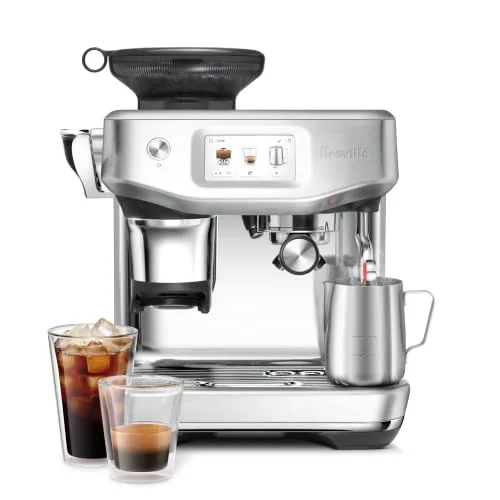
Breville BES881BSS Barista Touch Impress
Built-in conical burr grinder, touchscreen-guided brewing and the Impress auto-tamping puck system — the most automated shot-pulling process Breville sells at the home level.
$1,199.95 Check price →Grinder quality across the lineup
Three of the six machines here — the Barista Express, Barista Touch and Barista Touch Impress — ship with a built-in conical burr grinder. The Bambino and Bambino Plus have no grinder at all, and the Dual Boiler, despite its $1,599.95 price, also ships without one.
That last point surprises people who assume price and feature count always move together. The Dual Boiler is built around brewing and steaming performance, not grind-and-dose convenience, so it expects you to supply pre-ground coffee or pair it with a standalone grinder — the same way the Bambino and Bambino Plus do. If dose-into-the-portafilter convenience matters to you, that puts a hard ceiling on the Dual Boiler's appeal regardless of budget: you are buying thermal performance, and the grinder is a separate purchase on top.
Among the three machines that do grind, the Barista Express's conical burr grinder comes with manual dose control and a razor dose-trimming tool for leveling the bed by hand. The Barista Touch and Barista Touch Impress carry the grinder forward into the touchscreen workflow, so dose becomes a setting you select rather than a tool you run yourself — the hardware doing the grinding doesn't fundamentally change across the three, but how you interact with it does. None of the product listings specify number of grind settings or burr diameter for any of the six machines, so if stepless adjustment or a specific grind range matters to your beans, confirm it on the current listing before buying.
For anyone who already owns a grinder they like, or who wants to separate grinder failure risk from machine failure risk, the Bambino, Bambino Plus and Dual Boiler are the three routes that don't force a bundled purchase — at three very different price points and for three different reasons.
The picks, by tier
Six machines, six different buyers. Rather than force a single winner, here is who each one is actually for.
| Machine | Best for | Grinder | Milk | Price | |
|---|---|---|---|---|---|
| Bambino | Lowest entry price, smallest footprint | None | Automatic microfoam | $249.95 | Price |
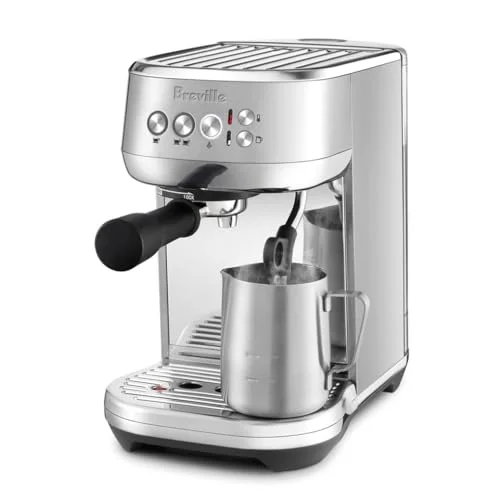 Bambino Plus Bambino Plus | Same entry price bracket, a better automatic milk system | None | Automatic microfoam, upgraded | $399.95 | Price |
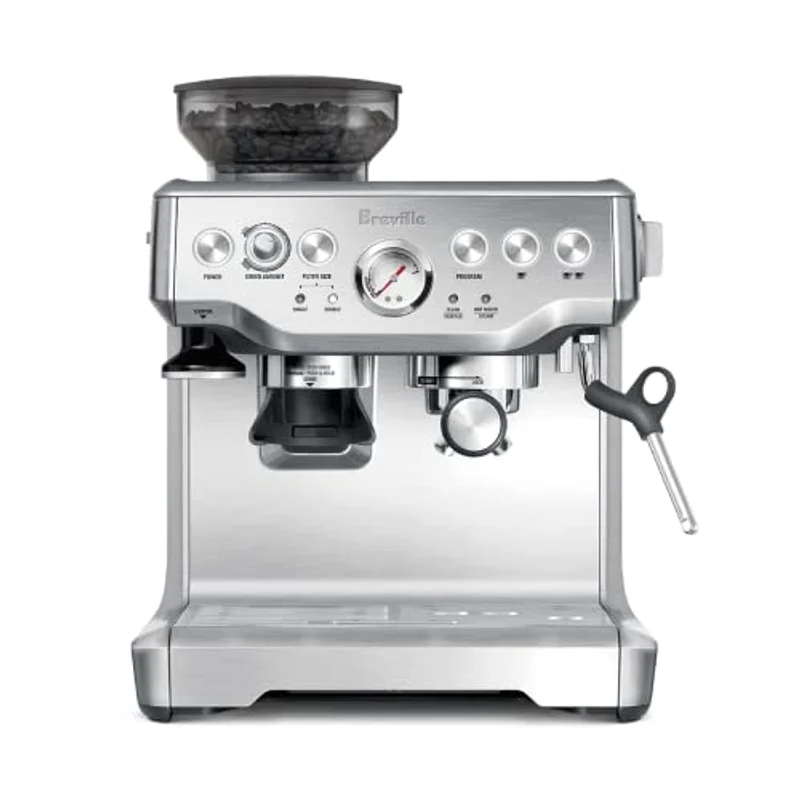 Barista Express Barista Express | First grinder-equipped machine, learning the manual steps | Built-in, manual dose control | Manual wand | $499.95 | Price |
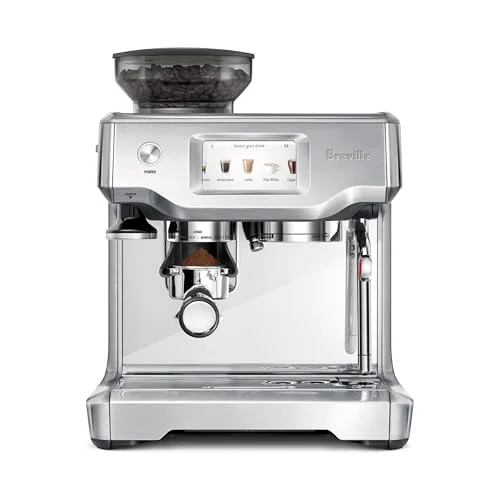 Barista Touch Barista Touch | Guided workflow, less memorizing | Built-in | Manual wand | $799.95 | Price |
| Barista Touch Impress | Near-hands-off shot pulling | Built-in | Manual wand | $1,199.95 | Price |
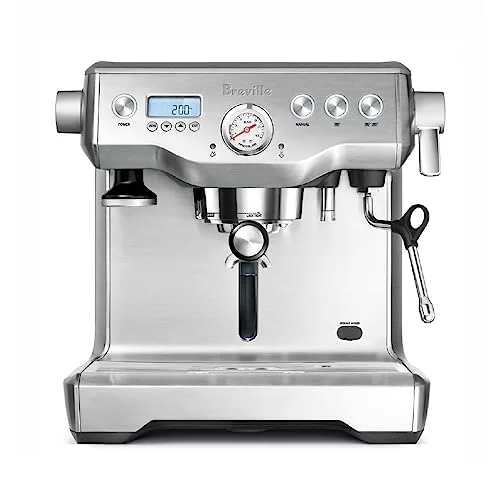 Dual Boiler Dual Boiler | Simultaneous brew-and-steam, café-level thermal stability | None | Manual wand, independent boiler | $1,599.95 | Price |
The Bambino — the cheapest way to find out if espresso sticks
At $249.95, the Bambino is the lowest-risk entry point in this lineup. It's a genuine pump machine with an automatic microfoam steam wand in a footprint small enough for a narrow counter, and the automation on the milk side means a flat white is approachable on day one. The trade-off is everything the grinder tiers add: no built-in grinder, so budget for pre-ground coffee or a separate burr grinder, and no touchscreen guidance on the brew side.
The Bambino Plus — the same bet, better milk
At $399.95, the Bambino Plus keeps the Bambino's compact, grinder-free formula and upgrades the automatic milk system. It's the pick for someone who has already decided milk drinks matter more than an integrated grinder, and who would rather spend the jump to $499.95 on a better milk experience than on dose control they may not use yet.
The Barista Express — the reference build for learning manual espresso
At $499.95, the Barista Express is where a built-in conical burr grinder, dose control and a razor dose-trimming tool arrive together for the first time in this lineup. It asks more of you than the touchscreen tiers — you're running the grind, dose and steam wand by hand — and that is precisely the appeal for anyone who wants to actually learn what each variable does rather than have a screen manage it.
The Barista Touch — the guided middle
At $799.95, the Barista Touch keeps the Express's built-in grinder and swaps the manual dials for a touchscreen that walks grind, dose and shot time. It's the pick for someone who wants the learning curve compressed without paying for automated tamping they may not need, and the $300 jump over the Express buys interface, not a new mechanical capability.
The Barista Touch Impress — hands-off shot pulling
At $1,199.95, the Barista Touch Impress adds the Impress auto-tamping puck system on top of the Touch's screen-guided workflow, removing the one manual step — tamping — that causes the most inconsistent shots for beginners. It's the pick for someone who wants the closest thing to one-button espresso Breville sells without stepping up to a super-automatic bean-to-cup machine, and the premium over the Barista Touch is specifically about that tamp automation.
The Dual Boiler — for someone who already knows they want it
At $1,599.95, the Dual Boiler is the outlier: no grinder, no touchscreen, full manual control, and the only machine here that can brew a shot and steam milk at the same time, each at an independently held temperature. That's a café-style workflow, not a beginner one, and it's the right buy specifically for someone who has already used a single-boiler machine, understands why simultaneous brew-and-steam matters to them, and wants to supply their own grinder. It is a poor first machine for anyone still deciding whether espresso is a daily habit.
Which tier most home users should stop at
Given six real options, most households get the best return stopping at the Barista Express or the Barista Touch, not at the top of the range.
The case for stopping at the Barista Express: $499.95 already buys a built-in grinder, dose control and a manual steam wand — the core of what makes home espresso genuinely good rather than merely functional. Everything above it on this list is refining the interface (touchscreen), removing a single manual step (auto-tamping), or solving a problem — simultaneous brew-and-steam — that only matters once you're making multiple milk drinks back to back on a schedule. For one or two people making one or two drinks a morning, none of those upgrades change what ends up in the cup; they change how much of the process you see.
The case for stopping one tier higher, at the Barista Touch, is narrower but real: if you know you dislike memorizing settings and would rather have a screen hold your recipe, the $300 premium over the Express buys exactly that, with no change to the grinder or steam wand underneath.
The Barista Touch Impress and the Dual Boiler are both defensible, but both are purchases for people who already know what specific problem they're solving — inconsistent tamping, or simultaneous brew-and-steam — rather than a default upgrade path. Buying either one without that specific need in mind is the most common way this lineup gets over-bought.
One thing not to assume
Don't assume the most expensive Breville here is the most automated one. The Dual Boiler at $1,599.95 is the most manual machine in this lineup — no grinder, no touchscreen, no auto-tamp — and the Barista Touch Impress at $1,199.95 is actually the more hands-off machine to live with day to day. Price here tracks mechanical capability, not hand-holding.
All six, side by side
Same six machines, every confirmed spec in one place. Prices are what we recorded on September 27, 2026.
| Machine | Grinder | Interface | Milk | Notable extra | Price | |
|---|---|---|---|---|---|---|
| Bambino | None | Manual | Automatic microfoam | Smallest footprint | $249.95 | Price |
| Bambino Plus | None | Manual | Automatic microfoam, upgraded | — | $399.95 | Price |
| Barista Express | Built-in, conical burr | Manual dials | Manual wand | Razor dose-trimming tool | $499.95 | Price |
| Barista Touch | Built-in | Touchscreen | Manual wand | Guided grind/dose/time | $799.95 | Price |
| Barista Touch Impress | Built-in | Touchscreen | Manual wand | Impress auto-tamping puck | $1,199.95 | Price |
| Dual Boiler | None | Manual | Manual wand | Independent dual boilers, simultaneous brew/steam | $1,599.95 | Price |
A few gaps are worth naming rather than papering over. None of the six listings gives us a boiler wattage figure — our guide to watts and amps explains why that number is worth confirming before you buy, Breville included. None specifies a pressure-relief or OPV valve as user-adjustable; if tunable brew pressure matters to you, our guide to adjustable pressure valves covers which machines actually offer that. And none of the six lists a self-clean or auto-descale cycle explicitly — see our guide to self-clean and auto-descale cycles for what to check on the current listing before you buy.
How we compared these
We compare published specifications, product names, price and machine class — we do not physically test these machines, we do not run a testing lab, and we do not publish ratings we cannot verify. Amazon's product data returns no rating and no review count for the machines on this site, so there are no stars and no invented scores anywhere on this page. Where a listing names a feature — the Impress auto-tamping system, a touchscreen interface, an automatic microfoam wand — we report it as stated; where a listing is silent on a spec, such as grind-setting count, boiler wattage or tank size, we say so explicitly instead of filling the gap with a plausible-sounding guess.
The tier logic in this guide — that built-in grinding, touchscreen guidance and automated tamping are each separate, stackable upgrades, and that a dual boiler solves a different problem than any of them — is general, non-product-specific domain knowledge about how espresso machines are engineered, not a claim about any single listing. Judgement calls, like where most home users should stop on this ladder, are stated in our own voice as trade-offs, not as verified facts, so you can weigh them against your own routine. The rest of our method sits on our main espresso machine guide.
Frequently asked questions
What's the real difference between the Barista Touch and the Barista Touch Impress?
Both have a built-in conical burr grinder and a touchscreen that guides grind, dose and shot time. The Barista Touch Impress adds the Impress puck system, which automates tamping — the one manual step that causes the most inconsistent shots for beginners. At $1,199.95 versus $799.95, that roughly $400 difference is specifically about tamp automation, not about grinder quality or screen features.
Does the Breville Dual Boiler have a built-in grinder?
No. Despite being the most expensive machine in this lineup at $1,599.95, the Dual Boiler ships without a grinder, the same as the Bambino and Bambino Plus. Its price goes into a second, independently controlled boiler that lets you brew a shot and steam milk at the same time — a different kind of upgrade than the grinder-and-touchscreen tiers in the middle of the range.
Is the Bambino Plus worth $150 more than the base Bambino?
Only if milk drinks are a regular part of your routine. Both machines skip the built-in grinder entirely and share the same compact, pump-driven foundation; the Bambino Plus's premium goes into an upgraded automatic milk system. If you drink espresso black, the $150 buys a feature you may never use.
Which Breville machine should a first-time espresso buyer start with?
For most people, the Barista Express at $499.95 is the strongest starting point: it's the cheapest machine in this lineup with a built-in grinder and dose control, which is the single biggest jump in day-to-day quality this range offers. The Bambino at $249.95 is a reasonable cheaper start if you already own or plan to buy a separate grinder; the touchscreen and auto-tamp tiers above the Express are worth paying for only once you know specifically what friction you're trying to remove.