Automatic Pressure Relief: The Safety Valve Feature Most Listings Don't Mention
One machine's listing describes an added solenoid valve that releases pressure automatically during and after extraction. Two similarly priced grinder machines describe no such thing. Here is what an over-pressure moment actually looks like, what the stated feature claims to prevent, and what a line in a listing can and cannot tell you before the machine is on your counter.
Reader-supported: we may earn a commission if you buy through our links, at no extra cost to you. Prices are the ones in our product database — the JustSmart price was last confirmed October 15, 2026 — and they move constantly, so confirm the live price before buying.
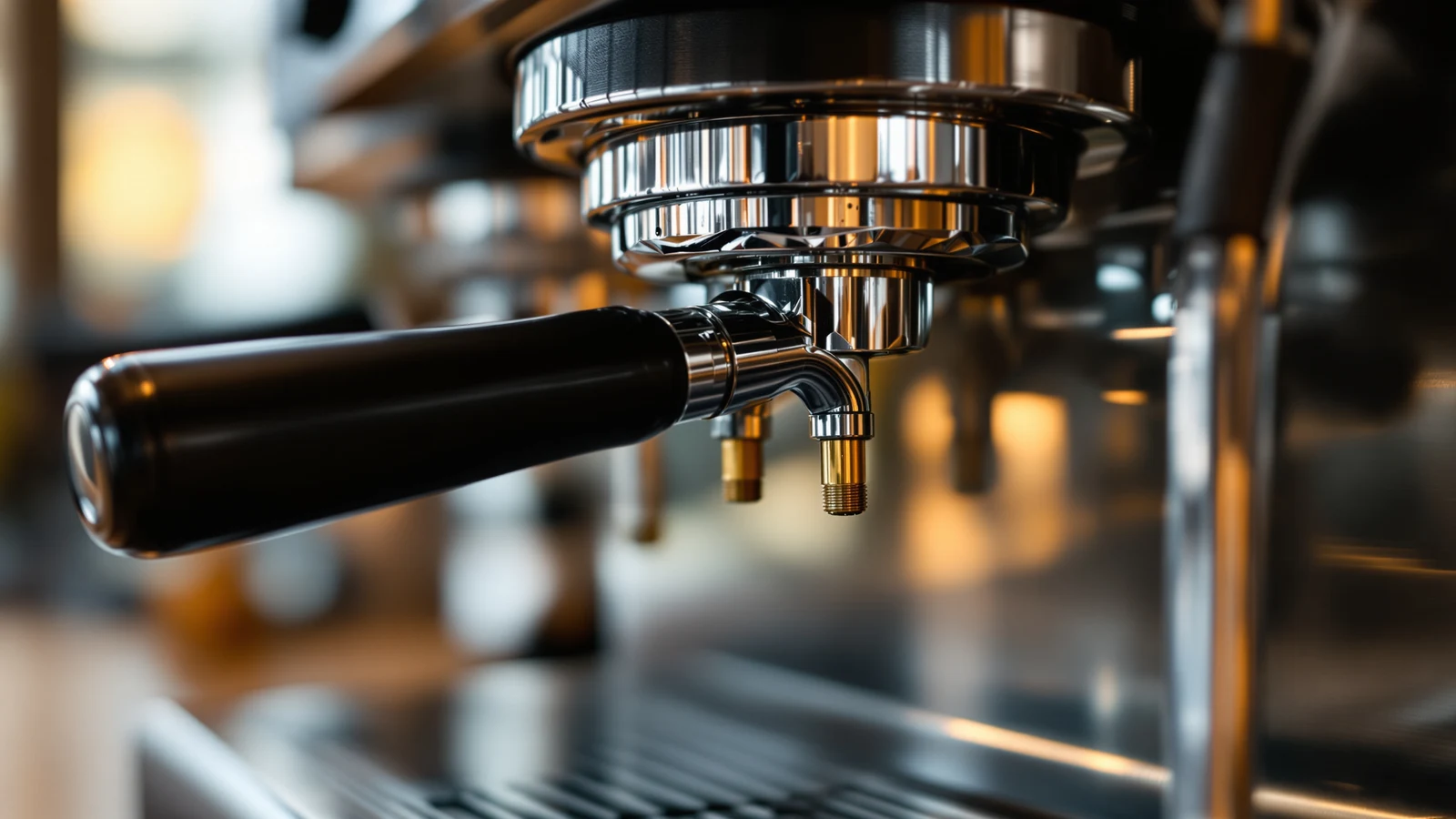
What an over-pressure moment during extraction actually looks like
Every pump espresso machine is, mechanically, forcing water through a tightly packed bed of ground coffee at something near 9 bar. That number holds only when the puck lets it hold. Grind a touch too fine, dose a gram too heavy, or tamp harder than usual, and the bed resists more than the machine expects — pressure in the group head climbs past its normal working point rather than settling at it.
On most machines that moment is invisible. There is no display telling you the puck just choked the flow, no indicator that the pump pushed harder than it should have for two or three seconds before the shot either stalled or forced its way through. You find out after the fact, in the cup: a shot that drips for a minute and comes out bitter, or one that channels through a crack in the puck and runs thin and sour. The pressure spike itself leaves no trace you can see from the outside.
The part that matters for this guide happens after the pump stops, not during it. Water and steam in the group head, the portafilter and the lines leading to them do not instantly return to room pressure the moment extraction ends — there is a brief window where that circuit is still pressurized and still hot, close to brewing temperature. Twist off the portafilter in that window on a machine with no provision for it, and what is holding that pressure back is only the basket and the little bit of resistance in the spent puck. That is the moment an automatic pressure relief feature is built to address: not the taste of the shot, but what happens to the person standing at the machine once the shot is finished.
The solenoid valve one listing describes
Among the three machines in this comparison, one lists a named safety feature the other two do not: the HERTELLA Espresso Machine with Burr Grinder states an "Automatic Pressure Release Function" directly in its product title, alongside a 20-bar pump, a visual pressure gauge, and four temperature modes that include hot and cold brew.
The listing does not publish an engineering diagram, and we are not going to pretend it does. What it claims, in plain terms, is that pressure is released automatically — not manually bled off by the person using the machine — at points during and after extraction. The general class of component that does this kind of job in a pump espresso machine is a solenoid valve: an electrically triggered valve, opened and closed by the machine's own control board rather than by a spring calibrated once at the factory. That is the meaningful difference from the passive over-pressure valve every pump machine already carries to cap peak brewing pressure — a solenoid valve is switched on command, which is what lets a machine time a release to a specific point in the cycle instead of only ever capping a ceiling.
Where the listing stays silent is on the specifics a cautious buyer would want next: exactly when in the cycle it fires, whether it vents to the drip tray or back into the reservoir, and whether it is a serviceable part or a sealed one. We are not going to fill those gaps with a guess dressed up as a fact. The honest summary is: the manufacturer states the machine does this, and that claim is specific enough to be a real design decision rather than a throwaway marketing word — more on the limits of taking that at face value below.
Two comparably priced machines without that stated feature
The comparison only means something because the other two machines sit in the same price band and the same product category — burr grinder built in, pump rated at 20 bar — and simply do not mention an equivalent function.
The JustSmart Deluxe Espresso Machine with Double Boiler, Built-in Burr Grinder is the cheapest of the three at $169.99, and its standout spec is the double boiler — a separate boiler for brewing and for steaming, which on most home machines is the thing you pay well over $500 for. Its listing does not describe any pressure-release mechanism, named or otherwise. The Mooye Espresso Machine with Grinder, at $219.99, lists a 20-bar pump, a grinder and a milk frother, and likewise says nothing about how pressure is handled once a shot ends.
To be precise about what that absence does and does not mean: every pump espresso machine, including these two, almost certainly has some passive over-pressure valve inside it, because a pump machine with no ceiling on brewing pressure at all would be a liability the manufacturer could not sell. What neither listing claims is the specific, electronically timed release this guide is about — the kind that is marketed as a feature rather than assumed as baseline plumbing. That is a gap in the stated feature set, not a verified gap in engineering, and the distinction matters enough that we come back to it directly below.
The picks
All three bundle a burr grinder into the machine, which is itself worth a separate look — see our breakdown of whether espresso machine and grinder bundles are worth it for how that trade plays out against buying the pieces separately. Here is what each lists, pressure handling included.
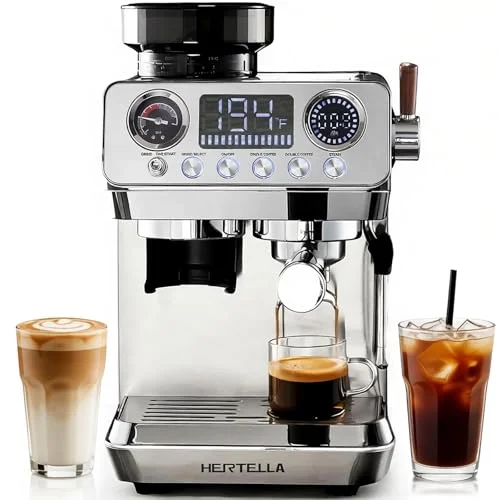
HERTELLA Espresso Machine with Burr Grinder — the one with the stated feature
20-bar pump, built-in burr grinder, visual pressure gauge, stainless steel housing, four temperature modes including hot and cold brew, milk frother steam wand, and the listed Automatic Pressure Release Function. The Large size/variant is the only size data we have for this listing — check the product page for other options.
$199.00 Check price →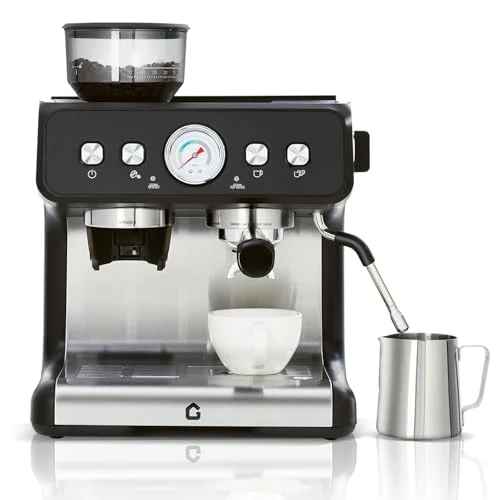
JustSmart Deluxe — cheapest, and built around a double boiler instead
20-bar pump, built-in burr grinder, and a double-boiler design that separates brewing and steaming heat — a specification that usually costs much more than $169.99. No pressure-release feature is named in the listing. The 20 Bar size/variant is the one we priced.
$169.99 Check price →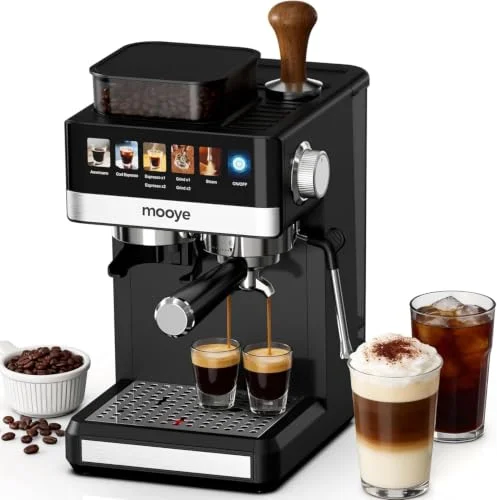
Mooye Espresso Machine with Grinder — the plainest spec sheet of the three
20-bar pump, built-in grinder, milk frother. No pressure-handling feature of any kind is called out in the listing, named or generic. The Medium size/variant is the one we priced; the listing is the authority on any other size offered.
$219.99 Check price →How this differs from a manually adjustable pressure valve
We cover a manually adjustable over-pressure valve, or OPV, elsewhere on this site, and it is worth being explicit about why that is a different feature from the one in this guide rather than a more expensive version of the same thing — the word "pressure valve" invites exactly that confusion.
An adjustable OPV is a mechanical dial or screw a buyer turns themselves, before or between shots, to raise or lower the ceiling the pump is allowed to push against the puck. It changes how the shot is brewed. Turn it down and the pump backs off sooner; turn it up and the puck sees more pressure before the excess bleeds away. It is a flavor and technique control, closer in spirit to adjusting grind size than to anything safety-related, and it asks the person using the machine to understand what they are changing before they change it.
The automatic pressure release described on the HERTELLA listing is not that. It is not a control the buyer operates, it does not claim to change how the shot tastes, and it is not something you would ever be expected to tune. On the account the listing gives, it fires on its own, during and after extraction, to deal with pressure that has already built up rather than to set how much pressure the shot gets in the first place. One is a dial you reach for deliberately to change the cup. The other, as described, is something that happens automatically to the machine so you do not have to think about it at all. Grouping them together because both involve a word spelled "pressure" would be the mistake — they solve different problems for different people at different moments in the shot.
What a safety claim on a listing can and cannot tell you before you own the machine
A bullet point in a product title is marketing copy written to sell a machine, not a lab report, and it is worth being precise about the gap between the two before any of this changes a buying decision.
What the HERTELLA listing's claim can tell you: the manufacturer considered automatic pressure handling worth naming as a selling point, which at minimum means the machine was designed with that behavior in mind rather than it being an accidental side effect of some other part. That is a real, if modest, signal — somebody on the design or marketing side decided this was worth a buyer's attention.
What it cannot tell you: how the valve performs after a thousand cycles, whether it is covered by whatever warranty period the listing offers, how it is serviced if it sticks, or whether it will still trigger correctly in year three. None of that is answerable from a listing, on this machine or any other, and we are not going to imply otherwise. It also cannot tell you that the two machines without the claim are actually less safe in practice — only that they have not chosen to market a comparable mechanism, which is a statement about marketing copy, not about what is bolted inside the housing. We go through a close relative of this exact problem in our look at the one machine here that states its country of manufacture: a label tells you what the manufacturer chose to state, not everything that is true about the product, and the gap between those two things is where a buyer's judgment still has to do real work.
It is also worth noting who is making each claim here. None of these three are long-established names the way a legacy espresso brand is — see our comparison of legacy brands against direct-to-consumer machines for what that track record is and is not worth. A newer, direct-to-consumer brand naming a safety feature is a reasonable thing to do and does not need a decades-old name behind it to be true. It does mean there is less independent history to lean on if something about the claim turns out to matter later, which is simply a different kind of unknown than the one you accept with an established brand that does not bother naming features everyone assumes are standard.
The three, side by side
Prices are the ones in our product database and move constantly on Amazon — confirm the live price before buying.
| Machine | Pump | Grinder | Pressure handling | Price | |
|---|---|---|---|---|---|
| HERTELLA with Burr Grinder | 20 bar | Built-in burr | Automatic Pressure Release Function (stated) | $199.00 | Price |
| JustSmart Deluxe | 20 bar | Built-in burr, double boiler | Not stated in listing | $169.99 | Price |
| Mooye with Grinder | 20 bar | Built-in | Not stated in listing | $219.99 | Price |
Reading this table correctly means noticing what it is not showing. The middle column proves that a 20-bar rating is nearly universal at this price and tells you almost nothing about pressure at the puck, which settles near 9 bar on a working machine regardless of the pump's maximum. That context sits alongside how brands at a step up market their own feature tiers — our breakdown of where the money actually goes between the Barista Express, Pro and Touch walks through a similar pattern, where a higher tier name does not automatically mean a meaningfully different mechanism underneath. The right column is the one doing the actual work in this guide, and it is reporting what each listing says, not what we have independently confirmed about what is inside the housing.
How we compared these
We compare published specifications, listing language, price and product class — we do not physically test these machines, we do not run a testing lab, and we do not publish ratings we cannot verify. Amazon's product data returns no rating and no review count for the machines on this site, so there are no stars anywhere on this page and no paraphrased review sentiment standing in for one.
Everything attributed to the HERTELLA's pressure-release feature in this guide comes from its listing title, read conservatively: we describe what a solenoid-type valve generally does in a pump espresso machine as background engineering context, and we have been careful to flag where the listing itself stops explaining. The absence of an equivalent claim on the JustSmart and Mooye listings is reported as exactly that — an absence of a stated feature — not as a claim that those machines lack any pressure-limiting hardware at all, since every pump machine needs some. This machine class sits one price tier above the cheapest grinder-equipped machines we track; see our look at what you actually get under $80 for where that honest floor sits and what gets dropped to hit it. The rest of our method, and the eight machines we recommend outright, live on our main espresso machine guide.
Frequently asked questions
What does "automatic pressure release" mean on an espresso machine listing?
On the HERTELLA listing, where this phrase appears as a named feature, it describes a valve — most likely a solenoid-type valve controlled by the machine's electronics rather than a spring set once at the factory — that releases built-up pressure on its own, during and after extraction, without the person using the machine having to do anything. The listing does not detail the exact timing or mechanism, so we are reporting the claim, not an independently verified engineering spec.
Is an automatic pressure relief valve the same thing as an adjustable OPV?
No. An adjustable over-pressure valve is a manual dial or screw the person using the machine turns themselves to change how much pressure the pump is allowed to push during brewing — it is a flavor and technique control. An automatic pressure release function, as described on the HERTELLA listing, is not user-operated and does not claim to change how the shot brews; it is aimed at venting pressure that has already built up, during and after the shot, rather than setting the ceiling in the first place.
Does a machine without a stated pressure-release feature lack any pressure safety at all?
Not necessarily. Every pump espresso machine needs some passive over-pressure valve to cap brewing pressure, or it would not be sellable. The JustSmart Deluxe and the Mooye with Grinder simply do not name an electronically timed release feature in their listings the way the HERTELLA does. That is a gap in what each manufacturer chose to state, not a confirmed gap in what is physically inside either machine.
Can I trust a safety claim on a listing with no further explanation?
Treat it as a real but limited signal. A stated feature means the manufacturer designed for that behavior and considered it worth marketing, which is more than nothing. It cannot tell you how the part performs after months of use, how it is serviced, or whether it is covered under warranty — none of that is answerable from listing copy, on this machine or any other, and no amount of careful reading changes that.