The One Machine Here That Says 'Made in Italy': Does the Label Change Anything?
Of the three machines in this comparison, exactly one listing states its country of manufacture. The other two — both sold direct to consumer — say nothing about where they're built, while disclosing plenty about what's inside them. That split is the whole story, and it's worth looking at honestly rather than letting either silence or a flag on a box do the deciding.
Reader-supported: we may earn a commission if you buy through our links, at no extra cost to you. Prices below are what we had on file as of late October 2026 and move constantly — confirm the live price before buying.
The short answer
No, not by itself. A country-of-manufacture line on a product listing tells you where final assembly happened, and nothing else — not the quality of the parts, not how the machine was tested, not whether it will still be pulling shots in five years. Treating it as a proxy for build quality is the same mistake as trusting a star rating you can't verify: it feels like information, and it is information, but it answers a much narrower question than the one you're actually asking.
Here is the actual setup. The Gaggia RI9380/46 E24, at $450.83, is the one listing in this trio that states its country of manufacture: Italy. The AMZCHEF Espresso Machine with Grinder at $219.99 and the Gevi Dual Boiler Espresso Machine at $349.99 — both sold the way most direct-to-consumer kitchen appliances are sold now, through a brand name and a product page rather than a retail heritage — don't mention a country of manufacture anywhere in their listing data. That's not necessarily something to hide; it's simply a field a lot of DTC listings skip, the same way they skip serial-number traceability or a named factory.
What the two DTC listings do instead is lean hard on numbers: wattage, grind-setting counts, portafilter diameter, boiler configuration. The Gaggia listing leans on name and finish. Neither approach is dishonest. But they are not comparable on the same axis, and that's the trap — you can't weigh "built in Italy" against "58mm portafilter" and come out with a winner, because they're answering different questions.
What the Gaggia listing actually claims — and what it doesn't
The Gaggia RI9380/46 E24 Espresso Machine, finished in brushed stainless steel, is the listing that puts its origin on the label: Italy. Gaggia is one of the oldest names in home espresso, and a country-of-manufacture claim from a brand with that history reads, fairly or not, as a heritage signal rather than a throwaway spec line.
What that claim does not do is tell you anything about the specific unit you'd receive. It doesn't specify the boiler type, the portafilter diameter, the pump pressure, or the wattage — none of those fields are present in the listing data we have for this model. It also doesn't tell you which components inside the machine were sourced locally versus imported; "Made in Italy" typically refers to final assembly meeting a country-of-origin threshold, not that every gasket, solenoid and circuit board was forged there. That's true of the label generally, not a knock on this specific machine — but it's worth saying plainly, because the label is doing more rhetorical work than factual work here.
We're also working from the Size variant listed for this unit — Small — which is a sales-variant label, not a dimension. If you land on this listing and see a different size option selected, check that the price and any stated measurements on the page match before you buy; we don't have inch-by-inch dimensions for this model to compare against the other two.
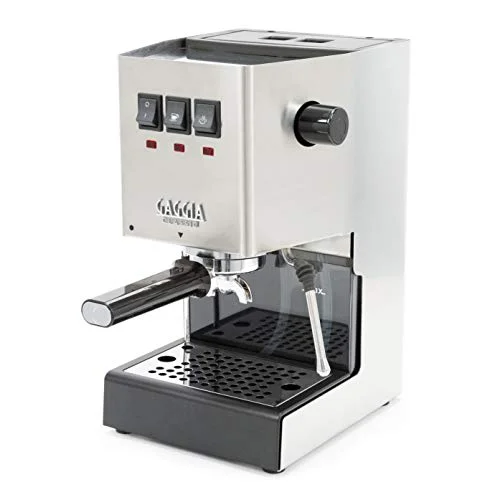
Gaggia RI9380/46 E24 Espresso Machine
Brushed stainless steel finish. The one listing in this comparison that states a country of manufacture — Italy — on the product page. Listed in the "Small" size variant; we don't have portafilter, boiler or wattage figures for this unit.
$450.83 Check price →Matching specs instead: bar pressure, portafilter size, boiler design
If the country label is the wrong axis, the obvious fix is to line the three machines up on the specs that actually change what lands in the cup — pump pressure, portafilter diameter, boiler design. We tried, and the result is itself the honest finding here: the three listings disclose almost entirely different things, so a clean side-by-side isn't fully possible from the data on the page.
The Gevi Dual Boiler Espresso Machine is the most forthcoming of the three on hardware. Its name alone states a dual-boiler design — one boiler dedicated to brewing, one to steam, which is the configuration that lets a machine pull a shot and froth milk back-to-back without waiting for the shared boiler to recover temperature — plus a built-in grinder and a 58mm portafilter, a commercial-style diameter larger than the 51–54mm baskets common on home machines in this price range. None of that is marketing copy we're repeating; it's literally in the product name.
The AMZCHEF Espresso Machine with Grinder discloses a different slice: 1500W of power and 40 grind settings on its built-in grinder. We don't have a stated portafilter diameter or boiler configuration for this model, so we won't guess at either — if that's a deciding factor for you, check the current listing directly before buying.
The Gaggia RI9380/46, as covered above, discloses none of these three figures in the data we have. No bar-pressure number, no portafilter diameter, no boiler count. That's the real asymmetry in this comparison: the machine that tells you where it's built is the one that tells you the least about what's inside it, and the two machines that are silent on origin are the ones handing you grind counts and boiler layouts. Bar-pressure claims specifically are worth reading skeptically everywhere in this category — espresso brews at roughly 9 bar at the coffee puck regardless of brand, and a pump rated well above that number is reporting its maximum, not the pressure your shot actually sees. None of the three listings here state a bar-pressure figure for us to even apply that skepticism to, which is its own small data point about how much this category omits.
Where the DTC machines list features the Italian listing doesn't mention
Flip the comparison around and the pattern holds. Both direct-to-consumer machines publish functional specs that the Gaggia listing simply doesn't surface: the Gevi's dual-boiler layout and 58mm portafilter, the AMZCHEF's wattage and 40-position grinder. A shopper comparing these three side by side on Amazon would see two detailed spec sheets and one brand name with a country flag.
That's a pattern worth naming rather than praising or condemning. Newer, direct-to-consumer brands without decades of name recognition tend to sell on quantifiable detail, because that's the trust they can build in a single product page — a number is verifiable, a heritage claim is not. Legacy brands can lean on the opposite: a name and a flag carry weight built up over years that a spec sheet doesn't need to re-earn on every listing. We go deeper on that exact trade-off, across a wider set of brands, in legacy brand or direct-to-consumer: what you're really paying for.
The practical consequence for a buyer: if hardware specifics are what you're deciding on, the Gevi's listing currently gives you the clearest picture of the three, on paper, of boiler design and portafilter size. If you're deciding on something closer to brand trust and heritage, the Gaggia name is doing that job, country label included. Neither listing is lying by omission — they're simply optimized for different kinds of confidence.
The picks
This isn't a ranked "best of three" — the machines are different enough in what they disclose that ranking them on a single scale would paper over the actual differences. Here's who each one is a reasonable fit for, based only on what we can verify.
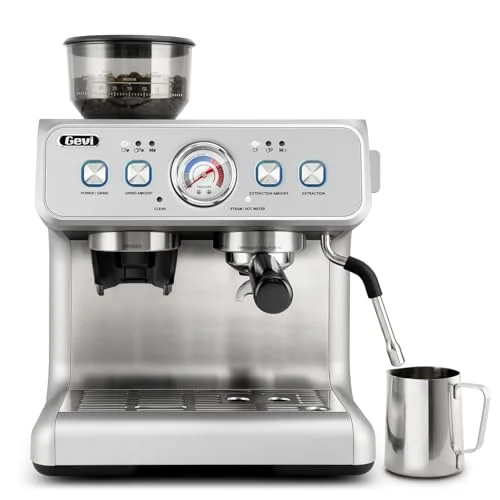
Gevi Dual Boiler Espresso Machine — if hardware specifics decide it for you
Dual-boiler design, built-in grinder, 58mm portafilter — the most disclosed hardware of the three. Measures 12.6"D x 13.8"W x 16.5"H, so check cabinet clearance before ordering.
$349.99 Check price →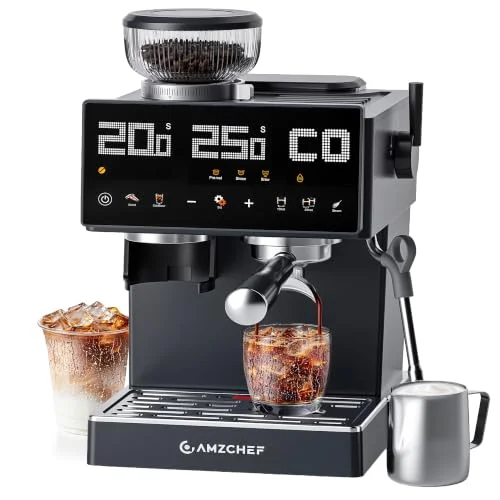
AMZCHEF Espresso Machine with Grinder — if price-to-features is the priority
1500W, 40 grind settings, built-in grinder, at the lowest price of the three. Listed in the "Large" size variant; confirm the current listing for any dimension you need before buying.
$219.99 Check price →And the Gaggia RI9380/46, above, is the pick for a buyer who weighs brand heritage and a stated country of manufacture heavily — as long as that buyer understands the label is answering "where was this assembled," not "how good is this machine," and checks the current listing for the hardware specifics it doesn't volunteer.
Why origin claims are easy to print and hard to verify
A country-of-manufacture claim on a retail listing is, functionally, a sentence someone typed into a product page. There's no espresso-machine equivalent of a nutrition label that Amazon independently audits line by line before a listing goes live. The claim can be accurate, outdated, or describe one production run and not the next — manufacturers do shift final assembly between facilities and countries over a product's lifespan, sometimes without updating every retail listing that references the old one.
None of that means the Gaggia listing's claim is false. We have no basis to say that, and we're not suggesting it. The point is narrower: a shopper can't verify a country-of-manufacture claim from the listing itself any more than they can verify a star rating from the listing itself. Both are statements the platform displays on the seller's behalf, not facts independently confirmed by the retailer. The honest move is to treat the claim as what it is — information the seller chose to disclose — rather than as proof of anything beyond that disclosure.
This is also why the absence of an origin claim on the AMZCHEF and Gevi listings shouldn't automatically read as a red flag. A brand that doesn't state a country of manufacture hasn't necessarily hidden it maliciously; plenty of DTC appliance brands simply don't include that field in their listing templates, the same way they often don't list a named design team or a factory address. The absence of a claim is not the same as the absence of information you're owed — it's a gap in what the listing format asked for.
One thing not to do
Don't let a country-of-manufacture line substitute for checking the specs that actually affect daily use — portafilter size, boiler configuration, wattage, tank size. A machine can be built anywhere and still be the wrong fit if its portafilter doesn't match the baskets you already own, or its single boiler means waiting between a shot and steamed milk. Read the hardware specs regardless of what the label says about geography.
What actually predicts long-term reliability, label aside
Country of manufacture is a weak predictor of how long a home espresso machine lasts, mostly because "built in Italy" or "built in China" describes a location, not a specific factory, supplier, quality-control process or component grade — all of which vary enormously within any one country and can be shared across several. The things that correlate more directly with longevity are structural, and they're the same regardless of where the badge says the machine was assembled:
Descaling discipline. Limescale buildup in the boiler and brew path is one of the most common causes of home espresso machines failing early, and it's driven by your water hardness and how consistently you descale — not by the country on the box. Our guide to fitting a machine under your cabinet and general maintenance habits matter more here than any manufacturing claim.
Parts and warranty support. A machine backed by an established service network and readily available replacement parts — gaskets, group-head seals, pump components — tends to stay in service longer simply because a failure doesn't end its life. This is a function of the brand's infrastructure and how long it's been selling into a market, not its factory's location.
Shared chassis risk. Machines that bundle a grinder into the same housing as the brew group — as the AMZCHEF and Gevi both do — concentrate more moving parts into one unit. That's a mechanical trade-off about integration, not origin, and it applies to bundled machines built anywhere. We cover that specific trade-off, including when it's worth paying for grinder integration versus keeping it separate, in espresso machine and grinder bundles: is the matched pair worth it?
Load and duty cycle. A machine rated and built for one or two drinks a day will wear differently from one asked to run six back-to-back, independent of where it came off the line. Dual-boiler designs like the Gevi's exist specifically to handle more consecutive use without the brew and steam functions competing for the same heat source.
None of these four factors appear on a product listing as cleanly as a country name does, which is exactly why the country name gets disproportionate attention. It's the single most legible claim on the page. It's also one of the least predictive ones for whether the machine you buy is still working in three years.
How we compared these
We compared what's published on each listing — price, stated wattage, grind-setting counts, portafilter diameter, boiler configuration, size variant and country of manufacture where present — and read every claim, including the country-of-manufacture one, as a seller-provided data point rather than an independently verified fact. We don't physically test these machines, we don't run a testing lab, and we don't publish ratings we can't verify. None of these three listings carry a verified rating or review count in our data, so there are no stars or scores anywhere on this page.
Where we drew a conclusion rather than reported a fact — that a country label answers a narrower question than "is this a good machine," that the asymmetry in disclosure between the three listings is the real story — we've said so in our own voice, so you can weigh it yourself rather than take it as settled. The general facts referenced above (espresso brewing at roughly 9 bar at the puck, dual boilers avoiding shared heat-source competition, descaling discipline affecting longevity) are standard, brand-neutral background, not claims about any specific one of these three products.
Frequently asked questions
Does "Made in Italy" mean an espresso machine is better built?
Not by itself. A country-of-manufacture claim tells you where final assembly happened; it doesn't specify the factory, the component suppliers, the quality-control process or the specific unit's hardware specs. Of the three machines here, the one stating Italian manufacture — the Gaggia RI9380/46 — discloses less about its boiler, portafilter and pump pressure than the two listings that say nothing about origin at all.
Why don't the AMZCHEF and Gevi listings say where they're made?
We don't know the reason in either case, and a missing field isn't evidence of anything hidden. Many direct-to-consumer appliance listings simply don't include a country-of-manufacture field in their product-page template, the same way they often skip a named factory or design team. Both listings instead disclose detailed hardware specs — the Gevi's dual boiler and 58mm portafilter, the AMZCHEF's wattage and 40 grind settings — that the Gaggia listing doesn't surface.
What actually predicts whether a home espresso machine lasts?
Descaling discipline against your water hardness, availability of parts and warranty support, how many moving parts share one housing (grinder-integrated machines concentrate more into a single chassis), and how heavy your daily use is relative to the machine's boiler design. All four matter more than, and are independent of, a country-of-manufacture claim.
Which of these three should I buy?
It depends on what you're optimizing for, since the three listings disclose different things. The Gevi Dual Boiler gives the clearest hardware picture — dual boilers, built-in grinder, 58mm portafilter — at $349.99. The AMZCHEF at $219.99 is the lowest-priced route to a built-in grinder with 1500W and 40 grind settings. The Gaggia RI9380/46 at $450.83 is the pick if brand heritage and a stated Italian origin matter to you specifically, understood as a heritage and trust signal rather than a hardware spec.