Diletta Alto in Black vs. Stainless Steel: Two Finishes, One $2,399 Price
Two Amazon listings, one prosumer machine. The Diletta Alto shows up as a Stainless Steel listing and a Black listing, both at $2,399.00, both stating a dual boiler, PID temperature control, a shot timer and an adjustable OPV. We read both listings line for line to find out whether "same machine, different shell" actually holds at this price, or whether something is quietly different underneath the finish.
Reader-supported: we may earn a commission if you buy through our links, at no extra cost to you. Prices are the ones we recorded on November 19, 2026 and they move constantly on Amazon — confirm the live price before buying.
The short answer
Buy on finish, not on spec, because the two listings do not disagree on anything that changes how the machine makes coffee. The Diletta Alto in Stainless Steel (ASIN B0DKKRNM5W) and the Diletta Alto in Black (ASIN B0DKLWHZXC) both state a dual boiler, PID temperature control, a built-in shot timer and a user-adjustable OPV, at the same $2,399.00 price we recorded on November 19, 2026. Both are also listed under the same "Without Flow Control" size/variant. Nothing in the published titles separates them beyond the color word.
That is worth sitting with for a moment, because it is not the usual pattern at this price. A dual-boiler, PID-controlled prosumer machine is a serious purchase, and most "which one should I buy" questions in this category hide at least one real trade-off — a smaller boiler, a narrower temperature range, a missing feature. Here, on the data available, the two listings read as the same machine wearing two different shells. The decision that's actually left is which finish you want sitting on your counter for the next decade.
Reading two identically priced listings of the same prosumer machine
At $2,399.00, a shopper bouncing between two Diletta Alto listings has every reason to slow down before clicking buy. Twin listings at an identical price are exactly the pattern that shows up around a seller quietly swapping in a cheaper internal part under a near-identical title, or around one listing being stale while the other reflects a newer production run. That instinct is the right one to have at this price point specifically — a mistake here costs a lot more than a mistake on a $90 machine.
The instinct has to be checked against what the listings actually say, though, not against the pattern in general. Both titles open the same way: "Diletta Alto Espresso Machine," followed by "Dual Boiler," "PID," "Shot Timer" and "Adjustable OPV," with only the trailing finish word changing — Stainless Steel on one, Black on the other. A single manufacturer selling the same prosumer model in two finishes through two separate Amazon listings, rather than one listing with a finish dropdown, is standard practice for small-batch and semi-commercial coffee equipment brands. It is not, by itself, evidence of anything being wrong.
What matters is whether everything after the finish word matches, and here it does. The dual-boiler callout, the PID mention, the shot timer and the adjustable OPV are stated in the same terms on both listings, with no softened or dropped wording on either side. When two listings for the same model diverge even slightly in phrasing — "PID-controlled" on one and "digital display" on the other, say — that phrasing gap is usually where a real functional difference lives. These two titles don't diverge in that way; they diverge only in the one word both are supposed to differ on.
What's confirmed identical: dual boiler, PID, shot timer, adjustable OPV
Four specifications decide most of what separates a prosumer espresso machine from the equipment below it, and all four are stated identically on both Diletta Alto listings.
The dual boiler. Both listings name a dual-boiler design — one boiler dedicated to brewing, a second dedicated to steam — which is the structural feature that lets you pull a shot and texture milk from the same machine at the same time without either one waiting on the other to reach temperature. It is also the specific line that separates this machine, and the Rancilio Silvia Pro X we compared it against in our Rancilio Silvia Pro X vs. Diletta Alto piece, from the single-boiler and heat-exchanger machines that dominate the market below $1,000. Our thermoblock vs. boiler guide goes into what the boiler category itself buys you over a thermoblock; a true dual boiler is the far end of that spectrum, and both listings claim it without qualification.
PID control. PID stands for proportional-integral-derivative — a control loop that holds brew and steam temperature inside a tight band instead of letting it swing between heating cycles the way a simple thermostat does. On a machine built for daily, back-to-back shots, that stability is the difference between a 7am shot and a 9am shot tasting the same and tasting different for reasons that have nothing to do with your grind. Both listings state PID control with identical wording, with no version on either side that reads as a cheaper fixed-thermostat system dressed up in PID language.
The shot timer. Both listings name a built-in shot timer — a visible readout or indicator that tracks how long the pump has been running, so you can time an extraction against a target window (commonly somewhere in the 25-to-30-second range for a double, though the right number for any given bean and grind varies) without reaching for a phone or a separate stopwatch. A shot timer is a convenience feature rather than a brewing-mechanism feature, but it's a named, stated feature on both ASINs, with no listing dropping it to save a line in the title.
The adjustable OPV. OPV stands for over-pressure valve, the component that caps how much pressure the pump can push into the group head. A fixed OPV locks you to whatever the factory decided; an adjustable one lets you set brew pressure yourself, which matters most to someone who has already dialed in a grinder and wants to chase a specific pressure profile rather than accept the factory default. Both listings state an adjustable OPV in the same terms. This is also the specific feature we flagged, in the Rancilio comparison linked above, as named on the Diletta listing and not named at all on the Rancilio Silvia Pro X listing — so it is a real, stated differentiator against that machine, even though it is not a differentiator between these two finishes.
Put together, that is the entire brewing-relevant core of the machine — how it heats water for two tasks at once, how tightly it holds that temperature, how you time a shot, and how you set brew pressure — stated the same way, at the same price, on both listings.
Why a finish-only difference is unusual at this price tier
Paint and plating are a small fraction of what a dual-boiler machine costs to manufacture, which is exactly why a true finish-only pair should, in the ordinary case, carry a near-identical price — the pattern we found to hold on a $599.99 Gemilai pair in our Gemilai G3028A white vs. grey comparison. What makes the Diletta Alto pair worth a separate look is the price tier it's happening at. At $2,399.00, most same-name-different-number pairs we've checked on this site turn out to be two different configurations, not two colors of one unit — our Rancilio Silvia vs. Silvia Pro X comparison is the clearest example: a $1,200 gap between two machines sharing most of a name, and that gap was backed by a confirmable list of what actually changed between them.
The Diletta Alto pair doesn't have that kind of gap. There is no price difference to explain, and the feature list that would normally separate a base unit from an upgraded one — boiler count, PID presence, shot timer, OPV adjustability — is stated identically on both. That combination is unusual specifically because prosumer buyers are the audience most likely to care about a finish choice having zero functional cost, and least likely to tolerate a hidden one. A $20 difference between two listicle-grade machines barely registers; a hidden downgrade hiding behind a $2,399.00 colorway choice is a materially worse outcome, which is exactly why this comparison exists rather than being waved off as "obviously the same machine."
None of that proves nothing has quietly changed between the two ASINs since November 19, 2026. Amazon listings get edited, and a seller can update one finish's bullet points without touching the other's. It is a reason to treat "the titles match" as a strong starting signal rather than a closed case — which is what the checklist later in this article is for.
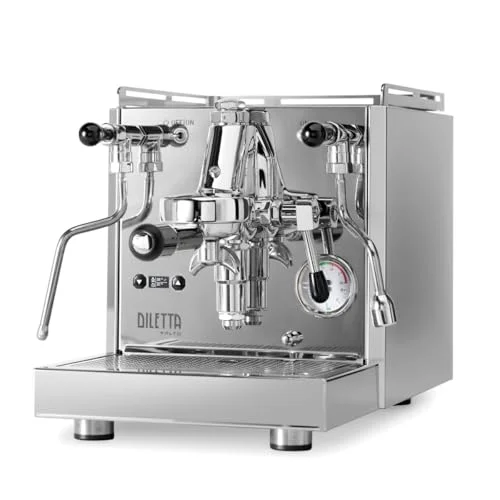
Diletta Alto — Stainless Steel
Dual boiler, PID temperature control, built-in shot timer, adjustable OPV. Listed under Amazon's "Without Flow Control" size/variant.
$2,399.00 Check price →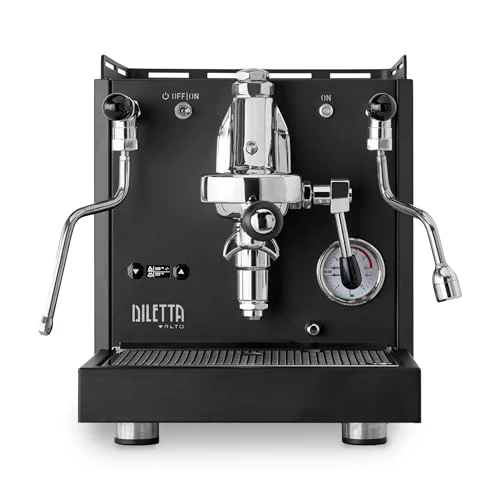
Diletta Alto — Black
Same dual boiler, PID, shot timer and adjustable OPV as the Stainless Steel listing, at the same price, under the same "Without Flow Control" size/variant.
$2,399.00 Check price →The picks
With the spec sheets and the price tied, there is no functional winner to hand you here — only a finish choice and a short list of things worth your own verification before you commit $2,399.00 to either one.
Pick the Stainless Steel listing if you want the machine to read as commercial-grade equipment on the counter, match other stainless appliances, or simply prefer a finish that shows fewer fingerprints and water spots day to day than a darker, more reflective surface tends to. Stainless is also the more common finish for prosumer dual-boiler machines generally, which matters if resale or replacement-parts matching ever comes into play down the line.
Pick the Black listing if your kitchen runs toward dark cabinetry, matte black fixtures or a moodier palette, where a stainless machine would stand out rather than blend in, or if you simply prefer how a black finish looks sitting next to dark counters. A black finish on a boxy dual-boiler unit tends to visually shrink its footprint compared with the same shape in reflective steel, which is worth factoring in if the machine's size on your counter is already a concern.
Don't pick either one purely because it happens to be the listing you found first. At $2,399.00, the cost of discovering after delivery that the two ASINs weren't actually tied on something you care about — an accessory, a warranty term, a fulfillment detail — is real money and a return-shipping headache on a heavy machine. Run the checklist below on whichever listing you're about to order, even though the specs read as matched.
What black vs. stainless steel changes: kitchen fit, not performance
Everything in this section is about the counter, not the cup, because nothing in either listing's stated specifications ties the finish to a performance difference.
Heat and visible wear. A boiler-driven machine runs warm at its chassis for hours at a stretch, and how a finish ages under that is a general material property rather than a feature either listing publishes. Brushed stainless steel is generally more forgiving of daily fingerprints and water spots than a glossy black finish, which tends to show smudges and dust more visibly under kitchen lighting — standard appliance-finish behavior, not a Diletta-specific claim, and neither listing states anything about long-term colorfastness or scratch resistance for either finish.
Visual footprint. A dual-boiler machine in this class is a genuinely large kitchen appliance, and the finish changes how large it reads even when the physical dimensions are unchanged. A dark, matte-leaning finish tends to visually recede against dark surroundings; a bright, reflective stainless finish tends to stand out and catch light, for better or worse depending on what's around it. Neither listing gives us a published footprint figure for this specific pair, so if counter clearance is tight, confirm the exact dimensions on the live listing rather than estimating from photos — this is one of the checks we'd push into the list below regardless of which finish you're leaning toward.
Matching the rest of the kitchen. This is the most straightforward of the three: stainless steel is the dominant finish across home and semi-commercial kitchen equipment, so it's the safer match if you already own other stainless appliances or plan to. Black is the better match for black-hardware kitchens, and it's a finish choice that's become more common across small appliances generally in the past few years, for buyers deliberately avoiding an all-stainless look.
None of that is a performance claim, and none of it should be read as one. The brewing-relevant specification set — dual boiler, PID, shot timer, adjustable OPV — is identical on both listings, and the finish decision sits entirely on top of that shared foundation.
What to double-check before buying either listing at this price
A tied spec sheet on the day we recorded it, November 19, 2026, is not a substitute for checking the live listing the day you actually buy — and at $2,399.00, that check is worth the extra few minutes it takes. Before you click buy on either the Stainless Steel listing or the Black listing, run through this.
Re-read the full bullet list on both, not just the title. Titles are the part of a listing least likely to be edited casually, since they're tied to search matching; bullet points below the fold are where a seller is more likely to quietly add or drop a claim. Confirm the dual-boiler, PID, shot timer and adjustable-OPV claims are still present, worded the same way, on whichever listing you're about to order.
Confirm the price is actually tied, not just close, on the day you buy. We recorded both at $2,399.00 on November 19, 2026. If one has drifted and the other hasn't by the time you're ready to order, that's not necessarily a dealbreaker, but it's a reason to re-read that listing's bullets specifically before paying a premium for either one.
Check the size/variant field directly on Amazon. Our data shows both ASINs tagged under the same "Without Flow Control" size/variant. If the live listing for either one shows a different variant option — including a flow-control version at a different price — confirm you're ordering the configuration you think you are before checkout, not after the box arrives.
Check who's selling and fulfilling each listing. "Ships from and sold by Amazon.com" generally carries more consistent return and authenticity protection than a third-party seller account, and that distinction matters more on a $2,399.00 appliance than it does on a $70 one — a difficult return process costs you a lot more at this price.
Read the box-contents and warranty lines specifically. A shorter accessory list or a differently worded warranty term on one finish, even with matching core specs, is the kind of discrepancy that's easy to miss and expensive to discover late. We don't have an itemized box-contents comparison for these two ASINs, which is exactly why it belongs on your own checklist rather than in a claim we'd make here without the data to back it.
Look through all of the listing photos, not just the hero image. If later photos on one listing show a different control panel, a different group head, or an accessory the other listing's photos don't show, treat that as a real discrepancy worth resolving with the seller before you order — photos are harder for a seller to keep perfectly in sync across two listings than bullet-point text, and sometimes reveal a difference the copy doesn't mention.
One thing not to do
Do not assume "tied price, tied title" means "tied everything" and skip the live-listing check entirely because this article already did the comparison for you. We compared the titles and the prices we recorded on one specific day. Amazon listings for both ASINs can change between that day and the day you order, and a $2,399.00 purchase is exactly the kind of purchase where a five-minute re-check is worth doing every time, not just the first time.
How we compared these
We compared the two Diletta Alto listings on their published titles, ASINs, size/variant data and the $2,399.00 price we recorded for both on November 19, 2026. We did not physically acquire either machine, and we do not run a testing lab. We have no rating or review-count data for either ASIN and we have not invented any — nothing in this article should be read as feedback from people who own the machine, because we have no such data to draw on. Every claim about the dual boiler, PID system, shot timer and adjustable OPV is taken directly from the listing specifications provided for these two ASINs; where we don't have a detail — an exact footprint, an itemized box-contents list, a warranty term — we've said so rather than guessed at it. General background facts used above, including what PID control does, what an over-pressure valve governs, and how appliance finishes age differently under daily heat and handling, are standard product-category knowledge rather than Diletta-specific test results. Where a point here is a judgment call rather than a stated fact — that a finish-only, same-price pair is unusual at this tier, that stainless tends to show fingerprints less than black, that the live listing is worth re-checking regardless — we've said so in our own voice so you can weigh it yourself rather than mistake it for a measured spec.
Frequently asked questions
Is the Diletta Alto in Black a different machine from the Stainless Steel one, or just a finish option?
Based on the published listing data, we can't find a functional difference. Both ASINs — B0DKKRNM5W (Stainless Steel) and B0DKLWHZXC (Black) — state a dual boiler, PID temperature control, a built-in shot timer and an adjustable OPV, at the same $2,399.00 price we recorded on November 19, 2026, under the same "Without Flow Control" size/variant. We found no spec, price or variant discrepancy between the two listings at the time of recording.
Why would a brand sell the same prosumer machine twice instead of a finish option on one listing?
Amazon's catalog tools make a true finish-variant listing — one product page with a color or finish dropdown — harder to set up correctly than publishing two separate, near-identical listings. Smaller and semi-commercial equipment brands commonly take the simpler route of one listing per finish, which is standard practice and not inherently a sign of a problem, provided the specifications actually match across the listings, as they do here.
Does the finish affect how the Diletta Alto's dual boiler or PID system performs?
Nothing in either listing's published specifications ties the finish to a performance difference. The dual-boiler design, PID control, shot timer and adjustable OPV are stated identically on both ASINs. Finish differences are about appearance, fingerprint and water-spot visibility, and how the unit visually fits a kitchen — not about brew temperature stability, pressure control or timing.
Should I just buy whichever Diletta Alto listing is cheaper that day?
If the two listings stay tied on price, buy on finish preference — there's no functional case for one ASIN over the other in the data available. If you check and find a price gap between them, treat that as a prompt to re-read both listings' bullet points and photos before buying either one, rather than assuming the cheaper listing is simply a discount on the identical machine.