Espresso Machines With a Cold Brew Setting, Under $180
Three machines under $180 add a dedicated cold brew function to what is otherwise a standard espresso pump. One builds around cold brew and a milk frother as its reason for existing, at $75.98. Two keep a full standard espresso machine underneath and add cold brew as an extra mode, at $83.99 and $179.99. Here is what that setting actually changes about the brewing cycle, and which of the three fits which kitchen.
Reader-supported: we may earn a commission if you buy through our links, at no extra cost to you. Prices are the ones we recorded between October 9 and November 16, 2026, and they move constantly — confirm the live price before buying.
The short answer
If cold brew is the whole reason you are shopping and you do not need a serious hot espresso shot alongside it, the VIOMI T1A at $75.98 is built around that function and a milk frother, and it is the cheapest way into the category. If you want a standard pump espresso machine that also makes cold brew on demand, with a digital interface and PID temperature control over the hot side, the 20 Bar Espresso Machine with Milk Frother, Cold Brew, Touch Screen at $83.99 is the one to look at. If you additionally want a built-in grinder so you are not buying one separately, the Espresso Machine with Grinder & Steam Milk Frother at $179.99 is the most complete of the three and the only one that pairs a grinder with the cold brew mode.
None of this is a star rating or a buyer survey — Amazon's listing data for these three gives us no rating and no review count, so there are none here. Everything below comes from the published titles, prices and size fields for these machines, plus general, well-documented facts about how cold brew and espresso are actually made.
What the cold brew setting actually changes
Espresso and cold brew are not the same drink forced through different settings on a dial. They are two different extraction methods, and the difference is pressure and heat, not just temperature.
A standard espresso shot pushes near-boiling water through a tightly packed, finely ground puck at roughly 9 bar of pressure for 25 to 30 seconds. The heat and the pressure do the work together: hot water dissolves and carries flavor compounds fast, and the pressure forces it through a bed of coffee that would otherwise barely let water pass. That is also why the heating element matters so much to shot quality — a boiler or thermoblock that swings in temperature changes the shot it pulls, which is the whole subject of our thermoblock vs. boiler guide.
Traditional cold brew throws both of those levers away on purpose. Coarsely ground coffee sits in room-temperature or cold water for 12 to 24 hours with no pressure at all, and time replaces heat and force as the thing doing the extracting. The result is a concentrate, typically diluted before drinking, that comes out less acidic and less bitter than hot-brewed coffee — the compounds behind sharp acidity and bitterness extract more readily at high temperature than cold ones do, a basic fact about coffee chemistry, not a claim about any one machine.
What a "cold brew setting" on one of these three machines changes is the question of how much of that slow steep you actually have to do yourself. None of the three listings here publish the internal mechanics of their cold brew cycle — no cycle length in minutes, no stated water temperature, no description of whether the pump recirculates water through the grounds or simply runs a slower, unpressurized pour. That is a real gap in the public spec sheet, and rather than guess at engineering none of these manufacturers have disclosed, we are telling you plainly: what we know for certain is what you select on the machine, not the engineering behind it. A cold brew mode on a machine like these is built to shortcut the traditional overnight steep into something you start with a button rather than a pitcher in the refrigerator — convenience is the pitch, not a claim that it replicates a 24-hour steep exactly.
VIOMI's single-purpose approach, at $75.98
The VIOMI T1A Espresso Machine with Milk Frother, Instant Cold Brew Maker (ASIN B0GV3DFRZR) is the cheapest machine in this group at $75.98, and its own product title tells you where the emphasis sits: milk frother and instant cold brew maker are named right alongside "espresso machine," not left as an afterthought. That framing is the reason we are calling this the single-purpose approach rather than the full-featured one — the listing is built and marketed around cold brew and milk texturing as the headline features, with the espresso function as the structural label under them rather than the main pitch.
At this price, that focus is also the practical story. $75.98 does not buy the parts budget for a machine that is excellent at three different jobs, so a listing that leads with cold brew and frothing is telling you, honestly, which two jobs it was designed to do well. If what you actually want is a quick cold brew in the morning and milk for it, that is not a compromise — it is the product doing what it says.
What we do not know, because the listing does not specify it, is a pump bar rating, a tank size or a boiler type for the T1A. We are not going to invent those numbers to make the comparison tidier. If a hot shot's spec sheet depth matters to your decision, that is the gap to check directly on the current Amazon listing before buying.
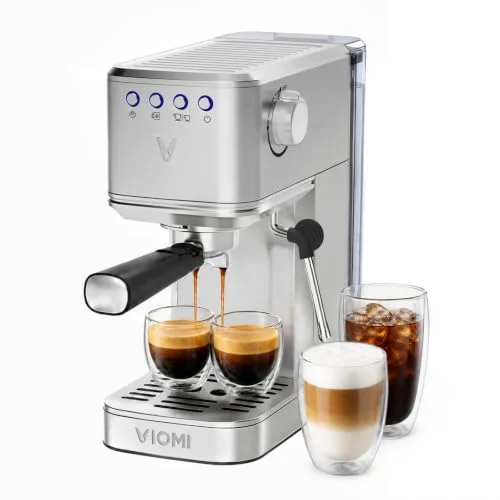
VIOMI T1A Espresso Machine with Milk Frother, Instant Cold Brew Maker
The cheapest of the three and the one built around cold brew and milk frothing as its headline functions, per its own product title. Size/variant: T1A.
$75.98 Check price →Two machines that keep espresso and add cold brew
The other two machines in this group are built the opposite way around. Both are pitched first as espresso machines — a standard pump with a portafilter and a steam or milk-frothing function — and cold brew is an additional mode layered on top of that base, not the reason the machine exists.
That distinction matters for who should buy which. A hybrid machine has to be competent at the hot shot first, since that is its primary job; the cold brew mode is a bonus that saves you owning a second brewer or a cold brew pitcher taking up fridge space. If your household drinks both hot espresso-based drinks and iced coffee depending on the day, a hybrid covers both without buying twice.
The two hybrids here split on two things: price, and what else is bundled in. The $83.99 20 Bar Espresso Machine with Milk Frother, Cold Brew, Touch Screen (ASIN B0HDB4RN4W) adds a digital touchscreen and PID temperature control to a 20-bar pump, a milk frother and the cold brew mode — four features in one unit for just over a hundred dollars. The $179.99 Espresso Machine with Grinder & Steam Milk Frother (ASIN B0HJ6WMYTQ) goes a step further and adds a built-in grinder, which is the one thing the cheaper hybrid does not have. That is also why we are not calling the $179.99 machine the obvious upgrade across the board — a built-in grinder and a PID touchscreen are different features solving different problems, and whichever one you need is the one worth the extra money.
PID and a touchscreen, for $83.99
Cold brew does not involve the machine's heating element at all — it is, by definition, made without heat. So when the $83.99 machine's listing leads with "PID Control and Easy Touch Operation" right alongside cold brew, it is worth separating what each of those actually improves, because the PID control is not doing anything for the cold brew cycle.
A PID, short for proportional-integral-derivative controller, is a well-understood piece of control electronics used across home espresso machines to hold a heating element's temperature inside a tight band rather than letting it swing the way a basic on/off thermostat does. The reason that matters is specific to the hot side: an espresso shot is sensitive to water temperature by only a few degrees, and a boiler or thermoblock that overshoots and undershoots on every cycle pulls a noticeably less consistent shot than one a PID is holding steady. Our guide to thermoblock vs. boiler machines goes deeper on why that temperature stability is the thing that actually separates a good cheap machine from a mediocre one.
So what the $83.99 machine's PID and touchscreen add beyond the cold brew mode is a better, steadier hot shot and an easier way to select between its modes digitally rather than with a row of physical dials. The value proposition here is really two machines in one listing: a hot-side upgrade (PID) that does nothing for cold brew, and a cold brew mode that does nothing for the hot side. Buying this machine for the touchscreen alone, expecting it to also make the cold brew taste different, is the wrong read of what each feature does.
None of the three machines in this guide include a built-in scale to weigh the dose going into the hot shot, which is a separate upgrade some pricier machines offer — see our guide to espresso machines with a built-in scale if gram-accurate dosing on the hot side matters more to you than the cold brew function does.
The $179.99 machine that also pulls hot shots
The Espresso Machine with Grinder & Steam Milk Frother, Semi-Automatic Espresso Maker at $179.99 (ASIN B0HJ6WMYTQ) is the most expensive of the three and, by its own listing, the most complete: a semi-automatic espresso base, a steam milk frother, a built-in grinder, and the cold brew mode on top. Its size/variant field reads simply "Large" — that is the only size information published for this listing, so we cannot state footprint dimensions for it the way we could for the $83.99 model, which does publish a size of 13.2 inches deep by 6.65 inches wide by 12 inches tall. If counter footprint is a deciding factor for you, check the current listing's measurements directly before buying this one.
The grinder is the feature that actually separates this machine from the other two. Neither the VIOMI T1A nor the $83.99 touchscreen model lists a built-in grinder, so pre-ground coffee is the assumption for both unless you add a separate grinder — a trade-off we cover in our guide to machines with a visible bean hopper, since a grinder that holds beans on top of the machine behaves differently day to day than a hopper-free pump. At $179.99, the price also sits where buyers start asking whether a separate machine-plus-grinder combo would do better; our best grinder-equipped machines under $150 roundup compares that tier directly.
"Also pulls hot shots" is the right way to describe this machine's identity: cold brew is the fourth feature on a list that starts with grinding and brewing a standard shot, not the first. If your actual daily habit is hot espresso-based drinks with cold brew as an occasional extra, this is the one built in that order of priority.
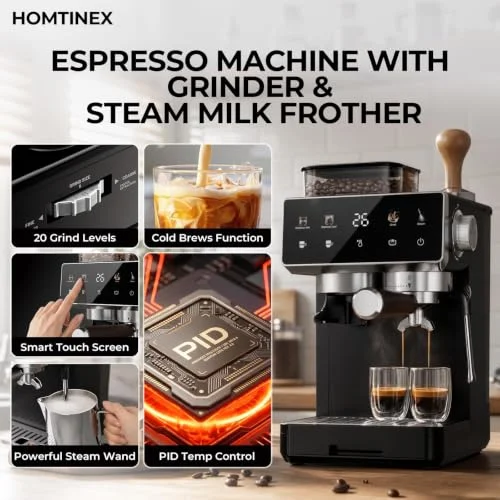
Espresso Machine with Grinder & Steam Milk Frother
Semi-automatic espresso base, built-in grinder, steam milk frother and a cold brew mode, in Grey. Size/variant: Large — check the current listing for exact dimensions.
$179.99 Check price →The three, side by side
Prices are what we recorded on the dates noted below; confirm the live price before buying, since Amazon pricing on these machines moves often.
| Machine | Approach | Grinder | Milk | Price | |
|---|---|---|---|---|---|
| VIOMI T1A | Single-purpose: cold brew + frother | None | Frother | $75.98 | Price |
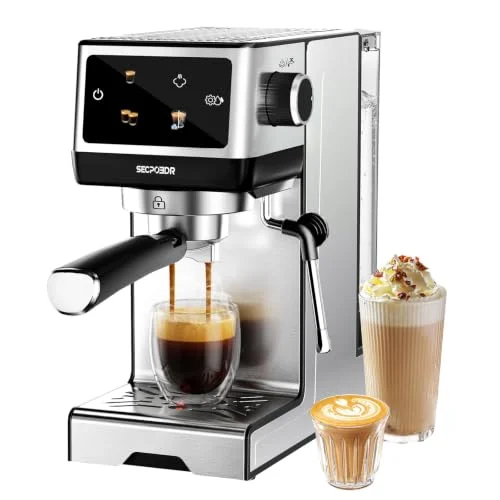 20 Bar with Touch Screen & PID | Hybrid: standard pump + cold brew | None | Frother | $83.99 | Price |
| Espresso Machine with Grinder | Hybrid: semi-automatic + grinder + cold brew | Built-in | Steam frother | $179.99 | Price |
The picks
Three different answers, because the three machines are not really competing for the same buyer.
Cold brew is the point, and you want the cheapest way in: VIOMI T1A, $75.98
If cold brew and a milk frother are what you actually use day to day, paying extra for a standard pump espresso base you will rarely touch does not buy you anything. The T1A's own listing leads with the two features you want, at the lowest price of the three.
You want a real daily espresso machine that also does cold brew well: the $83.99 touchscreen model
PID temperature control is a genuine upgrade to the hot shot, not a gimmick, and a touchscreen is a simpler way to switch between modes than a row of dials. At $83.99 this is the one to buy if espresso is your daily habit and cold brew is the welcome extra.
You don't want to buy a grinder separately: the $179.99 grinder model
Paying $75 more than the touchscreen model buys you the one feature neither cheaper machine has: a built-in grinder, on top of a semi-automatic base, a steam frother and the same cold brew mode. It is the most complete single purchase of the three, and the right one if you are not building a grinder into your budget separately.
Making cold brew without a dedicated setting
None of this requires a special machine at all, and it is worth saying plainly before you spend anything: traditional cold brew is a steeping method, not an espresso technique, so any espresso machine's absence of a cold brew button does not actually stop you from making it.
The standard home method needs four things, none of which are specific to any brand here. Coarsely ground coffee — roughly the texture used for a French press, because fine espresso grounds turn to sludge over a long steep and clog a filter. Cold or room-temperature water, at a ratio commonly started around 1 part coffee to 4 parts water by weight for a concentrate meant to be diluted before drinking. A steeping vessel with some kind of filter — a French press, a large jar with a cheesecloth pour, or a dedicated cold brew carafe with a built-in mesh filter all work on the same principle. And time: 12 to 24 hours in the refrigerator, with longer generally producing a stronger, slightly more bitter concentrate and shorter producing something milder.
After the steep, strain the grounds out and dilute the concentrate with water or milk before serving over ice — straight concentrate is usually too strong to drink undiluted. The process asks for a coarse grind, a filter, a fridge and patience; no machine is strictly required to make a legitimate batch. What a dedicated cold brew setting buys you is skipping the overnight wait, which is a real convenience — just not a different drink than the one you can make for free with gear you probably already own.
One thing not to assume
A "cold brew setting" and a 24-hour steeped cold brew are not guaranteed to taste identical, because none of these three manufacturers has published exactly how their on-demand cycle works. Treat the setting as a faster, more convenient version of the same idea rather than an exact substitute, and judge the result by taste rather than by the name on the button.
How we compared these
We compared published product titles, prices and the size fields Amazon lists for each machine, plus general, widely documented facts about how espresso and cold brew are each made — the roughly 9-bar pressure and 25-to-30-second window of a standard shot, and the coarse-grind, cold-water, 12-to-24-hour steep of traditional cold brew. We do not physically test these machines, we do not run a testing lab, and we do not publish ratings we cannot verify: Amazon's product data returns no rating and no review count for any of the three machines in this guide, so there are no stars and no invented scores anywhere on this page.
Where a listing does not disclose a spec — a pump bar rating for the VIOMI T1A, or exact dimensions for the $179.99 grinder model — we said so rather than estimating a number to fill the gap. Judgement calls, like which machine suits which buyer in the picks above, are stated in our own voice so you can weigh them against your own habits.
Frequently asked questions
Is the cold brew made in these machines the same as a 24-hour steeped cold brew?
Not necessarily identical. Traditional cold brew steeps coarse grounds in cold water for 12 to 24 hours with no pressure or heat. None of these three machines publishes the internal mechanics of its cold brew cycle, so we cannot confirm the cycle time or method matches that traditional steep exactly. Treat the setting as a faster, more convenient version of the idea rather than a guaranteed substitute.
Do I need a grinder to use the cold brew setting on these machines?
Only the $179.99 Espresso Machine with Grinder & Steam Milk Frother includes a built-in grinder. The VIOMI T1A at $75.98 and the $83.99 touchscreen model do not list one, so you would use pre-ground coffee or add a separate grinder with either of those two.
What does PID control actually add if cold brew doesn't use heat?
PID control holds the heating element's temperature in a tight band, which improves the consistency of hot espresso shots specifically. It does nothing for the cold brew cycle, since cold brew is made without heat by definition. On the $83.99 machine, the PID and touchscreen are a hot-side upgrade bundled with, not built into, the cold brew function.
Can I make cold brew in an espresso machine that has no cold brew button?
Yes. Traditional cold brew is a steeping method, not something unique to these machines: coarsely ground coffee steeped in cold water for 12 to 24 hours, strained through a filter, then diluted to taste. A French press, a jar with cheesecloth, or a dedicated cold brew carafe all work. A dedicated setting saves the wait and the separate equipment; it is not the only way to make the drink.