The short answer
The De'Longhi La Specialista Touch lists at $599.95 and the De'Longhi La Specialista Arte Evo lists at $449.95 — so Arte Evo is actually the cheaper machine of the two by $150, and Touch is the one with the touchscreen, the ten preset recipes, guided brewing, and an automatic-or-manual milk frother per its listing. If a number in your head said "the simpler machine is the one with the smaller interface," flip it: here, less visible control costs more, and more stated control (via the touchscreen path) costs less, which is the opposite of how these comparisons usually shake out.
Both machines share the same core promise: a built-in burr grinder feeding a semi-automatic pump, so you get fresh-ground dosing without buying a second appliance. What splits them is the layer sitting on top of that pump — Arte Evo's listing describes a more conventional manual interface, while Touch's listing adds a touchscreen that walks you through ten preset drink recipes and guided brewing steps. Buy Arte Evo if you want the grinder-plus-pump fundamentals without paying for a screen you might not use. Buy Touch if guided, screen-led brewing and the stated automatic-or-manual frothing option are worth the extra $100 over Arte Evo's simpler control layer to you.
Both machines belong to De'Longhi's La Specialista line, and the line's whole premise is bean-to-shot in one footprint: a conical burr grinder sits on top of the chassis, doses into the portafilter you clamp underneath, and a semi-automatic pump pulls the shot once you've tamped. Neither machine asks you to own a second grinder, and neither pretends to be a one-button super-automatic — you still grind, dose and tamp by hand on the pump side of the process, whichever control layer sits above it.
That shared architecture is why this comparison is worth having at all. If one of these were a capsule machine and the other a bean-to-cup, the $100 price gap would be explained by the hardware alone. Here it isn't — the grinder-plus-pump core is the same idea on both machines, so the price difference has to come from somewhere else, and the listings point to exactly one place: the control layer on top.
Our built-in grinder versus separate grinder guide covers why that integration matters more than the brand name on the box. Both La Specialista machines sit on the integrated side of that argument — the question here is only ever about what you interact with once the grinder has done its job.
What Touch's listing adds: screen, presets, guided steps
The Touch listing names three things Arte Evo's does not: a touchscreen display, ten preset recipes, and guided brewing. Put together, that reads as a different interaction model rather than a different machine class — you are still pulling espresso through the same kind of semi-automatic pump, but the Touch model's screen is meant to walk you through each step of the shot rather than leaving you to manage grind, dose and extraction by feel.
Ten preset recipes is a specific, stated number, which matters because it tells you the scope of what's programmed rather than a vague "customizable" claim. Guided brewing, per the listing, is the companion feature: the touchscreen presumably prompts you through a sequence rather than requiring you to already know the sequence. We don't have the exact step-by-step script De'Longhi ships on that screen — that detail lives on the listing and in the manual, not in our database — but the stated combination of preset count and guided steps is consistent with a machine built to reduce the amount you have to already know before you get a good shot.
Touch's listing also states an automatic-or-manual milk frother, giving the buyer a choice of mode rather than committing to one. We cover what that choice actually changes for your morning routine in the milk section below.
De'Longhi La Specialista Touch
Built-in coffee grinder, semi-automatic pump, touchscreen display, guided brewing, 10 preset recipes, and an automatic-or-manual milk frother per the listing.
$599.95 Check price →
Why Touch is priced $100 lower despite the extra control layer
This is the part that resists the usual shorthand of "more features, higher price." Touch, with the touchscreen, the ten presets and the guided brewing, lists at $599.95. Arte Evo, without any of those stated additions, lists at $449.95. That's a $150 gap in Arte Evo's favor — Arte Evo is the cheaper machine, not the pricier one, even though Touch's listing describes more on top of the shared grinder-and-pump platform.
We don't have De'Longhi's internal cost breakdown, so we won't pretend to know exactly why the line is priced this way — that would be inventing a rationale we can't verify. What we can say from the published specs is that the two machines are not simply "same machine, one with a screen bolted on for more money." Something else in the build, the grinder, the boiler, the materials, or simply the retail positioning within the La Specialista range accounts for the rest of the $150 difference, and none of that is visible from the feature list alone. The honest takeaway for a shopper is narrower and more useful: don't assume the screen is the only thing you're paying for, and don't assume paying less means you lose the screen's worth in some other spec you'd actually miss. Compare what's stated on each listing directly, which is what the table further down does.
If a $150 swing on a single line of machines makes you want the fuller picture of where De'Longhi sits against other brands at this price, our De'Longhi Magnifica Start in black vs. silver comparison is a useful second data point — it's the same brand pricing two color variants of one super-automatic model $98 apart, which tells you De'Longhi's line-level pricing doesn't always track feature count in the direction you'd expect.
The picks
Neither machine is strictly "better" here — they're priced for, and described for, different buyers. These are our picks given what each listing actually states.
01Best value core
De'Longhi La Specialista Arte Evo
For buyers who want the grinder-and-pump fundamentals without paying for a screen
Semi-automatic · built-in burr grinder · no stated touchscreen · Medium size/variant
Arte Evo is the lower-priced of the two at $449.95, and its listing doesn't claim the preset-recipe or guided-brewing layer that Touch does. That makes it the pick for anyone who already knows roughly how they want to dial in a shot and doesn't need a screen walking them through it — you're paying for the grinder-and-pump core and not much past it.
The trade-offWithout the stated preset recipes or guided steps, a first-time buyer is more on their own figuring out grind, dose and extraction by feel from the start.
02Best guided control
De'Longhi La Specialista Touch
For buyers who want a screen to walk them through the shot
Semi-automatic · built-in burr grinder · touchscreen, 10 preset recipes, guided brewing · automatic-or-manual frother · Medium size/variant
Touch costs $599.95, $150 more than Arte Evo, but its listing states the touchscreen, the ten preset recipes, guided brewing and a frother that can run automatic or manual. For someone who wants fewer decisions at 7 a.m. and is willing to pay for a stated control layer on top of the same grinder-and-pump platform, this is the listing built for that.
The trade-off$150 more than Arte Evo for a layer of guidance and presets whose exact depth isn't detailed beyond the "10 preset recipes" and "guided brewing" terms on the listing.
Manual versus automatic milk frothing on each model
Milk is where the two listings state a real functional difference, not just a control-panel one. Touch's listing describes an automatic-or-manual milk frother — a choice of mode built into the one machine. Arte Evo's listing does not state that same automatic-or-manual option; we don't have a frothing-mode spec for Arte Evo beyond what's on its listing, so if milk texture control is a priority for you, that's a detail to confirm on the current Arte Evo listing before you buy rather than something we can assert here.
What an automatic-or-manual frother buys you, when it's present, is flexibility rather than a strict upgrade. Automatic mode is the walk-away option: engage it, let the machine texture the milk to a set point, and get on with the rest of your morning. Manual mode is the latte-art option: a steam wand you move and judge by hand, which takes practice but gives you control over exactly how much air goes into the milk and at what temperature. A machine that offers both, as Touch's listing states, lets you pick per-drink rather than committing to one approach for every morning.
If milk drinks are the primary reason you're buying either machine, it's worth treating the frothing spec as at least as important as the touchscreen, because it changes what happens at the steam wand every single day, not just how you navigate a menu once.
Who actually uses guided brewing presets versus setting grind and dose by hand
This is the real fork in who should buy which machine, and it has less to do with budget than with how much you already know about pulling a shot.
Someone new to semi-automatic espresso, or someone who has used a fully automatic pod machine and is stepping up for the first time, benefits most from a stated preset-and-guided-brewing layer like Touch's. The value isn't that the presets replace your judgment forever — it's that they give you a repeatable starting point while you're still learning what "too fine" or "too coarse" tastes like in the cup. Ten preset recipes, per the listing, means ten documented starting points instead of zero, and guided brewing means the screen is prompting the sequence rather than you having to remember it.
Someone who already has a grind-and-dose routine from a previous machine, or who wants to adjust shot parameters shot-by-shot based on taste rather than following a programmed sequence, gets less marginal value from a touchscreen's presets — they were already going to set grind and dose by hand, preset or not. For that buyer, Arte Evo's simpler, lower-priced listing matches what they'd actually use day to day, and the $150 saved doesn't trade away a capability they needed.
Put bluntly: the touchscreen is a feature for the learning curve, not a feature for the ceiling. Both machines are semi-automatic pumps with a built-in grinder, so an experienced user can get just as good a shot out of Arte Evo by hand as a guided sequence gets a beginner out of Touch — the screen changes how fast you get there, not how good "there" can be.
Side by side
Same shared platform, sorted by what each listing adds. Prices are what we recorded on November 16, 2026 (Arte Evo) and November 8, 2026 (Touch).
| Machine | Best for | Grinder | Control layer | Milk | Price | |
|---|
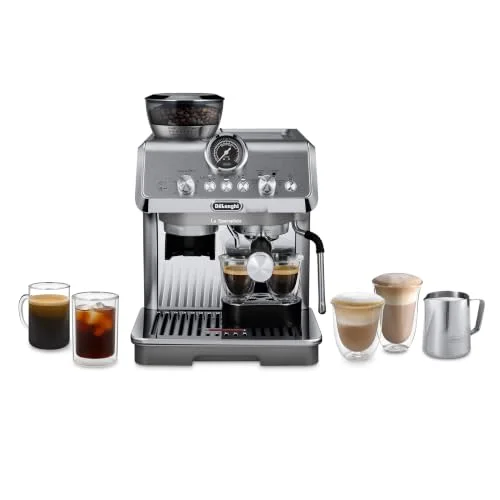 La Specialista Arte Evo | Value fundamentals | Built-in burr | No stated touchscreen | Not stated on listing | $449.95 | Price |
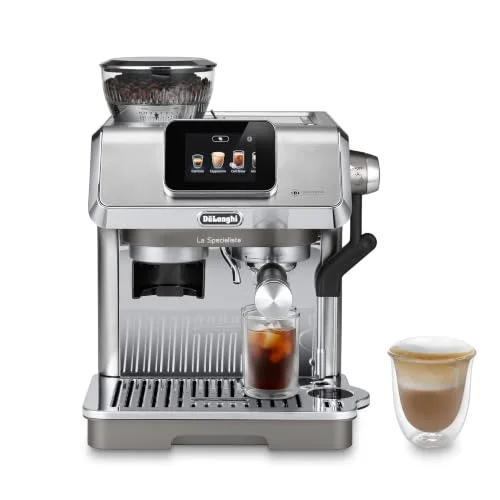 La Specialista Touch | Guided brewing | Built-in burr | Touchscreen, 10 presets, guided | Automatic or manual | $599.95 | Price |
One thing not to assume
Don't assume the cheaper machine here is the "stripped-down" one in every sense. Arte Evo is cheaper and has less stated control-layer tech, but that doesn't tell you about every spec on its listing — grinder settings, tank size and footprint aren't part of this comparison because we don't have verified figures for them on both machines. Check the current listing for anything not covered above before you decide.
How we compared these
We compare published specifications, what each listing states, and live pricing — we do not physically test these machines and we do not run a testing lab. Amazon's product data returns no rating or review count for either machine, so there are no stars and no paraphrased review sentiment anywhere on this page; every claim about the touchscreen, the preset count, guided brewing and the frother mode comes directly from each product's listing, not from physical use or invented buyer sentiment.
Where a point here is our judgment rather than a stated spec — who benefits most from guided presets, why a $150 gap between a screen-equipped and a screen-free model is counterintuitive — we've said so in our own voice and shown the reasoning, so you can weigh it yourself. Our semi-automatic versus super-automatic guide covers the broader category both of these machines sit in, if you're still deciding between this kind of control and a fully automatic one-button machine.
Frequently asked questions
Is the La Specialista Touch a completely different machine from Arte Evo, or just a different control panel?
Based on the listings, both are semi-automatic pump machines with a built-in burr grinder — the same core platform. What differs is the control layer on top: Touch's listing states a touchscreen, ten preset recipes and guided brewing, plus an automatic-or-manual milk frother, none of which Arte Evo's listing states. We don't have a full teardown comparing the grinder or boiler internals beyond what each listing publishes.
Why does Touch cost more than Arte Evo if it's the same platform?
Touch lists at $599.95 and Arte Evo lists at $449.95, a $150 gap. The stated difference between the two listings is the touchscreen, preset recipes, guided brewing and the automatic-or-manual frother on Touch — but we don't have De'Longhi's cost breakdown, so we can't say the entire $150 is explained by those features alone rather than other build differences or retail positioning.
Does Arte Evo have automatic milk frothing like Touch?
Touch's listing states an automatic-or-manual milk frother. Arte Evo's listing does not state that same option, and we don't have a verified frothing-mode spec for it beyond its own listing — if automatic frothing matters to you, confirm the current Arte Evo listing before buying.
Should a beginner buy Arte Evo or Touch?
A beginner generally gets more use out of Touch's stated ten preset recipes and guided brewing, since those give documented starting points while you're still learning grind and dose by feel. Someone who already has a grind-and-dose routine from prior machine experience is less likely to need that guided layer and may prefer Arte Evo's lower price instead.
Keep reading