The Espresso Machine Maintenance Schedule That Actually Keeps It Alive
Most home machines don't die of a broken pump. They die one preventable failure at a time: scale nobody removed, a gasket nobody replaced, a hopper nobody emptied. Here is exactly what to do daily, weekly, monthly and yearly, what each step costs, and the one everyone skips.
Reader-supported: we may earn a commission if you buy through our links, at no extra cost to you. We compare published specifications, box contents and live pricing; we do not physically test these machines and we do not run a testing lab.
The schedule at a glance
An espresso machine fails in a predictable order, and almost every step that prevents it takes under fifteen minutes. The pattern holds across a $100 pump machine and a $685 bean-to-cup unit: skip the daily habit and the coffee turns bitter within weeks; skip descaling and the machine is dead within a couple of years. Everything in between decides how good it tastes on the way there.
| Frequency | What you do | Time | What it prevents |
|---|---|---|---|
| Daily | Purge the group, knock out and rinse the basket, wipe and purge the wand, empty the tray | ~60 sec | Rancid oil, hardened milk, a sour-tasting shot |
| Weekly | Soak the basket and portafilter, brush the gasket, wash the tank | 10–15 min | Clogged basket holes, a musty tank, a leaking seal |
| Monthly (by hardness) | Descale the water path, set by your water hardness, not the date | 30–45 min | The single biggest cause of machine death: limescale |
| Yearly | Inspect or replace the group gasket, check the shower screen, swap the water filter | 15–20 min | Leaks, uneven extraction, a repair that costs more than a part |
Daily: the 60-second routine that matters most
If you do nothing else on this page, do this. It is short enough to fit inside the time you're already standing at the machine, and it accounts for most of the difference between a machine that still tastes good in year three and one that doesn't.
Purge the group, before and after
Run a quick flush through the empty group before locking in the portafilter, and again after knocking out the puck. The first stabilizes brew temperature; the second washes grounds off the shower screen before they sit there oxidizing until tomorrow.
Knock out the puck and rinse the basket
Empty the puck while it's still a solid disc, then rinse the basket and wipe it dry rather than leaving it wet in a drawer. Coffee oil dries into the tiny perforations like grout, and a half-blocked basket forces water through the holes that remain open — the kind of channeling most people mistake for a grind problem while dialing in a shot.
Wipe the steam wand immediately, then purge it
The moment you finish steaming, wipe the wand with a cloth kept for that job only, then crack the steam valve to blow the drawn-back milk out of the tip. Do this before you drink your coffee, not after: milk proteins and sugar bake onto hot metal within a minute or two, and the wand that "stopped steaming properly" is usually just a clogged tip. This applies to automatic wands too — the Breville BES450BSS Bambino's automatic microfoam wand still needs a wipe and a purge each time; the automation changes how the milk gets textured, not what's left behind afterward.
Empty the drip tray, leave the portafilter out
The tray collects sugary milk and coffee-tinted water and will smell within days in a warm kitchen. Then leave the portafilter out of the group to dry rather than locked in — clamped in place it keeps the gasket compressed and hot around the clock, which hardens rubber faster.
None of this is optional, and none of it stays a chore once it's a habit. It's also the one part of this schedule that applies identically whether your machine is the $99.99 CASABREWS 3700 or the $499.95 Breville Barista Express — price and features change what happens monthly and yearly, not what happens every day.
Weekly: portafilter basket, drip tray, water tank
Fifteen minutes, most of it soaking rather than scrubbing.
Soak the basket and portafilter
Pop the basket out and put both in hot water with an alkaline coffee-oil detergent — not dish soap — for around twenty minutes, then brush and rinse. This reaches oil the daily rinse doesn't: residue baked onto the basket's underside and inside the portafilter spouts.
Brush the group gasket
With the machine warm but not brewing, run a stiff nylon brush around the rubber ring the portafilter seals against. Stale grounds pack into that lip in a way that's invisible until you look, and a gasket coated in old coffee ages faster than a clean one.
Wash the tank, not just refill it
Empty the water tank, wash it with warm water and a little mild soap, rinse and let it air-dry rather than refilling it wet. Standing water in a warm plastic reservoir grows a faint biofilm — the slimy feel on the walls behind most "tastes musty" complaints. Removable tanks make this a thirty-second job: the AMZCHEF Espresso Machine with Grinder's 60 oz tank lifts out for exactly this reason.
One clarification worth making now, because it changes what "weekly" means on some machines: backflushing — running water backward through the group with a blind (holeless) disc fitted — needs a three-way solenoid valve to have anywhere for that water to go. Entry machines often don't have one, so forcing a blind disc against a dead end just strains the pump rather than cleaning anything. The Breville Barista Express ships with a cleaning disc and tablets specifically because it has the valve; a sub-$150 machine usually doesn't, and the manual will say so. Our full cleaning and descaling guide walks through backflushing mechanics and which machines can do it.
Monthly: descale by water hardness, not by calendar
This is the step that actually decides whether a machine sees year five, and it's also the step most owners get wrong — not by skipping it, but by running it on a fixed schedule that has nothing to do with their water.
Heat drives the calcium and magnesium dissolved in tap water out of solution, and it plates onto the hottest surfaces inside the machine — the element, the boiler wall, the narrow channels of a thermoblock. That's limescale: chalky, hard, and a poor conductor of heat. As it builds, heat-up time creeps upward, the pump strains against a narrowing passage, and eventually a channel blocks — a repair estimate that routinely exceeds the price of a new budget machine.
Water hardness is measured in milligrams per liter as calcium carbonate: under about 60 is soft, 60–120 is moderately hard, 120–180 is hard, and anything above that is very hard. Your water utility publishes this number, and cheap test strips cover well water. Manufacturers commonly specify roughly this range, adjusted for how much you brew:
| Water hardness | Typical interval | What changes if you ignore it |
|---|---|---|
| Soft (under 60 mg/L) | Every 3–6 months | Scale builds slowly; still accumulates over a year |
| Moderately hard (60–120 mg/L) | Every 2–3 months | Heat-up time starts creeping within months |
| Hard (120–180 mg/L) | Monthly to every 6 weeks | Flow drops noticeably inside one to two months |
| Very hard (over 180 mg/L) | As often as monthly, sometimes sooner | Passages can narrow within weeks of heavy daily use |
If your machine tracks volume and shows a descale indicator, trust it over any of the above — it's counting water through the machine, which beats a guess based on the calendar. The AMZCHEF lists a built-in descaling function for exactly this reason: fill, run the program, rinse.
Use your manufacturer's descaling product and procedure rather than a generic recipe: dilution and rinse counts are matched to your machine's seals and metals, and some warranties are conditional on an approved descaler. Descaler is acidic and goes in the tank to travel the water path; it is not the same product as the alkaline detergent used for the weekly basket soak, and swapping them removes nothing. The full step-by-step cycle, plus water-quality fixes that stretch the interval, is in our cleaning and descaling guide — this section tells you when; that one tells you exactly how.
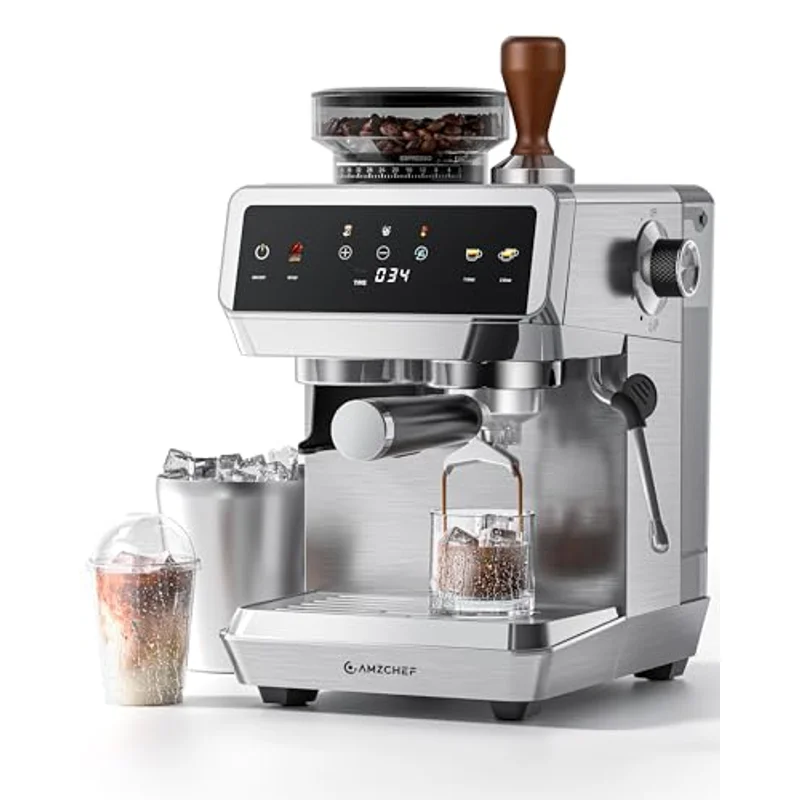
AMZCHEF Espresso Machine With Grinder
Relevant here for one reason: a built-in descaling function on a $199.98 machine, alongside temperature control from 190–201°F and a 60 oz tank that lifts out for the weekly tank wash. A program doesn't replace knowing your water hardness — it just removes the manual-cycle steps once you do.
$199.98 Check price →Yearly: gaskets, shower screen, and when a service beats a new machine
Once a year, or sooner if you notice the symptoms below, a few parts need more than cleaning.
The group gasket
This rubber ring lives permanently at brew temperature, and heat cycles harden it over time no matter how well you clean it. Once it hardens it stops sealing, and the tell is specific: water sprays or dribbles from the edge of the portafilter mid-shot, or you find yourself pushing the handle further around each time to get a tight lock. It's among the cheapest parts in the machine — replacements for common models generally run in the $10–20 range — so inspect it around the one-year mark and expect to replace it roughly annually under daily use.
The shower screen
The perforated disc water passes through on its way into the puck collects fines the same way the basket does, just less visibly. On machines where it's removable, pull it once a year, soak it, and hold it up to a light — a partially blocked screen distributes water unevenly across the puck and produces the same channeled, inconsistent shots as a dirty basket.
The water filter, if fitted
Some machines ship with an in-tank filter — the Breville Barista Express includes one with a holder. It cuts chlorine taste and some scale-forming minerals, and it exhausts on a volume schedule with no warning: it looks identical to a fresh one and simply stops helping. Most manuals ask you to pull it before descaling, since the acidic solution degrades the media.
When a service is cheaper than a new machine — and when it isn't
This is the judgment call that actually saves or wastes money. A professional descale-and-service on a semi-automatic commonly costs somewhere in the $50–150 range depending on the shop — a category estimate, not a quote for any product listed here. Compare that against the machine's replacement price, not its original price: servicing a machine that would cost $499.95 to replace, like the Barista Express, is close to always worth it if the fault is scale, a gasket or a worn seal, since none of those touch the boiler or the pump. Servicing a machine that would cost $79.99 or $99.99 to replace, like the Chefman CraftBrew or the CASABREWS 3700, rarely clears that bar.
The exception in both directions is a pump or boiler failure, usually a sign the earlier steps on this page were skipped for a long time rather than random bad luck — scale is what kills those components, and scale is preventable. If you're weighing repair against replacement, our cost-math guide runs the full payback arithmetic, and our picks under $200 cover what a clean replacement buys at the low end.
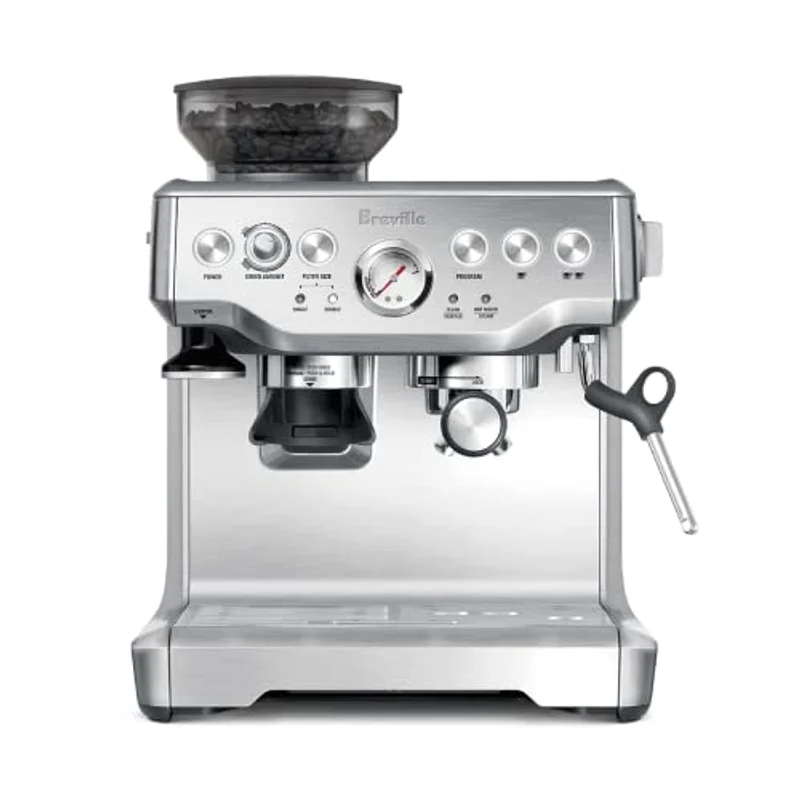
Breville BES870XL Barista Express
Ships with the parts this section assumes: a cleaning disc, cleaning tablets, a brush tool and a water filter with holder, plus a one-year limited warranty on the unit. At $499.95 to replace, a $50–150 service call for a gasket or a scale issue is straightforwardly worth it.
$499.95 Check price →Grinder hygiene, if your machine has one built in
Machines like the AMZCHEF add a fifth category most cleaning schedules skip entirely, because a burr grinder fails in ways a brew group doesn't.
Fines and coffee oil collect in the burr chamber and chute, and whatever the grinder retains gets pushed into your next dose — a small, invisible source of stale coffee mixed into every fresh grind. Empty the hopper and run the grinder briefly with nothing in it every month or so, more often for dark, oily roasts, which shed more oil than light ones. Where the manual allows removing the upper burr, brush out the carrier by hand rather than blowing compressed air into it, which just relocates the fines. Reassemble exactly as shown — the grind settings you've dialed in are calibrated against that exact alignment, and reseating the burr slightly off changes the grind size at every setting.
Two rules matter more than the schedule itself. First, empty the bean hopper and wipe it dry periodically: bean oils film the plastic and go stale in daylight, tainting whatever fresh beans you add on top. Second, and this is the one absolute: never put water or a wet cloth inside the grinder. Water plus coffee dust sets hard around the burr carrier, and moisture on steel burrs invites rust that no later cleaning reverses. Dry brush only, always. For the fuller case on integrated versus standalone grinders, see our grinder comparison guide.
What breaks first, and how much of it is preventable
We have no owner survey data for these specific machines and won't invent any — this section is drawn from how the components themselves fail mechanically, which is well documented regardless of brand. Across home espresso machines generally, failures cluster in a predictable order, and the pattern matters more than any single statistic:
| Failure | Root mechanism | Preventable? |
|---|---|---|
| Blocked or slowed flow | Scale narrowing the water path, or a clogged basket and screen | Almost entirely — descaling on hardness, weekly basket soaks |
| Leaking portafilter seal | Group gasket hardened by heat cycles | Mostly — a $10–20 part replaced on schedule instead of after it fails |
| Weak or dead steam wand | Dried milk in the tip, or scale in the steam circuit | Almost entirely — daily wipe-and-purge, included in the monthly descale |
| Sour, bitter or flat-tasting shots | Rancid oil in the group, biofilm in the tank, or grinder retention | Entirely — this is the daily and weekly routine doing its job or not |
| Boiler or pump failure | Prolonged, severe scale buildup straining the element or motor | Mostly — the end state of skipped descaling over a long period, not a random defect |
Read down that list and a pattern emerges: four of the five failures trace back to a task on this page, and the fifth — a genuine pump or boiler defect with no maintenance cause — is the least common, not the typical, outcome. That's the honest version of "how much is preventable": most of it, but not by doing one big thing occasionally. It's the sixty seconds a day that does the heaviest lifting, because it's the only step frequent enough to stop residue before it hardens.
The whole schedule, by machine
Same four machines from this guide, mapped to what changes their maintenance workload — grinder, backflush capability and filter are the three things that add or remove a category above.
| Machine | Grinder to clean | Backflush-capable | Water filter | Price | |
|---|---|---|---|---|---|
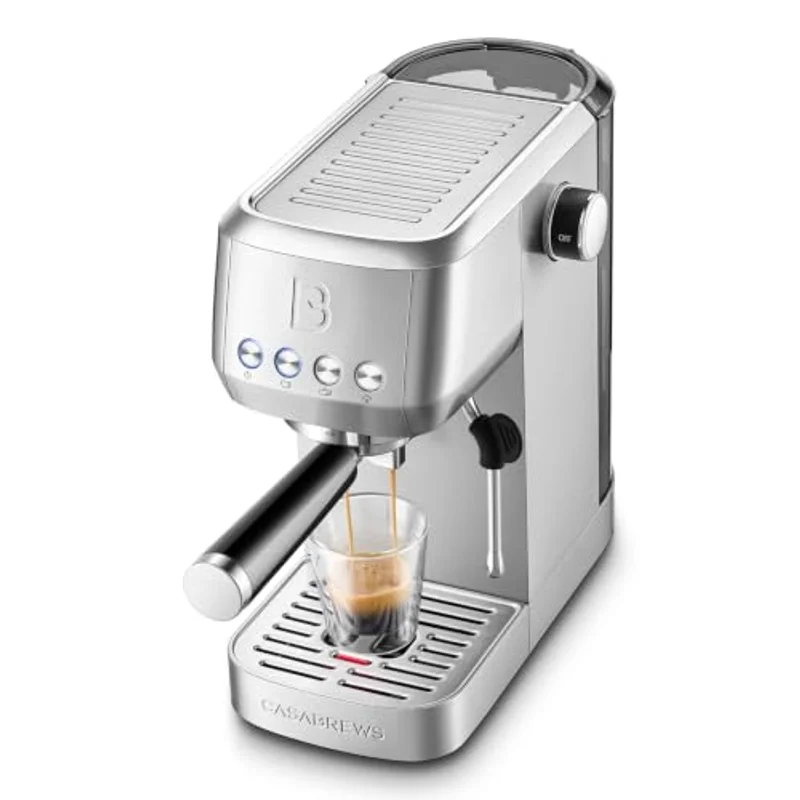 CASABREWS 3700 Essential CASABREWS 3700 Essential | No | No — manual clean only | No | $99.99 | Price |
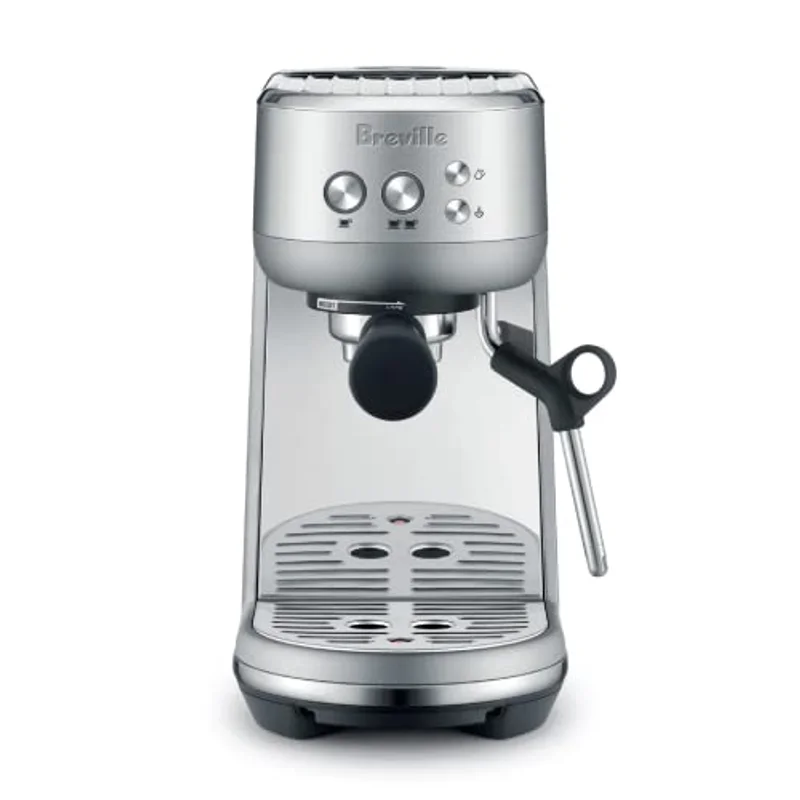 Breville BES450BSS Bambino Breville BES450BSS Bambino | No | No — manual clean only | No | $249.95 | Price |
| AMZCHEF with Grinder | Yes — 44 settings | Not stated — check listing | Not stated — check listing | $199.98 | Price |
| Breville BES870XL Barista Express | Yes — built-in conical burr | Yes — ships with a cleaning disc | Yes — filter with holder included | $499.95 | Price |
Where the table says "not stated," that's the honest answer rather than a guess — check the current Amazon listing or manual before assuming a machine can be backflushed or has a filter slot. Forcing a blind disc into a machine without a three-way valve doesn't clean it; it just works the pump against a dead end.
The one habit that outweighs the rest
If you only take one thing from this page: the daily sixty seconds is worth more than any single monthly or yearly task, because it's the only interval short enough to stop oil and milk from hardening in the first place. A machine that gets the daily routine and skips a descale interval by a few weeks recovers fine. A machine that gets descaled on schedule but never gets wiped down daily tastes worse within a month and needs the deep clean sooner regardless.
How we compared this
We compare published specifications, what ships in the box, and live pricing, and we read manufacturer claims about maintenance features — descaling programs, included cleaning kits, filter compatibility — the same way we'd read any other spec: a starting point to verify against your own manual, not a guarantee. We do not physically test these machines, we do not run a testing lab, and we do not publish ratings we cannot verify: Amazon's product data returns no rating or review count for the machines on this site, so nothing here is presented as owner sentiment, only mechanism and published specification.
Cost figures in this guide — descaler pricing, gasket replacement, professional service — are general category estimates stated as ranges, not quotes tied to a specific product or provider; confirm current pricing locally. The facts about limescale, gasket wear and grinder retention are standard mechanical background rather than claims about any one machine. The rest of our method sits on our main espresso machine guide.
Frequently asked questions
What's the single most important maintenance task for an espresso machine?
The daily sixty-second routine: purge the group before and after, knock out and rinse the basket, wipe and purge the steam wand immediately after use, and empty the drip tray. It's short enough to become automatic, and it's the only step frequent enough to stop coffee oil and milk residue from hardening before the weekly clean or monthly descale ever gets to it.
How often should I actually descale my espresso machine?
By your water hardness, not a fixed calendar date. Soft water (under 60 mg/L) typically needs descaling every 3–6 months, moderately hard water (60–120 mg/L) every 2–3 months, and hard water (120–180 mg/L or above) monthly to every six weeks. If your machine has a volume-based descale indicator, trust it over any of these estimates — it's counting actual water through the machine.
Is it worth paying for a professional service, or should I just replace the machine?
Compare the service cost — commonly in the $50–150 range for a descale-and-service — against the machine's current replacement price, not what you originally paid. On a machine that costs several hundred dollars to replace, servicing a scale issue or a worn gasket is almost always worth it. On a machine under about $100, a repair bill can exceed the cost of buying a new one, so replacement is often the more practical call.
Do machines with a built-in grinder need extra maintenance?
Yes, one extra category: grinder hygiene. Empty the hopper and run the grinder briefly empty every month or so, brush out the burr chamber and chute where the manual allows access, and never introduce water or a damp cloth into the grinder — moisture on steel burrs causes rust and sets coffee dust hard around the burr carrier. Machines without a built-in grinder, like the CASABREWS 3700 or the Bambino, skip this category entirely.